Book/page totals

Top 10 Lists

Sunday, January 28, 2007

read full post >

This novel is a collection of vignettes about various residents of Listre, a one-intersection town in North Carolina. The story loosely follows the doings of the Toomey family, 7-year old Stephen and his parents, as well as Jack Umstead, a smooth-talking drifter who drives into town in a stolen Buick and bides his time until he can steal some cash before moving on. The pace is slow, the events unremarkable (except at the end), but the snapshots are accurate and humane.

Alease Toomey is an interesting and nuanced character. On one hand, she is very concerned with propriety and upright behavior, and perhaps is overly zealous in instilling moral convictions in her son Stephen. She takes him to see the electric chair at the local prison to show him what happens to immoral people, for example. She wants very much to see Stephen saved and near the end of the book, observes with relief that he’s responded to an altar call and accepted Jesus. So her worldview seems a little rigid and judgmental. Yet at many points she skillfully balances compassion and discipline in her relationship to Stephen, acting in love for his good, sustaining a home life that makes him feel secure and beloved. Alease also deplores her brother’s dependence on alcohol, but patiently cares for him when he is unable to care for himself again and again.

Pastor Crenshaw is also interesting, although somewhat less transparent than Alease. He finds himself tempted by a sexy young woman. I thought his mental and spiritual struggle against lust was authentic: the unwanted thoughts, the frequent indulgence in them, the emotional disturbance, the repeated repentance, the continued striving. Jack Umstead is a snake but also human; often ignoble, but capable of kindness. Here, so many of the neighbors’ foibles are on display. Not a very important book, perhaps, but useful as a healthy reminder of human fallibility and preciousness.

Title:Where Trouble Sleeps
Author:Clyde Edgerton
Date published:1997
Genre:Fiction
Number of pages:260

Read more...

Monday, January 22, 2007

read full post >

cover of Ultimate X-Men: Return of the King

Magneto's back. Charles Xavier is being held captive by the U.S. government. Cyclops is left for dead in the savage lands. The X-Men are in hiding on their own, trying to find Magneto's people and stop whatever disaster he's planning. Even though there was plenty of stuff going on that should have been exciting, for some reason this volume just didn't grab my attention like some of the other ones have.

This is the first time I've encountered Forge in the comic books (I've only seen him in the X-Men video games before, and he's mostly there for the mechanics of getting the necessary gear)-- he seems like a pretty interesting character, and I like how he's portrayed. I guess the idea of an ability like his-- to see into the workings of things, to be able to create any device that anyone can dream up-- is pretty appealing, and in some ways it seems a little more realistic than others, because there are people who have abilities like that, to a somewhat lesser degree.

Of course, the device that Forge builds in this case is one to augment Magneto's powers-- and he actually plans to flip the magnetic poles of the earth and kill all of humanity. Magneto's logic-- or lack thereof-- bothers me, probably more than it should (although maybe this is why the story didn't grab me). Sometimes Magneto seems to want to rule over humanity, other times he and the other mutants are afraid of them (as if the sheer numbers of regular humans means much against such powerful beings) and want to exterminate them. Maybe that kind of conflicted attitude makes sense for someone who considers himself "Homo Superior" and yet has some love for humans that he's not willing to admit. The thing that makes this second plan seem even crazier is that the mutants are coming out of the regular population, and near the end of this volume even the government officials are admitting that there will be more and more mutants coming out of the general population.

Fairly entertaining, great artwork as always-- but I hope this volume is setup for some better stories.

Title:Ultimate X-Men: Return of the King (Vol. 6)
Author:Mark Millar
Date published:2003
Genre:Graphic Novel
Series:Ultimate X-Men
Number of pages:192

Read more...

Saturday, January 20, 2007

read full post >

page totals

BooksPages
Lark
2007 36 11,723
2006 42 11,508
2005 55 15,726
total
Sapphire
2007 50 17,050
2006 59 17,422
2005 78 23,529
total
Sapo
2007 16 5,488
since 8/2006 10 4,186
total
Site Total

Lark's Current Top Ten

  1. Sunshine, Robin McKinley
  2. Pride and Prejudice, Jane Austen
  3. The Tower at Stony Wood, Patricia McKillip
  4. To Say Nothing of the Dog, Connie Willis
  5. War in Heaven, Charles Williams
  6. Startide Rising, David Brin
  7. Possession, A. S. Byatt
  8. The Eight, Katherine Neville
  9. The Voyage of the Dawn Treader, C. S. Lewis
  10. A Swiftly Tilting Planet, Madeleine L'Engle

Sapphire's Current Top Five

  1. Ender's Game, Orson Scott Card
  2. Pain: the Gift Nobody Wants, Paul Brand and Philip Yancey
  3. Prayer: Finding the Heart's True Home, Richard Foster
  4. A Wind in the Door, Madeleine L'Engle
  5. The Great Divorce, Clive Stapes Lewis

Read more...

read full post >

Killer Diller focuses on Wesley, the orphan that Mattie takes in at the very end of Walking Across Egypt. He is now about 24, residing in a halfway house because he stole a car. He has an aptitude for music (he loves the blues), and he is now a Christian (Mattie told him about Jesus). During the course of the book, we see how he grows in favor with God and men, how he questions the Christianity preached in church and taught at Christian schools, how he falls in love and tries to conduct himself as a believer. Wesley is quite a likable fellow and his spiritual growth would be quite an interesting story. Unfortunately, he’s placed in a weak plot and used as a pawn in the author’s own agenda-driven critique of Christian culture in America.

What happens is that Wesley gets involved in a service project between his halfway house and Ballard University, a Christian college more interested in getting good media coverage than in giving sight to the blind and preaching good news to the poor. White sepulchres, indeed! These Christians are racist, elitist, snobbish, and altogether infatuated with the complacent, affluent lifestyle of the American Dream. They use Jesus’ ministry to quell dissent, bolster the status quo, and garner wealth and power for themselves. Wesley is suspicious of them, and the author makes no attempt to paint them in a sympathetic light. I have no doubt that such people exist in the US. I’ve even met some. But to prop up poor excuses for Christians, accuse them of being frauds, and then find them guilty as charged is not good writing, just a cheap shot.

Title:Killer Diller
Author:Clyde Edgerton
Date published:1991
Genre:Fiction
Number of pages:247
Notes:Semi-sequel to Walking Across Eqypt

Read more...

Friday, January 19, 2007

read full post >

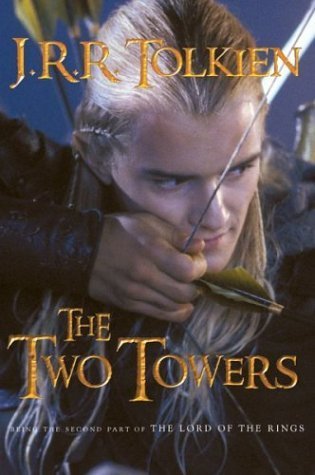
The middle book of Tolkien's trilogy. Following the broken fellowship and learning about how the evil is spreading across the land. But in the midst of evil, each group finds others who are trustworthy and willing to fight evil. That is encouraging and hopeful .. that in this world where darkness sometimes seems to be winning .. there are Treebeards and Eomers and Smeagols and Faramirs, along with the 'main characters' who will stand together against the enemy. People who know what they are fighting for and are willing to stay in the fight regardless of what may happen.

Smeagol/Gollum is a character who portrays much truth. He was a good, rather regular hobbit, but when the ring found him he became more evil, more selfish, more fearful. Early on, Frodo learns the truth from Gandalf and wishes that Bilbo had killed Gollum when he had the chance. In the now famous quote, Gandalf says "Many that live deserve death. And some that die deserve life. Can you give it to them? Then do not be too eager to deal out death in judgement. For even the very wise cannot see all ends." (p65) Frodo takes this to heart and learns to have compassion for Smeagol who has become his worst self because of the ring. This trust perhaps brings out more of Smeagol instead of just Gollum .. amazing how trusting someone can change their whole self-perception, character, personality. Taken to an extreme in this case but the idea still seems to ring true. And by trusting Smeagol, Sam and Frodo are able to make it closer to Sauron's land much faster than they would have made it on their own. Even the worst people have good left inside of them, since we are all made in the image of a good Creator .. at least I think I believe that.

Title:The Two Towers
Author: J.R.R. Tolkien
Date published:1954
Genre: Fantasy
Series: The Lord of the Rings
Number of pages: 398
Notes: Finally read these!

Read more...

Tuesday, January 16, 2007

read full post >

cover of Towing Jehovah

This book caught my eye once in a bookstore a few years ago, and I remembered it for so long and meant to read it because the main idea was so strange and unique. God is dead. And his smiling, two-mile-long corpse has fallen into the ocean. The archangels, before they die of terminal empathy, recruit a disgraced oil tanker captain and a Jesuit, backed by the Vatican, to take an oil tanker out and tow God's body to the arctic burial the angels have prepared for him.

It's a pretty bizarre concept for a book. And I was surprised by how quickly I read the book-- partly because Morrow's writing and characters are quite engaging, and partly because I had no idea what would happen next in such a strange story.

Anthony Van Horne is (or was) a captain of ultra-large oil tankers (the angels claim he's the best captain in the world), and the son of a great captain, but a few years back he was partly responsible for a terrible oil spill. Although not held legally responsible, he lost his captain's license and is wracked by guilt-- he dreams of birds and marine animals covered in black oil, and he is constantly washing himself because the oil always comes back.

Van Horne is joined on this venture by Thomas Ockham, a Jesuit professor and scholar who has worked to integrate Christian faith with philosophical and scientific principles. Together, they recruit a crew to staff their ship (the Valparaiso, which Van Horne was captaining when the oil spill happened) and set off to find God's body. And, of course, not everything goes according to plan. Once they find the body, the crew has to know what is going on (they take shifts guarding the corpse from being eaten by sharks and the like)-- and there's a diverse range of people, including a Jew and an evangelical Christian who can't handle it. Eventually most of the crew mutiny-- because they feel no one is watching any more, they start misbehaving in all kinds of terrible ways. Even Father Ockham, to some extent, gets taken up by this "Idea of the Corpse," as he calls it. At this time, they are stranded on an island, and the mutineers blow all the food in their wild partying-- and eventually, Van Horne and Ockham turn to God's corpse to provide food for the starving crew. There's a kind of reverse Eucharist, where God's literal flesh and blood becomes food and drink for them-- and rather than sacrilegious, I thought it was actually kind of beautiful, because they were completely sustained by God.

Along the way, they also rescue an atheist biology professor (who, it so happens, used to write off-Broadway plays, many of them based on Biblical ideas). She manages to get a secret message off to her atheist fiancé so that they can intercept and sink the corpse, since a male corpse would be a blow to feminism. Ultimately, this leads to a rather crazy sea battle, and the interesting development that both the Enlightenment society and the Catholic church want the same thing-- they want to destroy God's body and hide the evidence: the church, because they don't want the world to know God is dead, and the atheists, because people won't properly understand the meaning of the body and will take it as proof of God.

While this was a fascinating book, ultimately I found it a little disappointing. The angels told Father Ockham that by the end of the trip, he would figure out why God died. When he finally finds out that the whole towing & burial was the angel's idea, his conclusion was that God wanted the world to know he was dead, in order that humanity could grow up and be independent. The angels also told Van Horne that he would receive forgiveness from his father, and be able to get past his guilt for the oil spill-- but this doesn't quite happen either.

Ultimately, I think the book is unsatisfying because Morrow has no answers, and has rejected the answers of Christianity. Van Horne's guilt and constant, almost ritualistic attempts at self-cleansing are so clearly a spiritual struggle-- but Morrow's answer seems to be that there is no forgiveness; you just live with it as best you can. Likewise, Ockham's understanding of the reason for God's death seems pretty flimsy to me-- and the insignificance is underscored by the fact that they eventually decide not to exhume the body and show the world; instead the story only makes it out to the world via Van Horne's diary, published as the fictional Gospel according to Popeye.

Title:Towing Jehovah
Author:James Morrow
Date published:1994
Genre:Fantasy
Number of pages:371

Read more...

Sunday, January 14, 2007

read full post >

If you’re hankering after yet another book by a Southern writer, this one by Clyde Edgerton is a good choice. 78-year-old Mattie, who claims that she’s “slowing down,” spends her days picking tomatoes, canning fruit, running the Lottie Moon missionary fund drive, and fixing the best cornbread, butterbeans, and pound cake for every upholster, dogcatcher, neighbor, and deacon who stops by. And she starts pondering what it really means to “do unto one of the least of these my brethren.” The developments arising from these thoughts are authentic and engaging. Mattie presents a placid, grandmotherly face to the world but the story gives the reader access to many sassy comments that she thinks but doesn’t say. Very witty.

Edgerton’s writing has something of Flannery O’Connor in it. Mattie’s Christian conviction and her Baptist church culture are very significant to her character and the plot. And people in the book are allowed to utter backward statements that reveal their ignorance and prejudices. As in many O’Connor stories, these flawed human beings are fully fleshed out and move about freely in the story, whether you like them or not. From this vantage point, you can both appreciate their place in the world and laugh at their foibles. (Also, check out the hymn at the end of the book whose title is the same as the book's, which Edgerton wrote and composed.)

It’s probably bad to do too much comparison with other writers, but Walking Across Egypt has that quality that I liked so much in Jan Karon’s At Home in Mitford: the protagonist’s real faith in Jesus plays out naturally and sincerely. Mattie is neither preachy or smug in her devotion, but tries to follow Jesus as well as she can, expressing uncertainty at times and admitting error. She is a Christian who loves others and trusts God without falsely claiming to have all the answers – like a few people whom I most admire in my own life.

Title:Walking Across Egypt
Author:Clyde Edgerton
Date published:1987
Genre:Fiction
Number of pages:215

Read more...

Thursday, January 11, 2007

read full post >

cover of Batman: The Dark Knight Strikes Again

Batman as an old man. Bats has been gone for a while, and everyone thinks he died three years ago. In fact, all of the superheroes are thought to be gone-- although most of them are still around, just doing their heroics in secret at the behest of a corrupt and tyrannical government that has decided the populace doesn't need to see (or believe in) the superfolk in their spandex (it isn't good for them, or something). In the meantime, Batman has recruited and trained a band of young new heroes to help him change all of that.

This book is chock-full of superheroes (most of whom I'd at least heard of), and adds a few new ones (as far as I know), including Batman's young protegé Catgirl. Among other things, in this world Superman and Wonderwoman have a love-child named Lara, and a very corpulent and ugly Lex Luthor is the power behind the computer-generated image of a president. Superman and Batman are pretty antagonistic towards each other (although I think that may be common in other renditions), and Lex Luthor and Brainiac have an entire Kryptonian city miniaturized in a bottle that they're keeping as hostages so that Supes will do their bidding. I particularly liked the character of The Atom, who can make himself tiny-- and who had his own technology turned against him when the government kept him imprisoned in a petri dish. The government was also using the Flash, harnessing his speed to generate a secret power source that provided electricity to the entire eastern seaboard. Batman himself isn't all that visible, especially not in the first third or so-- although he's the one pulling the strings making things happen.

Miller is not just the author, but also the penciller for this work, which I find pretty interesting (I'm not so familiar with comic books, so I don't know how common this is, but I think not very). The artwork was fun and had a unique kind of flair to it. At many times, the layout on the page did a great job of representing the kind of infoglut and proliferation of talking heads we have now in our media when anything is going on. Also, there were some interesting ideas, like the "superchix," a girl band cashing in on the sexy superheroine chic or the vengeful, rejected sidekick who only wanted to be appreciated.

This is apparently a sequel to Miller's Batman: The Dark Knight Returns, which I haven't read. I enjoyed reading it, and it made sense to me without reading the first one.

Title:Batman: The Dark Knight Strikes Again
Author:Frank Miller, Lynn Varley, and others
Date published:2002
Genre:Graphic Novel
Number of pages:256

Read more...

Google Search

Google