Maggie is a high-school teenager who loves animals (especially her dog Mongo), and doesn't like her new step-father Val. But Maggie is far from normal. For one thing, the reason she dislikes Val is not just because he's from Oldworld or dresses terribly, but because he has too many shadows that seem to move on their own, and have too many legs or hands or other appendages, and that almost no one else can apparently see. For another thing, Maggie lives in Newworld, where magic is illegal and magic-using genes were removed two generations ago, and where there is a danger of "cohesion breaks," gaps in reality that are common enough they have their own slang term, "cobeys" - which the government handles with military teams and scientific equipment; but which just might be more of a problem than the government is letting on.
On this page:
- (Lark - Sunday, January 19, 2014)
- (Lark - Friday, October 15, 2010)
- (Lark - Wednesday, March 24, 2010)
- (Lark - Friday, November 14, 2008)
- (sapphire - Tuesday, February 13, 2007)
- (sapphire - Friday, December 29, 2006)
- (Lark - Tuesday, July 05, 2005)
- (Lark - Monday, July 04, 2005)
- (Lark - Sunday, June 26, 2005)
- (Lark - Tuesday, June 21, 2005)
Sunday, January 19, 2014
Friday, October 15, 2010
When Sunshine is getting ready to go into battle with Con, and expecting to die (for about the third time in this book), she thinks about what to do with the two days she has left-- and one of the options that crosses her mind is reading:
Reread your favorite novel, the one you only let yourself anymore when you're sick in bed. I might have enjoyed this more, since I'm never sick, if death didn't seem like a very bad trade-off.This caught my eye because I was actually sick in bed re-reading Sunshine. I don't know if that makes it my favorite book (it is definitely up there), but this book was such a wonderful, complete distraction from my own misery to escape into Sunshine's crazy world (and in particular her humorous, self-deprecating attitude that comes through in the narrative as she provides commentary). It feels like such a full, real world too-- populated with fascinating characters, and details of slang and history and myths, and since we get everything filtered through Sunshine's perspective, we don't know which myths are true and which aren't. Sunshine lives in a dangerous world that I'm not sure I'd want to visit-- I'd love to sample her cinnamon rolls and crazy decadent desserts at Charlie's coffeehouse, but I'm not sure I'd want to navigate the dangers of Old Town to get there.
Wednesday, March 24, 2010
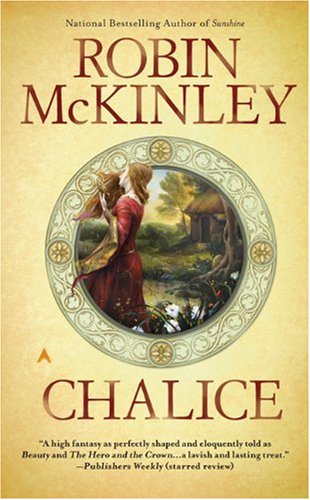
Mirasol was a beekeeper and woodskeeper until the Master and Chalice of the Willowlands were both suddenly and violently killed, without heir and apprentice. The land chose Mirasol to be the next Chalice, and so she had to step into the official role, second in the Circle, without any training or apprenticeship (and to the apparent dismay of the remaining members of the Circle). The Chalice is a magic user and a cup-bearer who mixes drinks to bind, or connect, or help make decisions, and is part of many rituals of the ruling of the demesne, and who works with the Master of that demesne to protect the land and the people. But the Master that Mirasol must learn to work with is the younger brother of the dead Master, who was sent away to become a Fire Elemental Priest six years ago. The Grand Seneschal sent for him out of desperation, and he returned out of loyalty and responsibility to the land; but he had gone far enough into the priesthood that he is no longer quite human, and certainly looks and moves very strangely, with blackened skin and reddish eyes. However, Mirasol is also different than any other Chalice; usually their magic runs in wine or water, or occasionally milk (and, in ancient, more violent times, occasionally blood); but the power of the Chalice manifests itself in Mirasol's honey and her bees.
Read more...Friday, November 14, 2008
I re-read this book over a weekend when I wasn't feeling well, and it was perfect timing to forget how miserable I was and lose myself for a while in Sunshine's fascinating world of vampires and magic and baked goods. I guess that means that it must be "escapist" literature, although I don't really think of it that way. There is so much worth thinking about here, and parts of this book stay with me. Sunshine discovered more of herself and who she is-- and she struggles with it, because she thinks it means that she is some kind of monster. She has this dark "affinity" for vampires, even helped save one, which she's sure no one around her could understand (although it is her very generosity towards the unthinkably Dark Other that saves her). She thinks this makes her a dark creature herself, but those around her have to help her see that it is because of her brightness, because of who she is and the source of her power, that she can face such darkness.
The fascinating character of Con, Sunshine's unlikely vampire ally, gives McKinley the chance to dig into the workings of vampires in this world she's created. Vampires are completely other and scary to humans on an instinctive level, as hunter to prey. The normal path for a vampire who survives to any kind of age is to become a wealthy master vampire with teams of younger vampires working for him-- in part, because the old vampire can't go out in any kind of light, even moonlight. We see this with Con's enemy Bo-- he has become so corrupt and evil through satisfying every dark appetite he could imagine for many centuries that he is no longer even fully corporeal.
A great book that I could (will) re-read again. I see that McKinley has published a few other books lately, which is exciting, but I hope that sometime she gets inspired to give us another glimpse of Sunshine and her world.
| Title: | Sunshine |
|---|---|
| Author: | Robin McKinley |
| Date published: | 2003 |
| Genre: | Horror / Fantasy |
| Number of pages: | 405 |
| Notes: | repeat reading |
Tuesday, February 13, 2007
The fairy tale of Robin Hood, made into a long wonderful story. McKinley has done this often and well .. taking vague tales and making them believable and with depth. Robin accidentally kills a man and goes into hiding, and with the help (and persuasion) of two good friends takes others with him. They become a banner for Saxons who are frustrated and angry with the Normans who unfairly tax them and take control of more than belongs to them. Robin is more than flesh-and-blood to those who keep surviving under Norman rule -- he is the embodiment of a legend -- he symbolizes their hope.
All the regular characters are here .. Robin Hood, Little John, Friar Tuck, Maid Marian, Much, the Sheriff of Nottingham, Will Scarlet. Characters as unique as one could hope for .. each with quirks, fears, dreams, humor. The band in the woods is made believable by the way they care for each other, the ways they interact, the mundane problems they have to deal with (food, rain, shelter, hiding, uncomfortable trees). An intruiging idea .. something that to us is only a tale becoming living people. How quickly normal people can become larger-than-life. I wonder if we need that to survive. Humans need stories .. but do we also need stories that are 'impossible' .. heroes who survive more often than they should, relationships that are saved and not broken as they so often are in our world, people who need hope and to whom it is given. Things that perhaps are not .. but perhaps should be? or could be? or may yet become?
| Title: | The Outlaws of Sherwood |
|---|---|
| Author: | Robin McKinley |
| Date published: | 1988 |
| Genre: | fantasy, fairy tale |
| Number of pages: | 275 |
| Notes: | repeat reading |
sapphire
on
Tuesday, February 13, 2007
add a comment
Friday, December 29, 2006
Mmmm... beauty and the beast, where the beast is a vampire. How intriguing is that? McKinley's writing is always enjoyable, and this book is no exception. Sunshine is a baker who one day reaches the tipping point, and realizes she is fed up with her mundane life at the coffeehouse (where almost all her friends and acquaintances are from), and goes out to the lake. This choice leads to more dangerous choices. To situations most humans would not come out of alive. But Sunshine does -- and brings with her a vampire, the worst of the Others. How is that possible? Can she control her own abilities? What are the desires of her heart?
One of the few people Sunshine knows outside the bakery is her landlady, Yolande. Who happens to be a wardskeeper (someone who is really good at making wards to keep people safe and has earned this honored title). Sunshine is keeping secrets from everyone she loves with nobody to talk to, and one day her seemingly helpless old landlady comes out for a chat. Yolande speaks Sunshine's secrets to her, in such a way that makes Sunshine feel safe and cared for. Keeping secrets from those we love is hard -- and something I'm glad I don't have to do often (although I keep reading books and watching shows about people who do ...). But to have someone who already knows your secrets -- that is truly a gift. Someone who not only knows your secrets but still trusts you and relates to you without fear or disgust. Someone who has their own secrets, but is willing to share those. Hmmm... in the middle of so many questions and fear there can be a safe relationship or two.
| Title: | Sunshine |
|---|---|
| Author: | Robin McKinley |
| Date published: | 203 |
| Genre: | Horror |
| Number of pages: | 405 |
| Notes: | Repeat reading |
sapphire
on
Friday, December 29, 2006
add a comment
Tuesday, July 05, 2005
Robin McKinley's later version of the Beauty & the Beast tale bears some marked changes from McKinley's earlier version of the tale-- this one, in some ways, reads more like a fable because of the names (like Lionheart and Jeweltongue, Beauty's sisters, or Mr. Horsewise). Perhaps the most significant thing, though, is the way that McKinley modifies and adapts the familiar fairy tale and turns it into a new story.
The character of Beauty in Rose Daughter is rather a departure from most of the other women in McKinley's books. It's almost as if the main character of McKinley's Beauty had been split into three characters-- the bold, horse-loving Lionheart (who even masquerades as a boy), the scholarly and witty Jeweltongue, and Beauty herself-- a kind, practical girl who loves to garden. She really loves all living things, as is made clear when we see her making friends by caring for unwanted animals and finding them homes. Beauty is also a much more reserved and less public person than her more flamboyant sisters. I also love the detail of the roses-- what would dead roses look like, to someone who loves plants but has never seen roses? All thorns and black and ugly-- but Beauty can tell they were important to whoever set up the garden, so she decides to wait one season to find out if they are worth all the trouble and the pain, and she loves them more than any other plant when they finally do bloom.
One interesting difference from the traditional version in this tale is the reason for Beast's form. He was a sorcerer-philosopher seeking knowledge who went too far-- but he was not evil or power-hungry in his search, so in restraining him the guardians of that knowledge accidentally touch him and give him something like their own form. This Beast is a rather different character from the spoiled young prince who is the first of his proud family to slip and be hit by an anicent curse.
The biggest point of difference in all of McKinley's Beauty & the Beast retellings is the ending. [Note that you may not want to read this if you have not yet read Rose Daughter or Sunshine and don't want to know how they end.] The ending of Beauty is right out of the fairy tale, although maybe a little grander and populated with the specific personages from Beauty's world. When you look at that ending in comparison with Rose Daughter, there is a bit of an inconsistency-- even in the first book, Beauty's family seems happier living a simple country life. Gervain can try on the fancy clothes from Beast and look like a Lord, but he's actually happier being a blacksmith. I sense this much more strongly in Rose Daughter-- the whole family is happier in their tiny country cottage than they were in their huge city mansion; they realize the duplicity of their city friends (most obvious in the two cancelled engagements of the older sisters). The father finally recovers from his wife's death and starts writing poetry. It would make much less sense for this family-- Beauty especially-- to go back to city life. However, as in the first version, this book still ends with a triple wedding.
It seems that sometimes writers must tell the same story repeatedly, and that they must first tell it one way before they can tell it another. I think this may be the case for McKinley-- it is only in her second re-telling that she is able to let her Beast remain a beast, and to let her characters stay in the simple lives they have come to love. And this is where I see the biggest connection to Sunshine: there, the beast is truly a monster inimical to humans. What happens on a smaller scale there happens here-- the girl saves the monster, the monster protects the girl. Allowing the beast to remain a beast at the end of Rose Daughter seems to open the door for Constantine in Sunshine-- he is an ancient monster, who is allowed to stay what he is. Also, the relationship between Con and Sunshine is different-- there are hints of attraction (and maybe more than hints), but it is against their very natures (and what would a marriage between Beauty and her untransfigured Beast look like, anyway?).
In her afterword, McKinley comments on this act of supposedly repeating herself, and what it means to her as a writer:
I read somewhere, a long time ago, a French writer, I think, saying that each writer only has one story to tell; it's whether or not they find interesting ways to retell it that is important. The idea has stuck with me because I suspect it's true. Maybe I shouldn't be surprised that my favourite fairy tale came back to me, dressed in a new story, after twenty more years in the back of my mind and the bottom of my heart-- and the odd major life crisis to break it loose and urge it into my consciousness.
Maybe it'll come to me again in another twenty years.
| Title: | Rose Daughter |
|---|---|
| Author: | Robin McKinley |
| Date published: | 1998 |
| Genre: | Fantasy |
| Number of pages: | 202 |
| Notes: | Second reading. |
Lark
on
Tuesday, July 05, 2005
add a comment
Monday, July 04, 2005
This book, as the title suggests, is a novelization of a beloved fairy tale. McKinley doesn't offer any major twists or revisions-- she just fleshes out the characters, makes them real and believable, and gives them human motivations. Some friends have expressed the feeling that the ending is a little bit "over the top", but I was young when I first read it, and loved it pretty much from start to finish, so I find it hard to dislike the fabulous ending even the tiniest bit.
The character of Beauty in this book bears a remarkable resemblance to many of the other women in McKinley's writing (most of whom she actually precedes)-- she's a tall (at times ungainly or awkward), stubborn, tomboy of a girl who loves horses and books (both of which are important in her relationship to Beast), is terrible at sewing and other more traditionally feminine pursuits, but inexplicably loves roses (it is called for in the plot, after all). It doesn't seem like all those characteristics should all belong to one person, but when I'm reading the book, I believe it-- and it also seems that Beauty's very uniqueness is what makes her capable of loving and saving her Beast.
I wanted to re-read McKinley's two explicits versions of the Beauty & the Beast story after reading Sunshine again, because I think there is a continuity between them. It would be reductive to say that Sunshine is merely another Beauty & the Beast story (does a story just need a woman and some kind of monster to qualify? What about Aerin fighting the dragon Maur in McKinley's Hero and the Crown, does that count?), because it is certainly much more than that. Whatever the case may be, I sense some connections between Sunshine and McKinley's two Beauty & the Beast stories, Beauty and Rose Daughter.
The character of Sunshine definitely has some of this Beauty's stubbornness, and it is one of her strengths. Beauty is written in first person, and re-reading it this time, I found some hints of a voice a little like Sunshine's-- but McKinley's more mature work has a greater depth, and seems much freer.
This book also contains one of my favorite lines about story-telling, when Beauty returns home for a visit and begins to try to tell her family about the kind Beast she has come to know.
Pictures of the garden, the castle, the incredible library, and the Beast himself crowded into my mind. "I don't know where to begin."
"Begin in the middle and work outwards," said Hope. "Don't be stuffy."
"All right," I said. So I told them...
| Title: | Beauty: A Retelling of the Story of Beauty & the Beast |
|---|---|
| Author: | Robin McKinley |
| Date published: | 1993 |
| Genre: | Fantasy |
| Number of pages: | 247 |
| Notes: | This is a repeat reading. |
Lark
on
Monday, July 04, 2005
add a comment
Sunday, June 26, 2005
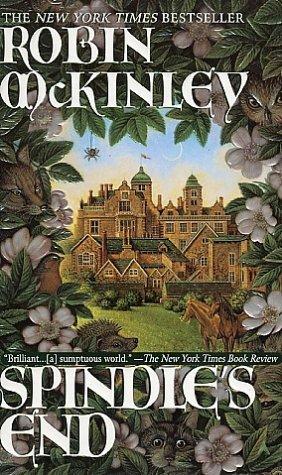
Another delightful fairy tale re-telling from Robin McKinley, this time (if you couldn't guess from the title), we get her version of Sleeping Beauty-- although there isn't so much slumbering in this story. McKinley creates a new country so saturated with magic that it settles around like dust and has the potential to invade such ordinary, every-day tasks as boiling water or slicing bread. This also allows McKinley to set up a dichotomy between the more academic and intellectual wizards, in contrast with the wilder, and ultimately more powerful magic of the fairies, both good and evil.
As with so many of McKinley's heroines, the girl who should be a slumbering princess is instead a tomboy who talks to animals, hangs around the smith's yard helping him shoe horses, and learns to be a horse doctor. Rosie detests the silly fairy-gifts she was given by her fairy godmothers at her christening (things like ridiculously long eye-lashes, curly blond hair, and the like), and has a stubbornness familiar to those who have encountered some of the other women in McKinley's books.
Because we all know the fairy tale, I'm not giving anything away when I say that the evil fairy Pernicia is defeated in the end. But the way that Rosie wins out is largly due to the strength of her own individuality, and also due to the loyalty of her many friends, both human and animal. Pernicia's strength is clear, and it is very obvious that things could have easily gone another way. This is one of the more creative retellings of a fairy tale I've read; the ending is fresh, and the characters (especially characters who never come into the traditional version of the tale) are delightful and lovable.
| Title: | Spindle's End |
|---|---|
| Author: | Robin McKinley |
| Date published: | 2000 |
| Genre: | Fantasy |
| Number of pages: | 354 |
| Notes: | Second or third reading, at least. |
Lark
on
Sunday, June 26, 2005
add a comment
Tuesday, June 21, 2005
So far as I am aware, this is the first book by Robin McKinley to be found in the Horror section of the bookstore (I know because I had to look it up in the bookstore computer when I went to buy my copy and couldn't find it). No doubt Sunshine is classified as horror because of the strong presence of vampires-- but in spite of this, there is a clear continuity with McKinley's earlier books, which include mostly fantasy and a few re-tellings of fairy tales-- and there is a definite connection with McKinley's two previous versions of the story of Beauty & the Beast.
I love this book and the characters-- even though Sunshine's world is a dark one I might not want to live in, it is a very believable world. This is partly accomplished through the minute details that flesh out Sunshine's world, in particular the slang. If there is a slang word for vampires (they call them "suckers"), then you know that they've been around for a while and people have sort of gotten used to the fact. The same goes for all the different kinds of magic and charms and the like that are a part of Sunshine's everyday world-- there is an incredible level of detail and logic to how these things work. Sunshine herself is also such a matter-of-fact narrator, with a very individual, believable, and even humorous voice.
In the past, when I've discovered a new book by Robin McKinley in my local bookstore, I've purchased it immediately without knowing anything about it (this actually happened with Spindle's End). That is how much I love McKinley's work (I own most of her books-- I think I probably have every full-length novel she's written). But when I first found out about Sunshine, I read some unflattering reviews on Amazon.com, which made me doubt this book. As a result, I didn't immediately pursue getting a copy, and forgot about it for a while. Somehow I was reminded about the book, but since I still had my doubts, I actually read a public library copy of Sunshine the first time... But I tore through the book, and I could hardly wait to get a copy of my own when the paperback edition came out.
I haven't read a lot of vampire fiction (in fact-- I'm not sure I've really read any besides Sunshine), but I'm familiar with Buffy & Angel, and I like the way McKinley spins the vampire tradition-- again, McKinley has thought things through and the details are completely fleshed out and logical. The character of Con, of course, is fascinating, and I love the idea that there are different ways of being a vampire. I think I prefer McKinley's descriptions of vampires-- It seems like vampires ought to look obviously different from humans (unless they are "passing"), although I can imagine that would be much more difficult and expensive to do on film or TV. In this world, vampires are clearly creatures of the night who are inimical to humans; their senses work differently, they travel differently, even though they are also very wealthy, powerful, and clever (they even have their own technology that hooks into this world's version of the internet).
The whole book is a treat to read, and even though it's a decent length book, it reads pretty quickly. The ending is perfectly suited to the rest of the book... but it also leaves me with some hope that perhaps McKinley will return soon to this fascinating world and the wonderful characters of Sunshine and Con.
| Title: | Sunshine |
|---|---|
| Author: | Robin McKinley |
| Date published: | 2003 |
| Genre: | Horror |
| Number of pages: | 405 |
| Notes: | Third reading. |
Lark
on
Tuesday, June 21, 2005
add a comment