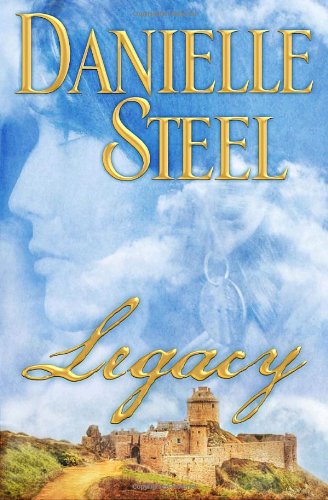
Brigitte is complacent and comfortable in her life - until she loses her job (where she has loyally served) and her boyfriend of 6 years (whom she'd always assumed she'd marry) dumps her to leave for his dream job, running an archaeological dig in Egypt. Brigitte tries to continue working on her own book, a definitive anthropological look at women's suffrage that she has been working on for years. She can't make any progress, so she goes to visit her mother and decides to help with some research on their family genealogy - first going to Salt Lake City. Then, when she discovers an Indian woman's name, Wachiwi, amongst their French aristocratic ancestors, Brigitte gets interested and follows the story, first to Indian archives and then eventually to France. Eventually she uncovers the story of a Dakota Sioux chief's daughter who was captured by the Crow, then seen with a Frenchman, and eventually made her way to France, where she was presented at court, married a Marquis, had children, and helped defend their Brittany chateau during the French revolution. Of course, along the way Brigitte comes into her own and is befriended by a kind Frenchman, an author who helps with her research.
On this page:
- (Lark - Thursday, April 05, 2012)
- (Lark - Monday, October 18, 2010)
- (Lark - Sunday, August 29, 2010)
- (Lark - Sunday, August 22, 2010)
- (Lark - Sunday, August 15, 2010)
- (Lark - Saturday, July 03, 2010)
- (Lark - Sunday, June 27, 2010)
- (Lark - Saturday, February 07, 2009)
- (Lark - Sunday, March 30, 2008)
- (Lark - Saturday, March 29, 2008)
- (Lark - Saturday, February 23, 2008)
- (Lark - Tuesday, February 12, 2008)
- (Lark - Saturday, February 02, 2008)
- (Lark - Wednesday, January 16, 2008)
- (Lark - Wednesday, September 12, 2007)
- (Lark - Monday, September 10, 2007)
- (sapphire - Wednesday, February 22, 2006)
- (sapphire - Tuesday, November 15, 2005)
- (Lark - Sunday, October 09, 2005)
- (Lark - Wednesday, September 28, 2005)
Thursday, April 05, 2012
Monday, October 18, 2010
Shortly after I started reading this book, I thought I recognized the standard hero and heroine of a Grace Livingston Hill novel-- the beautiful, angelic, unspoiled but well-educated and refined Minister's daughter, Lynn; the tough but sweet, good-looking neighbor boy, Mark Carter, who grew up with her but is now in some kind of trouble and estranged for her (of course they must be meant for each other); the spoiled rich boy, Laurence Shafton, who may be a slight distraction for the good girl-- she won't care for his money or fine things, but he will be drawn to this beautiful, religious girl and maybe it will change him for the better. That story does play out rather like I expected (although the characters have more depth than the caricatures I've suggested), but I was pleasantly surprised by this story: as much as it is about Lynn and Mark and Laurence, it is really Billy's story-- the young, tough neighborhood kid who looks up to Carter (or "Cart", as Billy calls him) and loves Miss Lynn's Sunday School lessons. In trying to earn some extra cash, Billy gets tangled up in some bad business and messes things up for others around him-- and as he tries to make things right, he seems to learn and finally understand true grace.
Sunday, August 29, 2010
Prudence and Robin Tremaine are a brother and sister fleeing to London, and because Robin was involved in the Jacobite rebellion on the wrong side, they disguise themselves-- the tall Prudence pretends to be a young man, and the slight, elegant, talented actor Robin pretends to be the sister. On their way to London, they run into flighty young Letitia, who is eloping with a man because she thought it would be quite an adventure, but he turns out to be rather a brute and after her money. Robin and Prudence manage to rescue her shortly before Letitia's family friend, Anthony Fanshawe comes to help her-- a man so large that Robin teasingly calls him "the mountain" to his sister (a man large enough for so tall a girl). Anthony takes the young lad (Prudence) under his wing when they go to London, introducing him around and sponsoring him at the gentleman's club; meanwhile, Robin and Letitia become rather intimate friends (Robin has fallen in love with the silly girl, so on a few occasions-- like a masked ball-- he manages to be her mysterious, romantic hero). Eventually, Prudence and Robin's father comes to town-- he's an adventurer and master of disguise, and perhaps a bit of a con man, so even they aren't sure whether or not they can believe him when he claims to be the long lost son and heir to a nearby estate.
Read more...
Lark
on
Sunday, August 29, 2010
add a comment
Sunday, August 22, 2010
This book is somewhat of a sequel to These Old Shades (which I read recently), as it follows Dominic Alastair, Marquis of Vidal. The "cub" of the title, he is the son of the Duke of Avon (who was known as "Satanas" to some, hence the title) and the fiery Leonie, and Heyer presents Vidal as a pretty believable mixture of his parents. He has his father's lack of morals and devil-may-care attitude, but he has his mother's quick temper instead of his father's subtlety and deviousness. He gets in a bit of trouble because he wounds someone in a duel-- and, what apparently makes it worse, he didn't even bother to go through the proper forms, but had the duel right then and there in the house where they were gambling. His father is quite angry with him and decides to send him to France, but this is mostly because Leonie is upset rather than that Vidal may have killed a man. Since Vidal is used to having pretty much whatever he wants, he decides to take along with him the pretty bourgeoisie girl who he has been flirting with-- but, of course, things don't go exactly as planned.
Read more...
Lark
on
Sunday, August 22, 2010
add a comment
Sunday, August 15, 2010
One night as Justin Alastair, Duke of Avon is walking through the streets of Paris, he collides with a poor young red-headed boy running from his rough older brother. On a bit of a whim, because something about the child's Titian hair and blue eyes reminds him of an enemy, Alastair buys the lad from the older brother and makes the child, Léon, his page. Alastair has quite the reputation for his cunning and lack of morals, such that he is known by some as "Satanas", and his good friend Hugh Davenant disapproves of Alastair taking this child with him everywhere, even serving him at gambling houses and other places of ill-repute. Of course, there is a great mystery about Léon, and it turns out to be quite an interesting story-- and the audience gets to be at least partly in on Alastair's knowledge and plans long before the other characters in the book.
Read more...
Lark
on
Sunday, August 15, 2010
add a comment
Saturday, July 03, 2010
A young girl in a lonely part of Montana buries her younger brother, who had been the last living member of her family, says the prayer her mother said over the other family graves, and then sets out on horseback by herself fleeing from the rough young men her brother had been hanging out with-- in particular their leader, the man she suspects killed her brother, and who wants to claim her for himself. On her second day of travel, she sees another man on horseback pursuing her, and she flees him as well because her mother had told her all men are the same, dangerous drunks. While she sleeps, the man catches up to her-- but he is in fact a city boy who had come out West with some friends to get away from his troubles (the society girl he was in love with wouldn't have him), and he had gotten separated from his party and lost in the wilderness. She has some food and the survival skills to get them through to civilization, and when he hears her story of the man she is running from, he naturally wants to help and protect her. They travel together for a while, once even drawn to a Christian Endeavor meeting by the music, which keeps them hidden from the ruffians who go by while they are inside, and the girl is encouraged by words from scripture of the religion she had scarcely known anything of. They make it safely to a city big enough to have a train station and the young man, George, learns via telegram that his mother is seriously ill, so he sells his horse and returns-- he encourages his young friend, who he has come to admire, to come with him, but she refuses because she believes he is promised to another, and a kind woman at a farm where they stayed overnight had told her it wasn't proper to travel alone with a man. They go their separate ways, and he only knows her first name-- Elizabeth.
Read more...
Lark
on
Saturday, July 03, 2010
add a comment
Sunday, June 27, 2010
Sir Tristram Shield comes to visit his dying uncle Sylvester, the Lord of Lavenham, and since it is Sylvester's wish, Tristram agrees to marry his younger, half-French cousin Eustacie. Tristram is a practical, unromantic kind of gentleman, so to Eustacie he seems completely unfeeling when he won't follow along in her flights of fancy at how sorry he should feel to see her going to the guillotine wearing a white dress (she was brought out of France long before there was any danger of that), or when she asks him to ride at full-speed to her deathbed when she dies in childbirth-- he replies quite practically that he wouldn't go out on such an occasion, but this doesn't suit Eustacie at all. Quite quickly, Eustacie convinces herself and her maid that she will be completely miserable married to Tristram (she's probably right-- and she would likely make him miserable as well), so she decides to run away and become a governess (her only qualification for such a job is that she speaks French). As she makes her way out in the night, she runs into a group of smugglers (or "free-traders")-- and their leader is, of course, her disgraced cousin Ludovic Lavenham, heir to Sylvester. Everyone assumed he had fled the country due to the suspicion that he murdered a man who took a family heirloom, a talisman ring, in payment for gambling debts and then would not return it. When Ludovic, Eustacie, and Tristram all end up together again and Tristram and Ludovic finally believe each other that neither of them killed the man, they set about finding the person who did-- and in particular, finding the talisman ring that will clear Ludovic's name.
Read more...
Lark
on
Sunday, June 27, 2010
add a comment
Saturday, February 07, 2009
Perhaps the best of all of Mary Stewart's many suspenseful romance novels. Linda Martin has been living in England for the last 10 years, ever since she was orphaned. She returns to France (where she was born and spent her childhood years before her parents died) to take a job as a governess caring for the nine year old Comte de Valmy, Philippe. Her employers are Philippe's aunt and uncle: the beautiful but cold and distant Heloise, and the virile, forceful Leon-- a handsome, powerful man who was crippled in an accident years before, and since then has devoted his great, wheelchair-bound energies to running the Valmy estate. Because Linda is so set on getting back to France and away from her dismal life in England, shes conceals from her employers that she is half French and speaks the language quite well, and she tells herself it was just a silly impulse; but when things start to go wrong around her young charge, the situation begins to seems more sinister, and she wonders if her instincts were right.
There are lots of literary allusions throughout the text, and even the title is a reference to a line of poetry (where a young woman is being seduced by riches and luxury, but is hurrying "to the devil"). The allusions that are woven into the text don't seem as out of place as they might, though, because they are a part of the main character and narrator. At one point, Linda reflects to herself,
"I was sharply grateful to Daddy for making poetry a habit with me. ... Daddy had been right. Poetry was awfully good material to think with."This is part of what makes the novel work so well: Linda and Leon are both aware of the similarity of their situation to that of Jane Eyre, and Leon suggests to others that he is a fallen angel, Milton's devil.
Soon, Linda meets and then falls in love with Leon's son, Raoul. Like his father, he is dark and handsome and powerful, and can turn on his immense charm at will. The relationship between Linda and Raoul (and people's perceptions of it, the servant's gossip) plays perfectly into the plot of the book, and become part of the plots against Philippe. The most difficult thing for Linda is that, she doesn't know if she can trust the man she loves. She still loves him, and if it were only her, she would take the chance, but when she tries to look at events and the evidence she has heard objectively, she sees that it could be read either way, and she dare not risk a child's life on the impulse of her own love. How she deals with this struggle and the outcome of her decisions is believable and touching.
It occurred to me after finishing the book that all the main characters are orphans, to some extent. Linda and Philippe are obviously so: their parents are dead, and they have to be cared for by people who don't care about them (or maybe even hate them and wish them harm). But Raoul is also a kind of orphan-- his English mother died long ago, and his crazy, hurtful, megalomaniac father may be worse than no father at all.
I don't think I noticed it before, but the chapters of the book are grouped and labeled as coaches, starting with the first and working up to the ninth. As far as I can tell, each of these sections actually does have a significant "coach" or car ride: Linda's taxi ride in Paris to see the old apartment where she had lived with her parent, the silent ride from Paris out to the country and Valmy, the fateful first meeting with Raoul on the mist-covered bridge, the outing with Raoul, the nerve-wracking car chase in the dark, Linda's final meeting with Raoul on the same bridge in a scene that echoes their first encounter perfectly. This structure perfectly plays out the title and its reference to a young woman being hurried to the devil.
This is my mother's favorite of all Mary Stewart's romance novels (maybe of any of her novels); I think it is probably the first one I ever read.
| Title: | Nine Coaches Waiting |
|---|---|
| Author: | Mary Stewart |
| Date published: | 1958 |
| Genre: | Mystery/Romance |
| Number of pages: | 342 |
| Notes: | repeat reading; gift from Jane |
Sunday, March 30, 2008
In Gilly's lonely childhood, the occasional visits of her older cousin Geillis were moments of sunshine and magic. Now Gilly is grown up and on her own, and discovers that her cousin Geillis has died and left her country house, Thornyhold, to Gilly. As she moves in and begins to get settled and meet her neighbors, she discovers that the people considered her cousin to be a kind of wise woman or witch, that the first owner of Thornyhold had an interested in herbs and remedies, and that some of Gilly's new neighbors expect her to continue the tradition. She has suspicious run-ins with the neighbor who lives at the gate-house, who claims to be looking for a special recipe hidden somewhere in the house (but it turns out she is looking for an old spell). Gilly also meets a young boy named William and his father (a handsome, divorced writer). And as the pigeons slowly return to the empty pigeon roost in the attic of the house, Gilly begins to receive messages-- mysterious, but encouraging.
The attitude towards magic and witchcraft is interesting here and a little ambivalent; it seems that Stewart is presenting different kinds of magic, because Cousin Geillis is definitely gifted in some kind of supernatural ways-- not only with her herbs and remedies for William's ferrets, but she also has some kind of foresight or prescience that's never fully articulated. However, Agnes thinks of herself as a witch, and even tries to recruit Gilly into her little coven-- which is almost more of a club, and seems harmless. But we discover, with Gilly, what means Agnes will use to accomplish her goals; for the love potion she is trying to make, she needs the hairs of a dead or dying dog, so she forces her dim-witted son to keep a dog tied up and starving in order to get her ingredient. When Gilly discovers, she is shocked and rescues the dog, nursing him back to health; it's clear that her attitude mirrors that of her cousin, who cared for all animals and life.
Enjoyable, quick read with engaging characters, a delightfully annoying villain, and a perfectly appropriate happy ending.
| Title: | Thornyhold |
|---|---|
| Author: | Mary Stewart |
| Date published: | 1988 |
| Genre: | Romance |
| Number of pages: | 289 |
| Notes: | repeat reading |
Lark
on
Sunday, March 30, 2008
add a comment
Saturday, March 29, 2008
I met him in the street called Straight.How can you not love an opening line like that? It catches my attention right away and communicates so much with so few words.
Christy Mansel is vacationing in Damascus and runs into her cousin Charles. They decide to drop in and visit on their eccentric Great Aunt Harriet, who has been living on her own in a crumbling, isolated old palace, much like the legendary Lady Hester Stanhope. Charles is detained by business, so while Christy is out on a driving tour she decides to stop by and see if they can visit later. She finds things much stranger than expected, and ends up staying the night in order to meet her aunt, who keeps strange hours. But in the morning, the river is in flood and Christy is stuck. Christy's description of Great Aunt Harriet and the whole situation strikes Charles as being "a bit off", so he does a bit of rock climbing and sneaks into the palace, and they do some exploring and investigating together. Of course, they find that things are not at all what they seem; someone has been taking advantage of this isolated spot to smuggle drugs, which is both very lucrative and very dangerous.
I was surprised to find that this book reminded me of Touch not the Cat-- cousins discovering they love each other, a climax where the lovers are stranded in the middle of an exotic location (in one instance, a hedge maze in the middle of a flood, in the other, an island in the Seraglio garden while the palace goes up in flames), and then of course there are dogs and images of dogs everywhere instead of cats.
The "Gabriel" hounds of the title are a pair of china dogs that Charles admired and nicknamed, which Harriet promised to him (he was always her favorite nephew). As it turns out, this is another variation of the hellhounds of Arawn, like those in Diana Wynne Jones' Dogsbody [read in 2006 by Lark, 2007 by Sapphire]. Harriet also has a pair of Salukis, and missing in action is her beloved terrier Samson, whom Christy and Charles think is dead until they fail to find a grave for him with Harriet's other dogs. And actually, cats figure into the story too, because Christy has an unnatural loathing and fear of cats, and her encounter with one during her interview with Lady Harriet provides Charles with another clue to what is really going on.
A completely entertaining, engaging book. Plenty of danger and adventure, and, of course, love, since Christy and Charles figure out what their family has apparently expected for years (and what the reader probably expects from the first line of the book) figure out that they belong together.
| Title: | The Gabriel Hounds |
|---|---|
| Author: | Mary Stewart |
| Date published: | 1967 |
| Genre: | Romance/Mystery/Adventure ? |
| Number of pages: | 244 |
| Notes: | repeat reading |
Saturday, February 23, 2008
I've read this book so many times, and I know it's not great literature, but it's such a delightful, entertaining, pleasant book that I often find myself reading it again. I guess it is my reading equivalent of comfort food (I read it in a single night once). I needed something to lighten the bleak, heaviness of Watchmen, and this is what I thought of and grabbed off the shelf. It's an entertaining story, again the "married first, fall in love second" that there are so many versions of, but with the trappings of a rough colony planet and the humorous escapades of an outsider, a "been-to" coming back from off-world and unfamiliar with the local ways.
I think the reason this book, and these kinds of stories, are so compelling is because it's a picture of unconditional love. A former pastor once said that we know perfect love not because we are capable of giving it or because we have received it, but because we know how we want to be loved. And near the end of the story, when you finally get all the details and find out how blindly and completely Sonny loves Delanna, it's a taste of that. He puts up with all the crazy things she does and the hurtful things she says, and he has no expectations from her; as soon as he sees how beautiful and educated she is he knows she doesn't belong on his primitive planet, but he still wants to show her the land and the beautiful flowers she used to love as a child. Sonny is generally so careful and thoughtful about things, but eventually we find out that he took off across the shifting, unsafe landscape in a broken solar the moment he heard Delanna was coming. He even tries to accommodate her leaving and getting money to go off planet, even though he knows it will force him and his brothers to abandon their land for ten years and go work in the mines to get by, but he never treats he never seems to think of himself when Delanna is involved.
The one thing that bugs me about this book (and I think it bothers me more every time I read it) is the last few lines. There are other things that are slightly out of character earlier in the book (like Delanna beginning to interpret and speak for the laconic Sonny when she's hardly seen him for a few hours), but for some reason I can put up with that. But at the end Sonny and Delanna suddenly forget that they are already married by the laws of the land (when they have argued about it and danced around it and avoided it for months by this time), and the only reason I can figure this happens is so the authors can get in what they think is a clever last line, but I find it disappointing and unsatisfying.
| Title: | Promised Land |
|---|---|
| Author: | Connie Willis & Cynthia Felice |
| Date published: | 1997 |
| Genre: | Science Fiction / Romance |
| Number of pages: | 368 |
| Notes: | repeat reading |
Tuesday, February 12, 2008
Christobel Kershaw is a bit different from most Grace Livingston Hill characters. She comes home from boarding school for her step-mother's funeral, and she is a rather angry young woman, and not sure what she believes in or where she thinks her step-mother has gone now that she's dead. Christobel and her brother Randall are practically strangers from her father because of this woman he married who immediately shipped them away to school and started enjoying her new husband's wealth. Everyone thinks Mr. Kershaw is quite wealthy, but they don't know that his wife was profligate in her spending and his business is starting to founder (I believe this is set near the beginning of the Great Depression). This doesn't prevent his wife's stylish servants from trying to steal all the silver and expensive dresses (Christobel figures this out and helps catch them), and eventually Randall is kidnapped and a ransom is demanded.
In some ways, Christobel is more interesting than many of Hill's other heroines, because of her uncertainty and her questions. However, it seems that Hill only does this in order to have another character share his faith in Christ with her, and the way this is written dragged me out of the story pretty abruptly. There's something similar in the second part of the book, too. Roughly half-way through, the story shifts to the kidnapped Randall who is being kept in a remote cabin in the woods. Randall notices a little book hidden in the chinks of his room, and because it has an endorsement by a famous athlete (not to mention he has nothing else to do), he begins reading it first to himself and then to his captors. The little book is the Gospel of John, which none of them have ever heard before, and they are convicted by it. The Gospel effectively becomes Randall's ransom, because when their hiding place is discovered and they flee, the kidnapper who is ordered to kill Randall lets him go instead, and Randall eventually escapes back to his family.
This is not really much of a romance, and with the plot ingredients it should be a more exciting adventure than it actually turns out to be. Hill seems to be orchestrating the plot and her characters' lack of belief purposely so that she can overtly share her faith through the book, which to my mind makes both the story and the gospel she's attempting to share less engaging. The Gospel being someone's "ransom" in a life-or-death situation is a compelling idea, but it seems to be handled rather clumsily here.
| Title: | The Ransom |
|---|---|
| Author: | Grace Livingston Hill |
| Date published: | 1933 |
| Genre: | Romance/Adventure |
| Number of pages: | 238 |
| Notes: | repeat reading |
Saturday, February 02, 2008
One of my favorite Grace Livingston Hill books, yet another variation on the story of a man and a woman who get married first and fall in love later. The Schuylers are all caught up in the preparations for the wedding of Marcia's older sister Kate, but Kate-- beautiful, whimsical, charming, and selfish-- decides to elope with another man the night before the wedding. To save face for the family and the groom, Marcia agrees to marry David in her sister's place. In an age when transportation was expensive and slow, none of David's family or neighbors have actually met or seen or met his fiancée, so if he brings home a bride he doesn't have to tell everyone how he was jilted and disgraced. Marcia is just beginning to grow into a young woman and has never been in love before, but has always admired and respected David. Without realizing it, she gradually grows into love with him, all the while he is heartbroken about his sweet Kate (not understanding just how selfish she is) and treating Marcia like a child (even though she is more thoughtful and better educated than Kate, and actually interested in his work). Eventually, of course, circumstances bring them to both recognize and admit their love to each other, and they discover they are better suited to each other than David and Kate would have been.
This book has quite a bit of adventure, a couple of real out-and-out villains, and an unusual amount of historical detail. David is a journalist, and for a while he goes to New York to help lobby for a steam engine train, and then later he and Marcia attend the beginning of the first steam engine trip in NY; also referenced are the "home sweet home" song which was popular in New York at the time, and Andrew Jackson in the senate.
I don't recall a lot of Hill's books having outright villains who are clearly evil, but here we have two. Harry Temple is in David and Marcia's small town for business (although he seems to do very little work), and decides that this pretty new bride would be a delightful conquest. Marcia is so naive she doesn't realize what he's up to at first, but the moment he makes a move she runs out of the house and away across the fields into the woods (giving a friendly young neighbor a chance to help and David the opportunity to rescue Marcia, and begin to see her as a desirable woman). Similarly, when David is in town he runs into an unhappy, poor Kate (disappointed in her marriage and in her father's lack of forgiveness), and while David is oblivious, the reader is shown Kate's deliberate choices that lead her down the path of evil as she attempts to manipulate and seduce David. Eventually, Kate and Harry Temple meet and join forces, and their villainy culminates in an attempt to kidnap Marcia and make it seem that she abandoned David. Their plot is foiled by the feisty and hilarious neighbor Miranda who goes out of her way to look out for the naive Marcia.
A delightful story with wonderful characters. I've read it many times and will no doubt read and enjoy it again.
| Title: | Marcia Schuyler |
|---|---|
| Author: | Grace Livingston Hill |
| Date published: | 1908 |
| Genre: | Romance |
| Number of pages: | 375 |
| Notes: | repeat reading |
Wednesday, January 16, 2008
Sweet Marion Warren has unselfishly put her life on hold to care for her ailing parents-- first her mother and now her father. When her father dies, she is sad and lonely, but looks forward to pursuing her dreams of getting an education and perhaps becoming a teacher. They are not a wealthy family, but her father had intended to provide for her (knowing her ambitions and intelligence), but his will gets "lost" (with the help of a selfish sister-in-law). Marion lives for a while with her brother and his family, and even though she loves them and their children, they treat her almost like an indentured servant. They decide to sell Marion's beloved childhood home to attain their own dream of living in the country, but Marion knows that any chance she has of education and culture is to stay in the city. So she uses her contacts at church to get a job as a sales girl at a store, rents a cheap apartment, and stays in the city on her own. Her one self-indulgence on her meager income is to get season tickets to the symphony, and when she goes she discovers a single, long-stemmed dark crimson rose on her seat. At first she can't believe it's really for her, but then she finds a new rose every time, and like the music, she treasures the roses as one of the small bits of beauty in her bleak life. Marion doesn't learn for quite a while what the reader has inklings of much earlier-- that her innocence and real interest in culture and music has intrigued a young man who enjoys watching her at the symphony, and who slowly begins to get to know her through other avenues and mutual friends.
This is a sweet, romantic story-- but from a modern perspective, it's hard not to think of Marion's admirer as a stalker. He watches her at the theater, he sends flowers to her address and cleverly gets the delivery boy to find out her name; one night when it's pouring down rain after the symphony, he rides the same trolley home and carries an umbrella over her from her stop to her door (unseen in the dark). It's all very gallant and sweet, but seems so foreign in this day and age where a story like this would probably be much darker and scarier.
While I was reading the book, I debated with myself whether Marion wasn't too good, almost angelic. She loves caring for her dying father even though it means she has no social life and has to postpone her education. She puts up with her brother's selfishness (selling the house that was half hers, and should have been all hers if the will hadn't been lost), and even forgives her sister-in-law when she figures out what happened with the will. When Marion is working at the department store she gets to know the girls, but she's clearly different than them-- she doesn't bob her hair or wear bright lipstick or go out with the boys. The men at the store treat Marion with respect because they think she's too good for them, and the narrator pretty much says that they are right. Marion seems to always do the right thing, which does seem unrealistic, but on reflection I remembered that there are moments when she struggles-- to forgive the sister-in-law, or when dealing with the villain of the story, a spoiled, wealthy, society girl who has set her sights on the wealthy young man who begins showing an interest in Marion. I liked the fact that she does have to deal with natural, human emotions, and it makes her a little bit more accessible as a heroine.
Of course, this is really kind of a fairy tale story anyway, so I probably shouldn't expect it to be all that realistic.
There's also an interesting undercurrent about class and society. Marion's father is working-class and poor. The president of the Sunday School at their church is perfectly glad to give her a referral for a job as a shop-clerk, but he thinks that the wealthy Jefferson Lyman should be interested in his niece (a wealthy girl of his own station) and not a plain, poor girl like Marion. Likewise, some of these society girls know Marion from school (and the narrator suggests Marion's intelligence here by letting us know that she helped them with their homework), but now they hardly deign to speak to her because her clothes are out of date. However, Jeff sees that Marion is his "match" in spite of these differences, because of their shared interest in music and culture and their shared faith.
I recently got back a bunch of books that were in storage elsewhere, and decided on a whim to re-read my Grace Livingston Hill books. Hill generally wrote romance novels with a Christian flavor (the editions I have are labeled as "novels of enduring romance"), written in the 1920s and '30s, so they have a bit of a historical feel. This is a sweet and enjoyable one, although perhaps not the best, which is why I chose to read it first.
| Title: | Crimson Roses |
|---|---|
| Author: | Grace Livingston Hill |
| Date published: | 1928 |
| Genre: | Romance |
| Number of pages: | 238 |
| Notes: | repeat reading |
Wednesday, September 12, 2007
This book is rather different from most of the other Mary Stewart books I've read. A young woman visiting northern England is mistaken for a missing heiress who disappeared years ago. Con, the cousin of the missing girl convinces Mary to pretend to be the missing Annabel and come visit her father's farm-- all in order to cement the disposition of the property on Con, who has been managing the land for years. Of course, when she gets there things are much more complicated than she expected, and she becomes less and less certain that Con can be trusted, as it seems he will do anything (even commit murder) to accomplish his goals. She also discovers, seemingly by accident, that the missing Annabel had a relationship with a neighboring farmer-- they used to leave each other notes in the hollow of an old ivy tree where the road split between the two properties.
This is one of those books that intentionally tricks the reader-- and at the end, when all is revealed, you flip back through the pages and realize, yes, the evidence was all there, carefully placed, but obscured and easy to miss. In Stewart's novels, things are rarely what they seem-- but in this book that is even more so than with the others I've read. Characters in the book are often surprised at Mary-- she seems so changed from the Annabel they knew, and yet she knows and does things that fit so well. Even as the reader I found myself wondering and then second-guessing myself-- in spite of the fact that Annabel was a masterful horsewoman, and Mary Grey seems quite terrified of horses. Of course, this made it a much more interesting and exciting read.
This seemed like a darker book and a more questionable romance than I remember in other Stewart novels. Annabel, as a young woman, was having an affair with a married man who detested his wife. This forbidden love was the reason she left her home and fled to America, and now the old lover is scarred and wounded by his terrible life. It has a fairly happy resolution, but it seems bittersweet, and there is plenty of darkness and evil around, too.
| Title: | The Ivy Tree |
|---|---|
| Author: | Mary Stewart |
| Date published: | 1961 |
| Genre: | Mystery / Romance |
| Number of pages: | 320 |
| Notes: | recommended by Nancy Pearson, author of Book Lust, on her NPR radio show / podcast |
Monday, September 10, 2007
Bryony is a young woman from an old British family, the Ashleys, and she returns to her family home under strange circumstances, after her father dies in a suspicious hit and run. There are plenty of legends and colorful stories about the Ashley family history, but one story-- that some family members have a "gift," some kind of psychic ability-- turns out to be true, because Bryony has had a special connection with one of her cousins since she was a child, and now thinks of him as her psychic lover. The only problem is, she isn't quite sure which cousin it is; none of them quite seem to fit. Of course, there turns out to be a cousin she didn't know about, and another interesting complication to the Ashley family legends. It's been long enough since I read this book that I didn't remember right away who Bryony's love was, which made reading it more fun.
As in most Mary Stewart novels, there's plenty of intrigue and mystery. Bryony's cousins (twins who were always partners in crime as children) have started selling off heirlooms from the estate (which they will inherit) because they have a "cash flow problem," in the process corrupting the young American girl whose family is renting the estate (and who is in love with one of the twins). There's also a cryptic message from her father that she can't quite make out, and interesting connections and revelations about their family history, the family crest and motto (which is where the title comes from), drawn and combined from various sources over history. And then, near the end of the book, after the trauma of a flood and near death, the discovery of a ancient Roman mosaic (of a cat, of course) that might be enough to save the family home.
The cover image is from my copy-- an old paperback I bought somewhere with a strange design, but it plays with the idea of the family crest and the maze and the cat images that run through the book.
| Title: | Touch not the Cat |
|---|---|
| Author: | Mary Stewart |
| Date published: | 1976 |
| Genre: | Mystery / romance |
| Number of pages: | 302 |
| Notes: | repeat reading |
Wednesday, February 22, 2006
Definitely not one of my favorite books. Once is enough. An engaging story for the most part, but nothing that stands out. Jennifer recently lost her husband and she gets a call saying her grandmother and best friend is in a coma. She rushes up to live in her grandmother's house and visit her and talk to her, and there is a series of letters written for her. So the story is Jennifer reading Sam's letters as her life continues and parallels the letters. Sort of.
Both Sam and Jennifer fall madly in love with a man they are not married to. And this love consumes much of their time and energy. Which is not for the best, in my opinion. Jennifer and Brendan spend the summer together and finally go to bed together. As the reader, you know it's coming a long way off. But it makes me angry that the assumption is if you love someone, you must have sex. That is false! Our society says that's okay and normal, but I don't believe that's true. I believe it is possible to love someone and decide to stay separate. Physical intimacy is not the only step that can be taken. There are other options, like waiting, like having a strong will, like asking God for strength.
If you want a book that's really not about much of anything, read this. It doesn't take too much time or thought, so can be enjoyable to get your mind off whatever's really bothering you. But -- if you want a good novel, pick something else. The end.
| Title: | Sam's Letters to Jennifer |
|---|---|
| Author: | James Patterson |
| Date published: | 2004 |
| Genre: | Romance, Fiction |
| Number of pages: | 263 |
| Notes: | recommended by and borrowed from Rikki |
sapphire
on
Wednesday, February 22, 2006
add a comment
Tuesday, November 15, 2005
A romance based on the book of Hosea - with a good man being told by God to love a prostitute, and all that comes from that. The man, named Michael Hosea, is known by all as someone who lives what he believes every day. The woman, named Angel by the first man who used her for himself, hides behind a thick wall because she has nowhere else to go. She is a high commodity, and people bribe the Duchess to get half an hour with her. Michael begins to pursue her hand in marriage, and gets laughed at and scorned many times -- both by her and others. Angel has no hope and this man comes to offer true Hope, but things always get worse for her so she can't let his promise of hope affect her.
Michael does not push her to accept God or even believe in God, but he continues to trust God himself, obey God, and pray for his new wife. He does not fit into any of her categories, and he slowly breaks down her walls so that she starts to feel and remember and hurt about evil things that happened to her.
Names are significant in the Bible, and in this story they are as well. The man's last name is Hosea, like the prophet who heard God and obeyed contrary to all that may have seemed right. The woman is named Angel at eight by the man who owns her, and she never tells anyone her real name. Michael calls her different names -- Amanda as a general name instead of Angel, saying that part of her is dead. He calls her Tirzah, to mean that he desires her and loves her and wants to be with her. He calls her Mara at first because she is so bitter. After she is fully healed by the love of Christ, she is finally able to share the part of her that she has shared with nobody before.
This book is full of pictures of God's love. As humans, we think that we know best, even though God offers so much. God loves us before we know what love is and calls us to live with Him and to know His love -- but we run away in fear and sometimes because we think it is better for God that way, that He doesn't have to love us. But God knows where we have come from and how we are hurt, and he wants us to go back to that pain and let Him show His power to heal and to conquer evil. Angel must go back and deal with Duke, the evil man from her childhood -- and by listening to the Spirit she does something neither of them would expect and is able to ruin him in front of all his clients, as well as learn what it means to be Free. God's love is the only thing that can redeem us and bring us new life -- and give us the chance to be free to choose Him each and every day. Thank you God for this book that reminds us of that.
| Title: | Redeeming Love |
|---|---|
| Author: | Francine Rivers |
| Date published: | 1997 |
| Genre: | Romance, Christian |
| Number of pages: | 464 |
| Notes: | Recommended by Rikki |
sapphire
on
Tuesday, November 15, 2005
add a comment
Sunday, October 09, 2005
The heroine of this Mary Stewart novel is a young war widow who returns to her childhood home (the cottage of the title) to take care of a few things for her grandmother. One of those things is a secret safe, hidden behind the plaster and the wall-paper; the contents of the safe are not rare jewels, but rather the family treasures and documents (birth, baptism, and marriage certificates, and the like). Our heroine is surprised to find that the safe has been uncovered and opened-- with a key-- and that the documents are gone. Her perplexity increases, as she and her childhood friend Davey keep running across odd stories from the neighbors and strange occurrences around the cottage which suggest someone has been around. Although there's no evidence of maliciousness or mischief, the missing papers make no sense to Kathy, because the only living family members are herself and her grandmother.
I enjoyed this book because it seemed to deviate a bit more from the usual Mary Stewart mysterious romance book. In this case, the main character is a widow, which means she isn't looking for love; there is still a romantic sub-plot here, but it is more subdued than in some of Stewart's other books. Certainly, there isn't more than one love-interest, one of whom turns out to be evil. I also enjoyed the mystery, because it is so much more personal to the character, rather than a dangerous political conspiracy or illegal smuggling. The heroine is struggling a bit with her identity-- this is brought to the fore by the play of names. Her married name is Kate Herrick, but when she returns to Rose Cottage she is once again the Kathy Welland everyone knew. Kathy's identity questions are compounded by the fact that she was born out of wedlock, never knew who her father was, and was left by her mother at a young age. So it's quite charming that the mystery touches on Kathy's own questions about her identity and roots.
Rose Cottage is an entertaining read, which doesn't take long to finish. Stewart's descriptions of rural English and Scottish countryside are pleasant, and there is enough local color in the dialogue of the characters to be both believable and entertaining. The central mystery of the plot is not a complete surprise; I guessed the main secret a while before the main characters figured things out-- but this story is different enough from the other Stewart novels I have read, and more personal in its dynamics, that it was still quite fascinating to find out how exactly the story ended. As in other novels by Mary Stewart, she doesn't give you all the details, doesn't bring everything to complete closure-- she gives enough to satisfy the reader, and finish the main story threads (or suggest where they will end), while still keeping a slight air of mystery.
| Title: | Rose Cottage |
|---|---|
| Author: | Mary Stewart |
| Date published: | 1997 |
| Genre: | Mystery / Romance |
| Number of pages: | 264 |
Wednesday, September 28, 2005
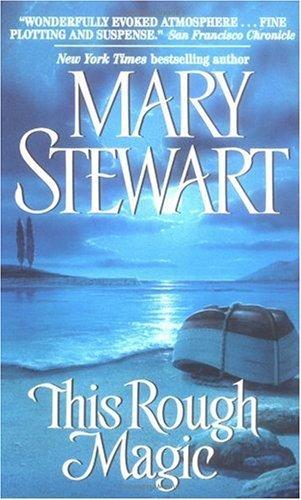
Lucy Waring is an aspiring actress on the London stage, whose latest play has just folded. So, she comes to the Greek isle of Corfu for an idyllic holiday with her sister, who happens to be married to a wealthy Roman lawyer, and owns some property on the island. But, of course, this is Mary Stewart, so the idyllic vacation is quickly swallowed up by mystery and adventure. It is almost inevitable that our intelligent and brave heroine will meet two men, both handsome, and that one will be a villain, and the other will become a villain. Can you guess which?
The book's title, of course, is from The Tempest, near the end of the play when Prospero is calling an end to his own magic-making:
But this rough magicThere are plenty of references to Shakespeare's play throughout the text. Each chapter begins with an appropriate line or two as epigraph. One of the characters staying on the island is a famous actor, Julian Gale, now living in seclusion. The last role he played was Prospero, and he believes Corfu is the "real" island of the Tempest. There is even a certain conflation with Prospero and the patron saint of the island, St. Spiridion. Many of the boys on the island are named after this saint, and the shortened version of the name, Spiro, sounds even more like Prospero. There is a rather delightful moment when a character thinks that her boyfriend has found proof that Prospero really was on the island, because they have found something that looks like a book hidden underwater, but it is actually proof of the misdeeds of the book's villain. I was a little disappointed that there was no real conclusion to this idea of Corfu being Prospero's isle, no huge connection to the world of the tempest or to the "rough magic" of the title. Stewart does bring those words in near the end, as if to justify the title:
I here abjure, and, when I have required
Some heavenly music, which even now I do,
To work mine end upon their senses that
This airy charm is for, I'll break my staff,
Bury it certain fathoms in the earth,
And deeper than did ever plummet sound
I'll drown my book.
"You've seen the other face of the enchanted isle tonight, haven't you, my poor child? It's a rough sort of magic for such as we are-a mere musician, and a couple of players."
There is also a dolphin in the book, who is mostly present to service the plot, but he gives a few moments of delight. When Lucy first sees him, she notices that someone is shooting at the dolphin with a silencer, and after scaring the dolphin away, she charges up to yell at the only person she can see nearby (who, of course, turns out to be innocent-- although Lucy stubbornly refuses to believe this for some time). Later on, the dolphin strands himself on the beach at night, and Lucy, with a little bit of help, manages to get him back into the water before he dehydrates and dies. Still later, the dolphin returns the favor, and in his turn saves Lucy. It seems a little bit unrealistic, and romantic-- but perhaps also a bit like a friendly spirit such as Ariel, helping out those who are shipwrecked on Prospero's isle.
I was a bit surprised to read on Amazon that several reviewers counted This Rough Magic as one of their favorite Mary Stewart novels, along with Nine Coaches Waiting. Perhaps it is only because I have read enough of Mary Stewart, but I found the plot rather predictable. I guessed fairly early on that the man Lucy was initially most resistant to and suspicious of would be the one she would eventually fall in love with; I suspected the villain's actions had something to do with the political turmoil in Albania, when it was mentioned, although I'm not familiar enough with this kind of illegal maneuvering to guess what the specific crime might be. I was also a little troubled by the portrayal of the natives; Stewart's portrayal of the Greeks seemed a bit racist. She stereotypes them all as delighting to serve, and when it is a matter of one man's word against another, the Greek police are inclined to believe an educated European man rather than a Corfiote boy. This Rough Magic is certainly well-written and entertaining, but I don't feel that it is on quite the same level as Stewart's best work (including the superb and rightly praised Nine Coaches Waiting).
| Title: | This Rough Magic |
|---|---|
| Author: | Mary Stewart |
| Date published: | 1964 |
| Genre: | Mystery / Romance |
| Number of pages: | 254 |