In the twelfth century, the town and Abbey of Shrewsbury are caught up in the civil war between King Stephen and Empress Maud. Stephen's advisors have told him he's gone too easy on those who oppose him, so when the town of Shrewsbury falls Stephen decides to make an example of the 94 soldiers who guarded the citadel by hanging them from the castle walls. The Abbot asks the kind, thoughtful, level-headed Cadfael to take on the grisly task of preparing the hanged men for burial and cleaning them up so that the people of the town can claim any dead kinsmen. Cadfael, with his attention to detail, notices not only that there is one more body than expected, and that one of the men was strangled rather than hung. Cadfael uses his skill and knowledge to investigate this murder and figure out why and how this unknown young man ended up with the other 94 guards.
On this page:
- (Lark - Sunday, January 30, 2011)
- (sapphire - Wednesday, July 29, 2009)
- (Lark - Saturday, February 07, 2009)
- (sapphire - Monday, August 25, 2008)
- (sapphire - Friday, July 25, 2008)
- (Lark - Saturday, March 29, 2008)
- (Lark - Wednesday, September 12, 2007)
- (sapphire - Wednesday, September 12, 2007)
- (Lark - Monday, September 10, 2007)
- (Sapo - Saturday, August 18, 2007)
- (sapphire - Friday, February 16, 2007)
- (Lark - Thursday, February 01, 2007)
- (sapphire - Monday, September 18, 2006)
- (sapphire - Wednesday, July 26, 2006)
- (sapphire - Sunday, July 16, 2006)
- (sapphire - Wednesday, March 01, 2006)
- (Lark - Saturday, January 21, 2006)
- (Lark - Sunday, October 09, 2005)
- (Lark - Wednesday, September 28, 2005)
Sunday, January 30, 2011
Wednesday, July 29, 2009
This book is composed of 4 complete books: A Carribean Mystery, A Pocket Full of Rye, The Mirror Crack'd From Side to Side, and They Do it with Mirrors. In each, Miss Marple makes her gentle, unassuming appearance and quietly solves the murders. She is such an enjoyable character, and so often underestimated. She is from a village called Mary St. Mead, and often as she meets new people she compares them with those she has known before in her 'quiet' village, and finds someone with whom they share characteristics. This usually gives her extra insight and reminders as to what humans are really capable of doing. Because she is an elderly woman, those who don't know her try to be careful of her sensibilities, but she understands better than they do how humans are complex and sometimes evil beings.
As always, with good murder mysteries, there are all sorts of false clues and important clues that are understated or ignored. Miss Marple sometimes asks questions which don't seem to make much sense, but are actually vital. In one of these cases, the final clue which convinces Miss Marple of what actually happened is one short conversation between the victim and another character. Everyone that overheard it remembers a different answer that was given, but the correct answer reveals both the murderer and the motive! A reminder of what it means to be attentive. So often we hear without actually listening, and we see without actually observing. Well-written enough that I'd read these again .. after enough time so that the details become foggy!
| Title: | Miss Marple Omnibus, Volume 2 |
|---|---|
| Author: | Agatha Christie |
| Date published: | 1997 (individual books published between 1952 and 1964) |
| Genre: | Mystery |
| Number of pages: | 654 |
| Notes: | from Amy |
sapphire
on
Wednesday, July 29, 2009
add a comment
Saturday, February 07, 2009
Perhaps the best of all of Mary Stewart's many suspenseful romance novels. Linda Martin has been living in England for the last 10 years, ever since she was orphaned. She returns to France (where she was born and spent her childhood years before her parents died) to take a job as a governess caring for the nine year old Comte de Valmy, Philippe. Her employers are Philippe's aunt and uncle: the beautiful but cold and distant Heloise, and the virile, forceful Leon-- a handsome, powerful man who was crippled in an accident years before, and since then has devoted his great, wheelchair-bound energies to running the Valmy estate. Because Linda is so set on getting back to France and away from her dismal life in England, shes conceals from her employers that she is half French and speaks the language quite well, and she tells herself it was just a silly impulse; but when things start to go wrong around her young charge, the situation begins to seems more sinister, and she wonders if her instincts were right.
There are lots of literary allusions throughout the text, and even the title is a reference to a line of poetry (where a young woman is being seduced by riches and luxury, but is hurrying "to the devil"). The allusions that are woven into the text don't seem as out of place as they might, though, because they are a part of the main character and narrator. At one point, Linda reflects to herself,
"I was sharply grateful to Daddy for making poetry a habit with me. ... Daddy had been right. Poetry was awfully good material to think with."This is part of what makes the novel work so well: Linda and Leon are both aware of the similarity of their situation to that of Jane Eyre, and Leon suggests to others that he is a fallen angel, Milton's devil.
Soon, Linda meets and then falls in love with Leon's son, Raoul. Like his father, he is dark and handsome and powerful, and can turn on his immense charm at will. The relationship between Linda and Raoul (and people's perceptions of it, the servant's gossip) plays perfectly into the plot of the book, and become part of the plots against Philippe. The most difficult thing for Linda is that, she doesn't know if she can trust the man she loves. She still loves him, and if it were only her, she would take the chance, but when she tries to look at events and the evidence she has heard objectively, she sees that it could be read either way, and she dare not risk a child's life on the impulse of her own love. How she deals with this struggle and the outcome of her decisions is believable and touching.
It occurred to me after finishing the book that all the main characters are orphans, to some extent. Linda and Philippe are obviously so: their parents are dead, and they have to be cared for by people who don't care about them (or maybe even hate them and wish them harm). But Raoul is also a kind of orphan-- his English mother died long ago, and his crazy, hurtful, megalomaniac father may be worse than no father at all.
I don't think I noticed it before, but the chapters of the book are grouped and labeled as coaches, starting with the first and working up to the ninth. As far as I can tell, each of these sections actually does have a significant "coach" or car ride: Linda's taxi ride in Paris to see the old apartment where she had lived with her parent, the silent ride from Paris out to the country and Valmy, the fateful first meeting with Raoul on the mist-covered bridge, the outing with Raoul, the nerve-wracking car chase in the dark, Linda's final meeting with Raoul on the same bridge in a scene that echoes their first encounter perfectly. This structure perfectly plays out the title and its reference to a young woman being hurried to the devil.
This is my mother's favorite of all Mary Stewart's romance novels (maybe of any of her novels); I think it is probably the first one I ever read.
| Title: | Nine Coaches Waiting |
|---|---|
| Author: | Mary Stewart |
| Date published: | 1958 |
| Genre: | Mystery/Romance |
| Number of pages: | 342 |
| Notes: | repeat reading; gift from Jane |
Monday, August 25, 2008
The next book after Gaudy Night, beginning with letters to and from various people. The story comes out that Lord Peter Wimsey and Harriet Vane get married .. rather quietly, without telling everyone. They evaded reporters in such a way that they actually had a bit of quiet (unusual for Lord Peter Wimsey). Wxcept that .. the house they go to stay in, which is in the country, happens to be the place where a man is found dead the day after they arrive. So their quiet honeymoon turns into questions and inquiries and possibilities and ponderings and murder investigations. With which, of course, they help. :)
One of the best parts of this book is the relationship between Harriet and Wimsey. They really do love each other, and it is clear throughout the story. As a married couple, it is good for them to delight in one another, and they do this quite gladly. One enjoyable chapter centers around them coming up with all the reasons and ways various people could have committed the murder, and with their intellectual capacities in full play, they come up with more than one might think. These are two people who have chosen each other, and must make adjustments because of it .. but they know they have chosen well and want to learn to love each other well and fully, without causing the other to change in ways that would be detrimental, losing themselves somehow. Worth reading again.
| Title: | Busman's Honeymoon |
|---|---|
| Author: | Dorothy Sayers |
| Date published: | 1937 |
| Genre: | Mystery |
| Series: | Lord Peter Wimsey Mysteries |
| Number of pages: | 381 |
| Notes: | borrowed from mom |
sapphire
on
Monday, August 25, 2008
add a comment
Friday, July 25, 2008
Harriet Vane decides to go back to Oxford for a reunion of sorts, even though she was on trial for murder and feels unable to face those she knew. Things turn out alright, and because she is a murder mystery writer, when strange things start to happen on campus they call her for help. They want to keep it quiet and under wraps so that the only all women's college isn't closed. But things get stranger and stranger, and Harriet eventually calls in the man who kept her from going to the gallows.
Because of various facts, a number of students are ruled out. So there are a number of tensions that arise, with people getting mad at one another and suspecting one another. Harriet is able to find a few people who have alibis (because she was with them during an event), and so is able to care for the college better. It has to be someone who is fairly well-educated, because Latin is used, and good spelling. Peter Wimsey eventually comes to save the day, and they solve the problem easily, before it comes to a horrible end. It turns out to be a woman whose husband was ruined by one of the teachers, who is trying to get revenge against the woman who ruining his life. Harriet meets Lord Saint-George, who is a nephew of Lord Peter Wimsey. He is quite amusing, knowing that he is handsome and that he can get just about anything he wants. He and Harriet become friends, and some interesting things happen between them. One of which is that Harriet and Peter have to start talking again .. and eventually, she decides that you can relate to someone both emotionally and intellectually. Well-written and intriguing, with plenty to ponder. Re-readable!
| Title: | Gaudy Night |
|---|---|
| Author: | Dorothy Sayers |
| Date published: | 1936 |
| Genre: | Mystery |
| Number of pages: | 501 |
| Notes: | borrowed from mom |
sapphire
on
Friday, July 25, 2008
add a comment
Saturday, March 29, 2008
I met him in the street called Straight.How can you not love an opening line like that? It catches my attention right away and communicates so much with so few words.
Christy Mansel is vacationing in Damascus and runs into her cousin Charles. They decide to drop in and visit on their eccentric Great Aunt Harriet, who has been living on her own in a crumbling, isolated old palace, much like the legendary Lady Hester Stanhope. Charles is detained by business, so while Christy is out on a driving tour she decides to stop by and see if they can visit later. She finds things much stranger than expected, and ends up staying the night in order to meet her aunt, who keeps strange hours. But in the morning, the river is in flood and Christy is stuck. Christy's description of Great Aunt Harriet and the whole situation strikes Charles as being "a bit off", so he does a bit of rock climbing and sneaks into the palace, and they do some exploring and investigating together. Of course, they find that things are not at all what they seem; someone has been taking advantage of this isolated spot to smuggle drugs, which is both very lucrative and very dangerous.
I was surprised to find that this book reminded me of Touch not the Cat-- cousins discovering they love each other, a climax where the lovers are stranded in the middle of an exotic location (in one instance, a hedge maze in the middle of a flood, in the other, an island in the Seraglio garden while the palace goes up in flames), and then of course there are dogs and images of dogs everywhere instead of cats.
The "Gabriel" hounds of the title are a pair of china dogs that Charles admired and nicknamed, which Harriet promised to him (he was always her favorite nephew). As it turns out, this is another variation of the hellhounds of Arawn, like those in Diana Wynne Jones' Dogsbody [read in 2006 by Lark, 2007 by Sapphire]. Harriet also has a pair of Salukis, and missing in action is her beloved terrier Samson, whom Christy and Charles think is dead until they fail to find a grave for him with Harriet's other dogs. And actually, cats figure into the story too, because Christy has an unnatural loathing and fear of cats, and her encounter with one during her interview with Lady Harriet provides Charles with another clue to what is really going on.
A completely entertaining, engaging book. Plenty of danger and adventure, and, of course, love, since Christy and Charles figure out what their family has apparently expected for years (and what the reader probably expects from the first line of the book) figure out that they belong together.
| Title: | The Gabriel Hounds |
|---|---|
| Author: | Mary Stewart |
| Date published: | 1967 |
| Genre: | Romance/Mystery/Adventure ? |
| Number of pages: | 244 |
| Notes: | repeat reading |
Wednesday, September 12, 2007
This book is rather different from most of the other Mary Stewart books I've read. A young woman visiting northern England is mistaken for a missing heiress who disappeared years ago. Con, the cousin of the missing girl convinces Mary to pretend to be the missing Annabel and come visit her father's farm-- all in order to cement the disposition of the property on Con, who has been managing the land for years. Of course, when she gets there things are much more complicated than she expected, and she becomes less and less certain that Con can be trusted, as it seems he will do anything (even commit murder) to accomplish his goals. She also discovers, seemingly by accident, that the missing Annabel had a relationship with a neighboring farmer-- they used to leave each other notes in the hollow of an old ivy tree where the road split between the two properties.
This is one of those books that intentionally tricks the reader-- and at the end, when all is revealed, you flip back through the pages and realize, yes, the evidence was all there, carefully placed, but obscured and easy to miss. In Stewart's novels, things are rarely what they seem-- but in this book that is even more so than with the others I've read. Characters in the book are often surprised at Mary-- she seems so changed from the Annabel they knew, and yet she knows and does things that fit so well. Even as the reader I found myself wondering and then second-guessing myself-- in spite of the fact that Annabel was a masterful horsewoman, and Mary Grey seems quite terrified of horses. Of course, this made it a much more interesting and exciting read.
This seemed like a darker book and a more questionable romance than I remember in other Stewart novels. Annabel, as a young woman, was having an affair with a married man who detested his wife. This forbidden love was the reason she left her home and fled to America, and now the old lover is scarred and wounded by his terrible life. It has a fairly happy resolution, but it seems bittersweet, and there is plenty of darkness and evil around, too.
| Title: | The Ivy Tree |
|---|---|
| Author: | Mary Stewart |
| Date published: | 1961 |
| Genre: | Mystery / Romance |
| Number of pages: | 320 |
| Notes: | recommended by Nancy Pearson, author of Book Lust, on her NPR radio show / podcast |
This book took me months and months. Because it's really more than one book, but rather four or five books in one. And while detective stories are enjoyable, to read too many at once is not so good for one's brain or looking over one's shoulder. Sherlock Holmes is famous for his eye for detail. He sees things many of us miss and is able to determine where they come from and what they signify. In every story, some of his reasoning is made clear to the reader, and it does not cease to amaze. Toward the end, there are some examples of Holmes even being able to follow Watson's train of thought and agree or disagree even without Watson saying anything. This is fun to read about and imagine, and although Holmes holds to it being simply scientific, I have a hard time believing something like this possible. It's at least really really unprobable.
One device that I enjoyed is the use of Watson. He is also a character, but is the narrator and chronicler and is written well enough that he could indeed be the author. Not just another character. Watson is often refering to cases that he cannot write up (because there are too many), which makes the stories he does tell seem even more real. All the details and places, people, history, weather .. combine to make Watson feel like a person instead of simply a character. And as good as Holmes is at discovering and catching criminals, it's too bad that these two people and their adventures are fictional. Ah well.
| Title: | Sherlock Holmes: The Complete Novels and Stories, Volume 1 |
|---|---|
| Author: | Sir Arthur Conan Doyle |
| Date published: | 1887 |
| Genre: | Mystery |
| Number of pages: | 1059 |
| Notes: | borrowed from Amy |
sapphire
on
Wednesday, September 12, 2007
add a comment
Monday, September 10, 2007
Bryony is a young woman from an old British family, the Ashleys, and she returns to her family home under strange circumstances, after her father dies in a suspicious hit and run. There are plenty of legends and colorful stories about the Ashley family history, but one story-- that some family members have a "gift," some kind of psychic ability-- turns out to be true, because Bryony has had a special connection with one of her cousins since she was a child, and now thinks of him as her psychic lover. The only problem is, she isn't quite sure which cousin it is; none of them quite seem to fit. Of course, there turns out to be a cousin she didn't know about, and another interesting complication to the Ashley family legends. It's been long enough since I read this book that I didn't remember right away who Bryony's love was, which made reading it more fun.
As in most Mary Stewart novels, there's plenty of intrigue and mystery. Bryony's cousins (twins who were always partners in crime as children) have started selling off heirlooms from the estate (which they will inherit) because they have a "cash flow problem," in the process corrupting the young American girl whose family is renting the estate (and who is in love with one of the twins). There's also a cryptic message from her father that she can't quite make out, and interesting connections and revelations about their family history, the family crest and motto (which is where the title comes from), drawn and combined from various sources over history. And then, near the end of the book, after the trauma of a flood and near death, the discovery of a ancient Roman mosaic (of a cat, of course) that might be enough to save the family home.
The cover image is from my copy-- an old paperback I bought somewhere with a strange design, but it plays with the idea of the family crest and the maze and the cat images that run through the book.
| Title: | Touch not the Cat |
|---|---|
| Author: | Mary Stewart |
| Date published: | 1976 |
| Genre: | Mystery / romance |
| Number of pages: | 302 |
| Notes: | repeat reading |
Saturday, August 18, 2007
If you don’t mind wending your way past erotic remarks and details on practically every page, this mystery can make a suspenseful read. Gordianus is a respectable man in Rome, enjoying semi-retirement when an old philosophy teacher comes to his door afraid and seeking his help. The events that follow lead Gordianus to make some interesting (and usually randy) new acquaintances and uncover several disturbing secrets. The book is very well-written and serves as an illuminating introduction to what the streets of Rome might have been like in the 1st century B.C.
The title ought to serve as a warning about the cloying sexual overtones that pervade the story. Everyone is thinking about sex and talking about sex. If the topics of sex and human anatomy haven’t popped up in a little while, you can be sure to see them re-introduced directly. For some readers, this can be a boon, but I found it irritatingly predictable after the first few references.
The ancient Roman setting enhances the mystery. Not only are the events themselves unexpected, but the unfamiliar Roman culture adds its own surprises.
No cultural practice is as shocking as that of slavery. The depiction here is extremely disturbing, as it must be when any group of people are systematically denied their humanity and treated as chattel – sometimes worse than livestock. There is an instance of a slave bought merely to try out poisons and times when slaves are tortured cruelly at the aloof whim of an owner. Slaves are used in sexual servitude and summarily sold if they become “damaged.” Gordianus at one point mildly expresses his opinion that slaves really should be treated decently, but doesn’t raise a fuss or even an eyebrow when he witnesses inhumane treatment. The slaves’ suffering is painful to contemplate, but the comfortable distance Gordianus and the rest of free Rome place between themselves and the reality of slavery is discomfiting. As Americans, are we guilty of the same complacency with respect to the many injustices perpetrated within our sphere of influence?
| Title: | The Venus Throw |
|---|---|
| Author: | Steven Saylor |
| Date published: | 1995 |
| Genre: | Mystery |
| Series: | Roma Sub Rosa |
| Number of pages: | 308 |
| Notes: | 4th in the series |
Friday, February 16, 2007
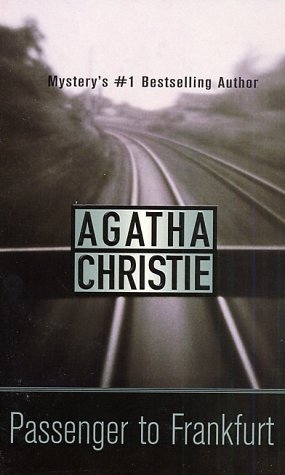
Sir Stafford Nye is a diplomat who likes to do things a bit out of the ordinary. He likes things which are interesting and challenging and a bit unacceptable. So he is chosen to join a powerful few who are seeking to discover who is behind all the chaos in the world. Students in almost every country are revolting .. being violent for the sake of violence, championing anarchy, and they have plenty of training and weapons and power. Who has provided these things? And how can they be stopped? These are the questions which must be answered if the whole world is not to be dramatically, drastically changed.
Mary Ann aka the Countess Renata Zerkowski is an agent with the British government. She travels all over the world gathering information, discovering secrets, playing roles. She brings Stafford into the mix for a variety of reasons, and together they are able to help pin down exactly who is in power, who is giving money, who the youth of many countries are following, and how they may be stopped. It's rather scary to think about this, because it seems somewhat possible. As humans we are easily tempted by those who are powerful, especially when we are promised the chance to share in their power, or in the 'better world' they are seeking to create. Story after story has been written along these lines. And stories always contain bits and pieces (or large pieces, sometimes) of truth. What stops us from such deep evil? I suppose my answer is simple: the grace of God.
Stafford has a great aunt .. Aunt Matilda. She is rather old and suffers from rheumatism and arthritis and other aches and pains, but she is remarkably astute and well connected. Many key players in this story are childhood friends, or at least people she knew 'way back when'. Stafford is continually amazed at how much she knows and what is normal for her. I appreciate this about Agatha Christie -- how so often 'old women' which the world thinks powerless as actually powerful, key characters. Miss Marple comes to mind, but I'm sure there are others. Christie values age and wisdom and common sense and understanding which comes when someone has lived well for a number of years. As well as the British modesty of Aunt Matilda, who plays it off as though it were 'all in a day's work' .. nothing to be proud of. A very enjoyable character, as well as a value (that of honoring and listening to individuals) which I appreciate.
| Title: | Passenger to Frankfurt |
|---|---|
| Author: | Agatha Christie |
| Date published: | 1970 |
| Genre: | Mystery |
| Number of pages: | 262 |
| Notes: | not a typical Christie |
sapphire
on
Friday, February 16, 2007
add a comment
Thursday, February 01, 2007
Sherlock Holmes is one of those iconic characters that everyone is familiar with-- but perhaps not so many know him very well. I thought I had read some Sherlock Holmes before, but all of these stories were new to me-- and the description of Holmes' character and personage was a little different than I expected. I suspect my mental image of Holmes has been more formed by TV versions of his character than by the original stories. In spite of my mild surprise at finding a different man than I expected, I found both the stories and the character quite engaging and interesting.
I've discovered about myself that, while I enjoy mystery stories (whether in book or video form), I dislike the death and gore that is so often associated with them (particularly in so many TV series these days)-- so the fact that Holmes' cases in this book are much more varied was a pleasant surprise. A few have to do with death, but in many other cases Holmes stops a crime before it happens, or by solving the mystery of one death prevents another. In at least one case, there was no actual crime committed-- although still a terrible, unkind act. After I finished the book, it occurred to me that at least three of the different stories (out of twelve total) had to do with fathers or step-fathers who, by death, imprisonment, or more subtle means, were doing their best to keep their daughters fortunes under their own control. They are all different cases and interesting on their own-- but the parallel struck me as interesting; perhaps because it is so much less likely to happen in our society now.
I love that Holmes cares so little for rank. He works for the high and noble, Kings and Lords, but is just as willing to work for the poor commoners-- he cares more about whether or not the case is interesting and challenging than anything else. A while back I read that the character of Gregory House on the TV show "House, M.D." was based partly on Sherlock Holmes (which I found both intriguing and explanatory as to why I liked the show so well). When I read these stories and found Holmes so much concerned that his case be "interesting" or unique (rather than any kind of payoff or importance in the eyes of the world), it resonated with the character of House. Watson also notes Holmes' arrogance and (probably pretty just) assessment of his own brilliance and skill-- sometimes even showing off what he can deduce about people's profession or means of travel by the tiny indicators on their clothing and the like-- an arrogance that is also discernible in House.
This collection includes an afterword from Fred Strebeigh excerpted from "The Greatest Detective Who Never Lived" on Holmes fans, especially American ones. What struck me as most interesting (and a little bizarre) is the insistence that Holmes be treated as and spoken about as a real, and not a fictional, person.
| Title: | The Adventures of Sherlock Holmes (Readers Digest edition) |
|---|---|
| Author: | Sir Arthur Conan Doyle |
| Date published: | 1987 |
| Genre: | Mystery Short Stories |
| Series: | Sherlock Holmes |
| Number of pages: | 270 |
Monday, September 18, 2006
Read in less than a week. Lord Peter is quite an enjoyable character. Certainly a lord with noble bearing -- but also a man who can be down to earth and enjoys using his logic, which is better than that of most men. He and his butler, Bunter, make quite the pair. One who can figure out any mystery that is set before him, and one that can do almost any practical (or impractical) task that is set before him. The butler reminds me of Jeeves, as they have many of the same qualities, as presumably did most spectacular butlers during this time period. Sayers does not make every mystery end in finding and condemning the criminal, which is quite nice -- sometimes difficult decisions must be made that will affect many. And sometimes the truth is quite unbelievable.
A couple different places in the stories, Wimsey is asked how he does it. His answer is that he observes and his brain goes on making connections and asking questions of what he saw. That things are slightly out of place - something is not right. He doesn't worry about it, but simply goes on observing and comes back to it when his brain has already figured out the answers. For instance, a pearl necklace is stolen and it must be in one of two rooms. Everyone does a thorough search and it cannot be found anywhere. Wimsey does his own search with the master of the house and finds a pin. He doesn't actually see the pearls but he sees a reflection in the floor of things that look remarkably like pearls -- and that's enough to go on. He knows where they are and how to reveal who stole them in the first place. I like the idea that our brains work overtime. It's true!! But -- perhaps mine works on different things or notices different details. And I'm very glad that some people have brains that actually work rather like Wimsey's and put them to good use to find criminals, discover cures, seek possibilities.
| Title: | The Complete Lord Peter Wimsey Stories |
|---|---|
| Author: | Dorothy L. Sayers |
| Date published: | 1972 |
| Genre: | Mystery Short Stories |
| Series: | Lord Peter |
| Number of pages: | 481 |
| Notes: | Borrowed from mom |
sapphire
on
Monday, September 18, 2006
add a comment
Wednesday, July 26, 2006
The first book in this series, which I read after the second, instead of the usual order. But still enjoyed the characters and the glimpses into Botswanan culture. Mma Ramotswe is very clever in the ways that she goes about her cases. There are a number of smaller cases which she is hired to solve, so her problem solving skills become very apparent. Also, there are pieces of Mma Ramotswe's history that are shared to give an understanding of who she is -- these were helpful for me, especially having already read another book.
One humorous section involved Mma Ramotswe thinking about her weight. That she has nothing to be ashamed of when she visits the doctor. She is built like a traditional African woman. Which means that she is strong and rather large. She has had enough food to eat, meaning she is wealthy enough to eat as well. A couple of times in the book this subject comes up and she reminds herself she should be confident and enjoy her appearance. And two men offer to marry her, so they must think she is beautiful as well. Different ideas than our current American ideal of beauty.
| Title: | The No. 1 Ladies' Detective Agency |
|---|---|
| Author: | Alexander McCall Smith |
| Date published: | 1998 |
| Genre: | Mystery |
| Series: | The No. 1 Ladies' Detective Agency |
| Number of pages: | 235 |
| Notes: |
sapphire
on
Wednesday, July 26, 2006
add a comment
Sunday, July 16, 2006
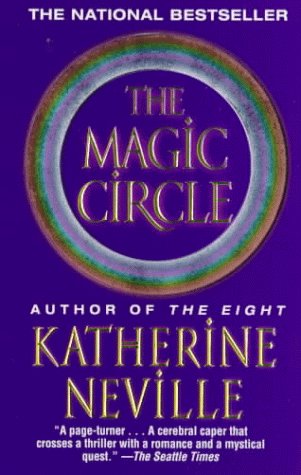
Mostly enjoyed this book. Neville's writing is wonderful, involving the reader quickly and thoroughly. Ariel Behn is thrust into an adventure she didn't want. She inherits dangerous manuscripts from her dead cousin and is sent on a number of travels to figure out what they are, why they are so important, and who wants them. She gets to discover all sorts of interesting facts and stories about her convoluted family as well. Stories she's never heard, as she finally has opportunity (and necessity) to interact with some members she never spent time with before. This main plot is the most exciting part of the novel.
Another piece comes with the title -- the magic circle. This is the idea that there are number of objects that must be together for the next millenium to come. With myths, astrology, and history, fictional conversations interspersed throughout the book tie together these ideas and what they might have looked like in the past. Several important historical figures, including Christ are represented as having had all thirteen of these objects together at pivotal moments in their lifetime. I guess it bothers me a bit because writing stories from history is so often stretching the truth -- taking pieces of truth and elaborating to a point that they are truly story with only a glimpse of truth. But humans believe stories so easily -- so if I didn't know the Jesus of the Bible, I might find some of these ideas and possibilities very enticing, but as it is, I mostly found them distracting and a bit frustrating.
| Title: | The Magic Circle |
|---|---|
| Author: | Katherine Neville |
| Date published: | 1998 |
| Genre: | Mystery / Thriller |
| Number of pages: | 552 |
| Notes: | repeat reading |
sapphire
on
Sunday, July 16, 2006
add a comment
Wednesday, March 01, 2006
Mma Ramotswe, a woman in Botswana, runs a detective agency. She is engaged to a man named Mr. J.L.B. Matekoni, who has good morals and a good heart. There are two cases that come into the agency with some interesting questions that are asked of characters and the reader. The main case is that of a woman who lost her son in Africa many years ago and wants to discover what happened. She expects nothing, but wants to search once more for the reason he disappeared and died.
The reader gets to know a comfortable woman who is self-assured, intelligent, and knows her country and its customs well. The best part about the book is how the Botswanan culture is mixed in so thoroughly with all that happens, so in reading a novel one gets to discover a bit more about another culture. A light read, with not too much substance, but enough for a good read.
| Title: | Tears of the Giraffe |
|---|---|
| Author: | Alexander McCall Smith |
| Date published: | 2000 |
| Genre: | Mystery |
| Series: | The No. 1 Ladies' Detective Agency |
| Number of pages: | 227 |
| Notes: | Repeat reading |
sapphire
on
Wednesday, March 01, 2006
add a comment
Saturday, January 21, 2006
When I first came across this book, I was mildy interested in it because it was by the author of Blue Moon Rising, which is a marvellous book. It was only later that I learned that the two title characters, Hawk & Fisher, are actually the Prince Rupert and Princess Julia from Blue Moon Rising; they have taken new names and travelled far from the Forest Kingdom, gotten married, and become Captains in the Guard of the city of Haven. It's a little interesting to see the same characters further on in their lives, and in a very different setting... and if you're familiar with the darkness and the demons they've faced before, then you're more likely to understand why they are so capable and unfazed by the horrors of Haven, a city full of corrupt politicians and drug trafficking, alongside wizards and vampires and unfair companies who use zombies to get work done during strikes.
The adventures of Hawk and Fisher are quite fascinating, and will keep you both wondering and enthralled. The first major case is a locked-door mystery with magic involved-- while Hawk & Fisher have an isolation spell to keep all the suspects within a manor house overnight, and a truth-spell to help them track down the murderer, they also have to deal with magical beings and the clever manipulation of magic that was used to accomplish the initial murder. In the second book, Hawk & Fisher are assigned to protect a political candidate for the Reform party-- and end up uncovering plenty of secrets (everyone has at least one). In the third book, Hawk & Fisher have an even stranger murder to solve-- someone has been killing the supernatural beings on the Street of Gods, and they have to figure out who quickly, before all the other beings begin a God War.
The mysteries are all tightly plotted, and the resolutions make complete sense within the world of Haven. Green's writing is not very literary, and sometimes seems a bit formulaic (his description of each new character always seems to be organized the same way, and even the volumes are structured similarly). However, he does have a wry, humorous tone which I find enjoyable.
One oddity: when they took new names, Fisher gave herself a first name, Isobel; but apparently Hawk never chose one (or, at least, we never hear about if he did).
| Title: | Swords of Haven: The Adventures of Hawk & Fisher
collects Hawk & Fisher (1990), Winner Takes All (1991), and The God Killer (1991) |
|---|---|
| Author: | Simon R. Green |
| Date published: | 1999 |
| Genre: | Fantasy / Adventure / Mystery |
| Series: | Hawk & Fisher |
| Number of pages: | 540 |
| Notes: | Repeat reading of Hawk & Fisher |
Sunday, October 09, 2005
The heroine of this Mary Stewart novel is a young war widow who returns to her childhood home (the cottage of the title) to take care of a few things for her grandmother. One of those things is a secret safe, hidden behind the plaster and the wall-paper; the contents of the safe are not rare jewels, but rather the family treasures and documents (birth, baptism, and marriage certificates, and the like). Our heroine is surprised to find that the safe has been uncovered and opened-- with a key-- and that the documents are gone. Her perplexity increases, as she and her childhood friend Davey keep running across odd stories from the neighbors and strange occurrences around the cottage which suggest someone has been around. Although there's no evidence of maliciousness or mischief, the missing papers make no sense to Kathy, because the only living family members are herself and her grandmother.
I enjoyed this book because it seemed to deviate a bit more from the usual Mary Stewart mysterious romance book. In this case, the main character is a widow, which means she isn't looking for love; there is still a romantic sub-plot here, but it is more subdued than in some of Stewart's other books. Certainly, there isn't more than one love-interest, one of whom turns out to be evil. I also enjoyed the mystery, because it is so much more personal to the character, rather than a dangerous political conspiracy or illegal smuggling. The heroine is struggling a bit with her identity-- this is brought to the fore by the play of names. Her married name is Kate Herrick, but when she returns to Rose Cottage she is once again the Kathy Welland everyone knew. Kathy's identity questions are compounded by the fact that she was born out of wedlock, never knew who her father was, and was left by her mother at a young age. So it's quite charming that the mystery touches on Kathy's own questions about her identity and roots.
Rose Cottage is an entertaining read, which doesn't take long to finish. Stewart's descriptions of rural English and Scottish countryside are pleasant, and there is enough local color in the dialogue of the characters to be both believable and entertaining. The central mystery of the plot is not a complete surprise; I guessed the main secret a while before the main characters figured things out-- but this story is different enough from the other Stewart novels I have read, and more personal in its dynamics, that it was still quite fascinating to find out how exactly the story ended. As in other novels by Mary Stewart, she doesn't give you all the details, doesn't bring everything to complete closure-- she gives enough to satisfy the reader, and finish the main story threads (or suggest where they will end), while still keeping a slight air of mystery.
| Title: | Rose Cottage |
|---|---|
| Author: | Mary Stewart |
| Date published: | 1997 |
| Genre: | Mystery / Romance |
| Number of pages: | 264 |
Wednesday, September 28, 2005
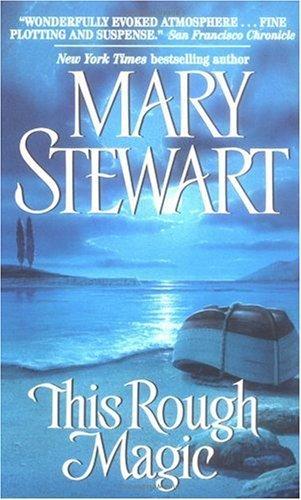
Lucy Waring is an aspiring actress on the London stage, whose latest play has just folded. So, she comes to the Greek isle of Corfu for an idyllic holiday with her sister, who happens to be married to a wealthy Roman lawyer, and owns some property on the island. But, of course, this is Mary Stewart, so the idyllic vacation is quickly swallowed up by mystery and adventure. It is almost inevitable that our intelligent and brave heroine will meet two men, both handsome, and that one will be a villain, and the other will become a villain. Can you guess which?
The book's title, of course, is from The Tempest, near the end of the play when Prospero is calling an end to his own magic-making:
But this rough magicThere are plenty of references to Shakespeare's play throughout the text. Each chapter begins with an appropriate line or two as epigraph. One of the characters staying on the island is a famous actor, Julian Gale, now living in seclusion. The last role he played was Prospero, and he believes Corfu is the "real" island of the Tempest. There is even a certain conflation with Prospero and the patron saint of the island, St. Spiridion. Many of the boys on the island are named after this saint, and the shortened version of the name, Spiro, sounds even more like Prospero. There is a rather delightful moment when a character thinks that her boyfriend has found proof that Prospero really was on the island, because they have found something that looks like a book hidden underwater, but it is actually proof of the misdeeds of the book's villain. I was a little disappointed that there was no real conclusion to this idea of Corfu being Prospero's isle, no huge connection to the world of the tempest or to the "rough magic" of the title. Stewart does bring those words in near the end, as if to justify the title:
I here abjure, and, when I have required
Some heavenly music, which even now I do,
To work mine end upon their senses that
This airy charm is for, I'll break my staff,
Bury it certain fathoms in the earth,
And deeper than did ever plummet sound
I'll drown my book.
"You've seen the other face of the enchanted isle tonight, haven't you, my poor child? It's a rough sort of magic for such as we are-a mere musician, and a couple of players."
There is also a dolphin in the book, who is mostly present to service the plot, but he gives a few moments of delight. When Lucy first sees him, she notices that someone is shooting at the dolphin with a silencer, and after scaring the dolphin away, she charges up to yell at the only person she can see nearby (who, of course, turns out to be innocent-- although Lucy stubbornly refuses to believe this for some time). Later on, the dolphin strands himself on the beach at night, and Lucy, with a little bit of help, manages to get him back into the water before he dehydrates and dies. Still later, the dolphin returns the favor, and in his turn saves Lucy. It seems a little bit unrealistic, and romantic-- but perhaps also a bit like a friendly spirit such as Ariel, helping out those who are shipwrecked on Prospero's isle.
I was a bit surprised to read on Amazon that several reviewers counted This Rough Magic as one of their favorite Mary Stewart novels, along with Nine Coaches Waiting. Perhaps it is only because I have read enough of Mary Stewart, but I found the plot rather predictable. I guessed fairly early on that the man Lucy was initially most resistant to and suspicious of would be the one she would eventually fall in love with; I suspected the villain's actions had something to do with the political turmoil in Albania, when it was mentioned, although I'm not familiar enough with this kind of illegal maneuvering to guess what the specific crime might be. I was also a little troubled by the portrayal of the natives; Stewart's portrayal of the Greeks seemed a bit racist. She stereotypes them all as delighting to serve, and when it is a matter of one man's word against another, the Greek police are inclined to believe an educated European man rather than a Corfiote boy. This Rough Magic is certainly well-written and entertaining, but I don't feel that it is on quite the same level as Stewart's best work (including the superb and rightly praised Nine Coaches Waiting).
| Title: | This Rough Magic |
|---|---|
| Author: | Mary Stewart |
| Date published: | 1964 |
| Genre: | Mystery / Romance |
| Number of pages: | 254 |