Book/page totals

Top 10 Lists

Showing posts with label religious. Show all posts

Wednesday, May 05, 2010

read full post >

I read this for church, which is a little weird to begin with (it's odd to hear sermons connected or organized based on anything other than the Good Book), and I found it so poorly written and edited that I really struggled with finding much of anything that was spiritually valuable. The basic premise is that Christians have gotten so accustomed to living in the day-to-day life of the world that we've lost sight of the larger Kingdom that we have been invited to be a part of. Tripp expresses this repeatedly by saying that we have shrunk "the size of our lives to the size of our lives", which doesn't work for me because it just seems like a nonsensical tautology. It finally occurred to me that the poor writing is, in part, due to the use of a rhetorical preaching style (which at times shifts into an almost colloquial, conversational style), so that the words on the page might actually communicate something meaningful if they were spoken aloud and accompanied by gestures and facial expressions.

Read more...

Thursday, February 14, 2008

read full post >

Wagner gathers insights and stories from Christians all over the globe, with varying but connecting experiences. Each chapter is written by a different person, with enjoyable and challenging stories. There are pratical insights, with certain steps that might be taken were a group of people desiring to undertake such spiritual warfare. Everyone makes sure that it is known spiritual warfare is not something to be done lightly, but to be prepared for as one would prepare for war.

In all the writings, there are a few themes which are agreed upon by everyone. There are spirits who have control over certain areas, and these areas might be as small as a house, or as large as a country. When large changes come over an area, these spirits have been somehow neutralized or challenged. Opinions varied on how these battles were to be fought, but they are certainly battles that the Lord fights and that He wins, not humans. The role that humans play is mostly in prayer - which, contrary to common practice, is actually Kingdom work and powerful. Especially when those praying have confessed and live God's power of sin, and are praying in unity with other believers. Prayer is often made stronger with fasting, and God's insight and wisdom can be more clearly heard.

Many Biblical examples are brought to play, such as Daniel fasting and praying until the archangel could come - some 3 weeks, and that his prayers somehow gave energy and power to the angels fighting to break through with God's message. Another example that is used is that of Jericho, where the Israelites might have felt useless but were living in obedience and power and purity - such that on the 7th day, in God's time, they had God's power to conquer. Another story tells of a YWAM group who went to a city to hand out tracts, but felt great opposition. After intense prayer, God revealed to them the spirit of pride had power of the city. In answer to this, they split up into groups and came in the opposite spirit - that of humility, praying on their knees in public places. In answer to this, people became interested and gladly received tracts and listened to the message of hope and truth they had to share. In spite of the encouragement and amazing stories in this book, it is still scary to step into something like this. I feel more prepared with information, and more sure than ever that only in God's strength and calling and power is it possible to stand up to evil.

Title:Territorial Spirits: Insights on Strategic-level Spiritual Warfare from 19 Christian leaders
Author: Edited by Peter Wagner
Date published:1991
Genre: Religious
Number of pages: 202
Notes: Recommended by Diane

Read more...

Thursday, January 24, 2008

read full post >

Quite a book. L'Engle is an articulate woman who believes in Jesus, who is an artist, who is an intellectual, who is widely read, and who is still humble. A wonderful and challenging book. L'Engle, who is both an artist and a Christian, was asked to lecture about what it means to be a Christian artist. Thoughts from that lecture went into this book, as well as many others. If I was a person who highlights in books, probably 1/3 of this book would be bright yellow .. but I'm not. So I'll just plan to read it again in the near future. L'Engle connects a variety of images and ideas -- theology, advanced mathematics, stories of herself and her family, classic literature, various branches of science -- to ponder and reflect on what the differences and distinctions are between Christian artists and secular artists, between artists and Christians, between sinners and saints and those in-between.

I'd like to think that my perspective is similar to L'Engle's, although she is much more articulate than I am. From her writing, I suspect that I want to grow up to be like her. As someone who is unafraid to face challenges and the unknown. As someone who takes time each day to BE without needing to do and to be busy all the time. As someone who can see what is usual and old in such a way that others can see the newness and beauty of it. As someone who doesn't have to write (or dance or draw) about things which are Christian because her character simply reflects it. All that said, how refreshing it is to read a solid book by a solid person .. as opposed to a good book by a person whose life I wouldn't want to imitate. Haven't yet read anything by L'Engle that I didn't enjoy and wouldn't mind reading again.

Title:Walking on Water: Reflections on Faith and Art
Author: Madeleine L'Engle
Date published:1980
Genre: Nonfiction, Creativity
Number of pages: 227
Notes: Borrowed from Lisa E.

Read more...

Thursday, July 12, 2007

read full post >

cover of The Seeking Heart

A collection of letters from the 17th century French priest. The letters are short, usually only a page or two, and always very encouraging. These are real letters written to real people (many of them women) struggling with real spiritual issues. I was amazed at how encouraging Fenelon's words were, and how many times what I read was perfectly appropriate to something I had been going through. (Although I did note in myself a tendency to more easily accept the compliments and encouragements written to others; when there was criticism, I discovered that I was more likely to think it only applied to the original recipient and not to me). Fenelon's letters are thoughtful and beautifully written, and repeatedly encourage the reader to greater simplicity and greater love of God. The book also includes an introductory overview of Fenelon's life, which I found very interesting and impressive, and made me only more intrigued by his letters.

As I read these, I jotted down particular lines or passages that spoke to me-- and I ended up filling two entire pages in the small notebook I carried with me as I read the book. There were times when I could have almost copied down entire letters.

Here are a few of the things I jotted down.

  • Do not add to the cross in your life by becoming so busy that you have no time to sit quietly before God.
  • ... the life of faith is the most penetrating of all deaths. Death is only painful to you when you resist it. ... Self-love fights with all of its strength to live.
  • It is easy to mistake a vivid imagination for true spiritual experience.
  • Agree with Him about all things - even those you cannot understand.
  • Occupy every spare second with God.
  • You will accomplish more by quietly working in the presence of God than by the restless activity that comes from your old nature.
  • It does not take much time to love God, to renew yourself in His presence and to adore Him in the depths of your heart.
  • ... you must let all these attitudes drop like rocks in water.
  • You can die to yourself in the course of everyday life-- you don't need to go out into the desert or on some high mountain to be spiritual.

And, since this is a book reading site, a book related quote (even though I don't know quite what to make of it):

It is not enough to like good books. You must be a good book yourself.

Read over several months, usually reading one entry on my morning commute.

Title:The Seeking Heart
Author:Francois de Fenelon
Date published:1992 (from letters written in late 1600s to early 1700s)
Genre:letters, religious
Number of pages:182
Notes:gift from S. Apostel

Read more...

Tuesday, November 21, 2006

read full post >

cover of The Cloister Walk

I savored this book for at least a month. Reading a chapter before bed sometimes, or a couple chapters during a slow morning. Then I got close to the end and read even more slowly because I didn't want to finish. In this book, readers are invited to join Norris during a year of her life. A year in which she spends much time at monasteries, with monks and nuns, doubting, returning to life in South Dakota, and reflecting on how liturgy, prayer, psalms, and metaphors can fit into regular life.

Norris has a wonderful way of writing, and of thinking -- she asks good questions and makes connections between people and ideas that feel true. Norris also writes humbly -- not as someone with all the answers, but someone who is seeking and who has been found and is in awe when she glimpses the Kingdom of God. In many chapters, monks (from a variety of centuries including the most recent) are set alongside regular society. What does it mean for Christians to set themselves apart from the world? What do their interactions look like when they come in contact with the world again? What does it mean to be celibate in a society where sexuality is exploited and over-emphasized? What does it mean to continue rhythms (daily, weekly, monthly, yearly, lifetime) and remember the past, when society so often longs to forget it and move on?

One set of ideas I really appreciated was those connecting artists with theology and prophecy. (By artists I mean all varieties.) Artists see the world differently, and artists who are Christian are called to share this different vision. It doesn't mean that artists are better -- but that artists often grasp different pieces of God's character and are able to make connections for others in ways that minister to the whole person. This is important to me because I consider myself an artist and sometimes find little encouragement in Christian circles. It's easy to get caught up in words and abstract ideas and forget about what it means to live practically as a Christ follower in this world. Artists and pastors and other truth-speakers have the opportunity to call us back to reality. To connect ideas with concretes and emotions and colors and the future. To take what has become mundane and remind us how amazing and incomprehensible truth actually is. I'm glad for the encouragement and understanding and exhortation Norris gives to herself and others in these pages.

Title:The Cloister Walk
Author: Kathleen Norris
Date published:1996
Genre: Religious, Nonfiction
Number of pages: 380
Notes: repeat reading

Read more...

Saturday, October 21, 2006

read full post >

The concept and main idea of this book is worth reading about -- but the writing isn't so much. Richardson includes many stories from all over the world about people groups who were prepared to receive the Gospel long ago. That in some specific way, truth found in the Bible was written into the innerworkings of their beliefs and traditions. Many people groups (these particular examples came largely from Ssia) had lost 'The Book' and were waiting for an 'older brother' or 'white man' to come and restore this book and more instructions to them. Another common belief includes a supreme God -- who for some reason had been angered by their people and left them alone. For those who believe this, they often sacrificed to other spirits to keep them from being angry - instead of blind worship. This idea -- that humans are made to worship and know God is exciting and true. Not just as individuals, but as cultures and societies God's truth is written in our very being.

One chapter was devoted to other strange practices, telling a few stories of people groups who were prepared in other ways. These stories (and some others) made the book well worth reading. One fairly well known example is that of the Chinese writing system, which uses characters. Some words are portrayed visibly (drawn or written) as combinations of others. For example, the word righteousness is formed by writing the character for 'lamb' over the character for 'I' -- which shows the truth that to be declared righteous by God, we must be under the Lamb of God. In a very different vein of preparation, a couple cultures created cities of refuge, where murder and violence were not allowed (strangely parallel to God's instructions in Numbers to the Israelites). Lastly, Native Americans are often raised to understand and remember things in fours. They often pay attention better when there are four points to a lesson and resonate with places throughout the Bible where four is a valuable number. Hebrews also enjoyed numbers and found them very symbolic, so pieces of the Bible and God's truth easily make sense culturally to Native Americans. It's good to be reminded that God is all places long before we were, that He is the one who prepares hearts, minds, societies, cultures.

But -- I don't plan to read this book again. Richardson's tone was very discouraging to me. Some individuals have a way of speaking (and/or writing) which conveys their opinion is the only right opinion. Which also conveys that anyone who disagrees is wrong (and also stupid..). Richardson also goes back to look at Christ and the apostles in the Gospels and Acts, and creates lots of fiction. He gives emotions and reasons to various characters -- which could be true, but are not actually found in the narratives. Unless the Bible specifically states an individual's reason for a certain action -- we cannot know and should not assume. At least not to prove a point as if it were Biblical. Humility is a vital characteristic of a Christ follower, and sadly, Richardson does little to evidence that he has chosen to live humbly.

Title:Eternity in their Hearts
Author: Don Richardson
Date published:1981
Genre: Religious
Series:
Number of pages: 213
Notes:

Read more...

Monday, June 26, 2006

read full post >

cover of The Screwtape Letters

This is the first time I actually finished this book. I've read the beginning before and got caught up in something else. Anyway, this is probably one of Lewis' most famous novels. The premise is that Screwtape has a young nephew, Wormwood, with whom he corresponds about life. And both of them happen to be in the service of 'Our Father Below'. Wormwood has a 'patient' who he is supposed to corrrupt and keep from joining the service of the 'Enemy' aka God. Lewis takes the opportunity to imagine what demons might reason about various things, to give a fresh perspective to the reader about sin and choices and what it means to serve God.

Wormwood and Screwtape have a few discussions about prayer. About what it means to corrupt prayer and make the prayers of this patient useless. Which raises plenty of good questions. If you are praying to someone who is not God, but simply your idea of God, does the real God still hear your prayers and answer them? Does praying simply mean thinking good thoughts? By praying, is it better to be vague and nebulous or to ask for specific things and bring up specific questions to God? Prayer is a vital part of knowing God, and so easy to get sidetracked from. Prayer can become a rote piece of the day instead of remembering that prayer is really a conversation that brings humans into the presence of the Most High God, which is not something to be taken lightly. Perhaps all the prayers that are said without real intent and focus behind them are not really said to God at all? And yet -- I know that grace is extended to each of us more often and in greater measures than we could ever deserve. So -- God must extend some grace to us in our prayers and hear us even when we are quite unsure of what we are praying or who we are praying to, as long as we are generally aimed toward Him and not from Him. Perhaps. Still in process on this...

Title:The Screwtape Letters
Author: C. S. Lewis
Date published:1941
Genre: Religious Fiction
Number of pages: 134

Read more...

Monday, February 27, 2006

read full post >

cover of The Ragamuffin Gospel

This book has been on my to read list for quite a while -- and I'm glad that I finally got an opportunity to read it. Grace grace grace. Love love love. Manning understands that the Gospel is all about God choosing to love us and extend grace to us, that we cannot deserve or earn or repay. It is lopsided and sometimes we have a hard time accepting that. But that is all we have to do -- accept that we are loved and that our souls have been bought with the blood of Jesus Christ.

Manning challenges his readers to receive the amazing love of God, to live in such a way that expresses our confidence in that love. Like a little child, we are called to believe our Father and trust Him, even if it means acting in ways that don't make sense or following different rules than the world presents us with. Manning uses stories and historical ragamuffins (like St. Francis and Teresa of Avila) to connect as much as possible that this is a life worth living.

Title:The Ragamuffin Gospel
Author:Brennan Manning
Date published:1990
Genre:Religious
Number of pages: 235
Notes:borrowed from Miriam

Read more...

Sunday, October 16, 2005

read full post >

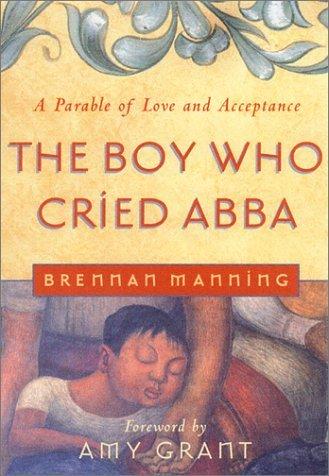
A book about a young boy who is an outcast who gets to meet Jesus and have his first friend. There is some real truth in this book, stated simply but honestly. We are all outcasts and desperately need for someone to accept us as we are, and to teach us to accept ourselves and others in that same manner. Beautiful imagery clearly showing that Christ felt our own pain as completely as we do, and He is willing to share it with us -- to love is in that manner and that completely.

Title:The Boy Who Cried Abba
Author: Brennan Manning
Date published:2001
Genre: Religious
Number of pages: 83 pages
Notes: recommended by and borrowed from miriam

Read more...

Google Search

Google