Book/page totals

Top 10 Lists

Showing posts with label connie willis. Show all posts

On this page:

Monday, August 01, 2011

read full post >

cover of Connie Willis' 'D.A.'

This fun novelette (even shorter than a novella!) takes us into the world of Theodora Baumgarten, a student at Winfrey High School where just about everyone (except her) wants to get into the fiercely competitive IASA Space Academy. The story is told from Theodora's perspective, with her wry commentary on everything that goes on; she'd wanted to do remote learning but her mother was a "nostalgia freak", and her dad went along with the idea because he wants her to be independent, and what better place to do that than in a crowd? Shortly after the story begins, there is a mandatory assembly called, and the rumor is that one of the students has been selected to for Space Academy. No one is more surprised than Theodora that it is her name the visiting admiral announces-- particularly since she didn't apply, and really doesn't want to go into space. But things happen very quickly, no one will listen to her protests that she didn't apply and doesn't want to go (mostly because none of them understand why you wouldn't want to go or be selected for something so prestigious), and she is whisked away to Space Academy where she is sent aboard the RAH (a spaceship named for Robert A. Heinlein) and launched into space before she can clear up the mistake. Fortunately, she's got a good friend on the outside, Kimkim, who can hack into just about anything; they manage to re-establish communication and work together on figuring out just what has happened.

Read more...

Sunday, July 31, 2011

read full post >

cover of Connie Willis' 'Inside Job'

Rob is a professional skeptic and debunker who edits and publishes the The Jaundiced Eye, a little publication that tries to keep up with and discredit the various scams of mediums, channelers, psychics, and the like that people are so eager to believe and pay. He is joined in his work by Kildy Ross, a beautiful and wealthy former actress who decided she didn't want to pursue the fame game (as she tells him, she didn't want to play the love interest in "Hulk IV", date Ben Affleck, or end up in rehab). Kildy takes Rob to see Ariaura, a new psychic who claims to channel Isus, an ancient priest of Atlantis; Ariaura is clearly a poor fake, speaking in thees and thous without even getting the grammar right, and Rob can't figure out why Kildy would bother bringing him; but then, in the middle of the session, something strange happens-- another voice speaks out, a gruff, skeptical voice that sounds an awful lot like H. L. Mencken.

Read more...

Sunday, March 13, 2011

read full post >

cover of Connie Willis' 'Blackout'

Set in the same world of time-traveling historians as Doomsday Book and To say Nothing of the Dog, this book follows several historians who are going to various parts of England during the second World War, in order to observe and study history as it happens. At the beginning of the book, there is a flurry of activity as students are running around Oxford trying to get in touch with Mr. Dunworthy (or avoiding him, for fear he'll change his mind and decide their trip is too dangerous), getting their props and outfits for the period and place they'll be going, memorizing or getting implants of vital knowledge they'll need to do the research they intend or to stay safe while they're there. There seems to be something going on with the time-travel lab-- assignments are getting shuffled around and re-ordered, drop dates are getting moved up-- but the characters we follow aren't privy to whatever it is that might be causing this, and for the most part are so anxious to get out on their trips that they aren't worried too much about the bigger picture. As the novel progresses, we follow three main historians: Merope, who is working as a servant in the country where London children have been evacuated; Michael, studying the heroism of ordinary people, plans to go to Dover as a reporter so he can interview the men involved in the evacuation of Dunkirk; and Polly, who is going to London to work as a shop girl so she can study the behavior of Londoners in the bomb shelters during the Blitz. Of course, for each of them, something goes wrong that changes their assignment and their time in the past.

Read more...

Saturday, February 23, 2008

read full post >

cover of Promised Land

I've read this book so many times, and I know it's not great literature, but it's such a delightful, entertaining, pleasant book that I often find myself reading it again. I guess it is my reading equivalent of comfort food (I read it in a single night once). I needed something to lighten the bleak, heaviness of Watchmen, and this is what I thought of and grabbed off the shelf. It's an entertaining story, again the "married first, fall in love second" that there are so many versions of, but with the trappings of a rough colony planet and the humorous escapades of an outsider, a "been-to" coming back from off-world and unfamiliar with the local ways.

I think the reason this book, and these kinds of stories, are so compelling is because it's a picture of unconditional love. A former pastor once said that we know perfect love not because we are capable of giving it or because we have received it, but because we know how we want to be loved. And near the end of the story, when you finally get all the details and find out how blindly and completely Sonny loves Delanna, it's a taste of that. He puts up with all the crazy things she does and the hurtful things she says, and he has no expectations from her; as soon as he sees how beautiful and educated she is he knows she doesn't belong on his primitive planet, but he still wants to show her the land and the beautiful flowers she used to love as a child. Sonny is generally so careful and thoughtful about things, but eventually we find out that he took off across the shifting, unsafe landscape in a broken solar the moment he heard Delanna was coming. He even tries to accommodate her leaving and getting money to go off planet, even though he knows it will force him and his brothers to abandon their land for ten years and go work in the mines to get by, but he never treats he never seems to think of himself when Delanna is involved.

The one thing that bugs me about this book (and I think it bothers me more every time I read it) is the last few lines. There are other things that are slightly out of character earlier in the book (like Delanna beginning to interpret and speak for the laconic Sonny when she's hardly seen him for a few hours), but for some reason I can put up with that. But at the end Sonny and Delanna suddenly forget that they are already married by the laws of the land (when they have argued about it and danced around it and avoided it for months by this time), and the only reason I can figure this happens is so the authors can get in what they think is a clever last line, but I find it disappointing and unsatisfying.

Title:Promised Land
Author:Connie Willis & Cynthia Felice
Date published:1997
Genre:Science Fiction / Romance
Number of pages:368
Notes:repeat reading

Read more...

Thursday, January 03, 2008

read full post >

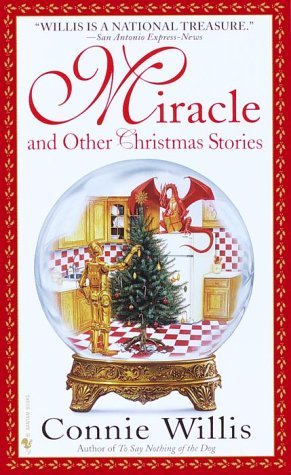
cover of Miracle

It's been a couple of years since I read Connie Willis' collection of Christmas stories, and I thought maybe it would help get me into the Christmas spirit. One of her stories ("Inn") was similar but more moving than a sermon, about finding space and time for Christ in the midst of our busy lives and welcoming him in. I finished the last story, about three new wise men and a strange second coming, right around the end of the 12 days of Christmas, at Epiphany, and that seemed completely appropriate as well. Not all of the stories are this serious; I enjoyed most of them, but the deeper ones seem to resonate especially this year. I've read and written about this before, so I think this time I'll just quote some key lines from my favorite parts.

From the introduction:

The recounting of the first Christmas (you know, the baby in the manger) has all the elements of great storytelling: drama, danger, special effects, dreams and warnings, betrayals, narrow escapes, and-- combined with the Easter story-- the happiest ending of all.

"Miracle"

"You look like you could use a little Christmas spirit."
"No thanks, I've already got one," Lauren said.

"Inn"

She regarded all this-- the girl's awkward bulkiness and the boy's beard, the fact that they had not sat down, the fact that it was the light from the adult Sunday school room that was making her see now what she hadn't before-- with some part of her mind that was still functioning ... some part of her mind that was taking in the details that proved what she had alraedy known the monet she opened the door.
"What are you doing here?" she whispered...
Poor things, she thought, leaning her cheek against the door. Poor things. So young, and so far away from home. She wondered what they made of it all. Did they think they had wandered into a palace in some strange kingdom? There's stranger yet to come, she thought, shepherds and angels and old men from the east, bearing jewelry boxes and perfume bottles. And then Cana. And Jerusalem. And Golgotha.

"The Pony"

Barbara held the tag a little away from her as if she were afraid of it. It had a Santa Claus on it. It read "To Barbara." The present was big enough to be a pony. Or something worse. Something only your subconscious knew you wanted. Something too frightening for your conscious mind to even know it wanted.

"Adaptation"

... Sir Spencer Siddon, Sir Scrawl of the new hardbacks only and the Armentières water, Sir Scrooge and his damnable secretary who had not even recognized the Spirits of Christmas, let alone heeded them, who had no desire to keep Christmas ...

"Newsletter"

"Did anything unusual happen to you over Thanksgiving? ... I flew out to my parents' for Thanksgiving, and on the flight home-- you know how people always carry on luggage taht won't fit in the overhead compartments and then try to cram it in? ... Well, nobody did that on my flight. They didn't carry on hanging bags or enormous shopping bags full of Christmas present. Some people didn't even have a carry-on. And that isn't all. Our flight was half an hour late, and the flight attendent said, 'Those of you who do not have connecting flights, please remain seated until those with connections have deplaned.' And they did." He looked at me expectantly.
"Maybe everybody was just in the Christmas spirit."
He shook his head. "All four babies on the flight slept the whole way, and the toddler behind me didn't kick the seat."
That was unusual.

"Epiphany"

Mel kicked the heater over to high, and the kid leaned forward and held his hands in front of ghe vent. There was a peace sign tattooed on the back of one of them and a fierce-looking lion on the other. Both looked like they'd been done by hand.
The kid rubbed his hands together, wincing, and Mel took another look. His hands were red with cold and between the tattoo lines there were ugly white splotches. The kid started rubbing them again.
... His hand looked even worse now that it was warming up. The sickly white splotches stood out starkly against the rest of his skin.
"There's always a battle between good and evil," Mel said. "Look at the first time He came. He hadn't been on earth a week before Herod's men were out looking for Him. They murdred every baby and two-year-old in Bethlehem, trying to kill Him."
And thirty-three years later they succeeded, Mel thought. Only killing couldn't stop Him. Nothing could stop Him.
Who had said that? The kid from the carnival, talking about the [crack in the] windshield. "Nothing can stop it. There's stuff you could do to keep it from spreading for a while, but it's still going to spread. There ain't nothing that can stop it."

Maybe next year I will remember to look at Willis' book and movie recommendations at the beginning of the Christmas season when I might have time to find and enjoy them.

Title:Miracle and Other Christmas Stories
Author:Connie Willis
Date published:1999
Genre:Science Fiction, Short Stories
Number of pages:298
Notes:repeat reading

Read more...

Wednesday, December 19, 2007

read full post >

cover of Asimov's December 2007

A delightful new Christmas novella from Connie Willis. Some aliens (inaccurately dubbed the Altairi) have landed in Colorado, but no one has been able to figure out how to communicate with them. They have such an air of disapproval ("like great aunt Judith") that the people working with them keep moving on to other projects. Which is why the narrator, a newspaper columnist who once wrote about aliens, is included in the group. Meg makes for a very amusing narrator, and she's one of the ones who finally figures out the aliens. Near the beginning of the story, the aliens have been taken to a mall to see if they respond to anything, and they suddenly sit down. Meg enlists the aid of a choir director there with middle school girls, the only one who noticed that the aliens sat down in response to a Christmas song playing in the mall, and they sat down exactly in time with the title words. Together, Meg and Mr. Ledbetter begin to puzzle out which songs the Altairi respond to and why, and finally figure out what the aliens were waiting for.

This is a delightfully humorous take on both alien invasion type of stories and Christmas stories. Early on, Mr. Ledbetter calls Meg frantic that she not let the aliens listen to any other carols, since there are all kinds of dark and dangerous verbs sprinkled through them, and they don't know what the Altairi might start doing. It's obvious that Willis is pretty well-versed in her Christmas carols and has thought about this before-- including the "Satan's power" in "God Rest Ye Merry Gentlemen" that G. loves to do in a dark sinister voice. The answer, when it comes, is perfectly logical and makes great sense-- and makes you wonder what intelligent, wise aliens would think of humanity if they came to visit (turning them into a media circus, claiming they are there to support a particular religion, everyone trying to use it for their own ends).

The first part of the story is available online, but I warn you-- if you read it, you will probably do like I did and find yourself needing to buy a copy of Asimov's so you can finish the story.

Title:All Seated on the Ground
Author:Connie Willis
Date published:2007 (in Asimov's Science Fiction December 2007 issue)
Genre:Christmas Science Fiction
Number of pages:44
Notes:

Read more...

Sunday, April 29, 2007

read full post >

cover of Doomsday Book

A story set in the future where they have the power to send people back to various points in history, using 'the net'. The net won't allow irregularities, so someone who was sick with a disease that the 'contemporaries' (aka those who lived in the past) wouldn't be able to travel to the past. And viruses etc. cannot come through the net either. Kivrin, a young college student, wants to return through the net as an historian to the middle ages (1320 or so). She takes the initiative and learns various languages so she should be able to communicate, grows long hair, learns practical skills like riding a horse and milking a cow, and does research so she'll be able to fit in (at least mostly!) with the contemps. She is sent back, and even as she is leaving things are going wrong in the present -- and within a few days a full-blown epidemic is happening. The two stories (past and present) mirror each other and reflect each other in beautiful ways.

Mr. Dunworthy is Kivrin's closest tutor. Others helped her to learn language or various skills, but Mr. Dunworthy is the one who made sure she knew what to learn, encouraged her to be wise in how she went about things, and became almost a father to her. Kivrin has a recorder imbedded in her wrists, so she can hold her hands like she is praying and record observations and thoughts without raising suspicion, and most of her words are directed to Mr. Dunworthy. When she is scared that things have gone dreadfully wrong and she may not be able to get back home it is Mr. Dunworthy that she hopes for - it is him that she trusts to keep the net open so she can return and to find her. At the same time, Mr. Dunworthy is doing everything he can to get the net open, to find out where and when she is exactly, to save her - but this is incredibly difficult with all the restrictions that have been put in place because of the epidemic. This also happens to be taking place around Christmas, so there are a couple different reflections from Mr. Dunworthy about God sending His Son to save humanity and parallels between Mr. Dunworthy and Kivrin. Without being heretical, Willis raises interesting questions.

Kivrin is sent back to 1320 but due to a variety of factors ends up in the wrong time. In 1348, when the black death hits the specific part of England where she is. Before she went she was immunized so isn't in danger of becoming infected, but everyone around her is in danger. She knows what it is and how it is transferred from person to person, so she frantically tries to care for those she has come to know and love in her short time with them -- but without medicine and knowledge that isn't available yet in the past she can only do so much. So she and father Roche (priest for the village) care for those who are sick and dying. Watch them die. Not what Kivrin signed up for -- but she cannot leave them (both because she doesn't know where the net is and because she cares for them too much), so she stays and helps bring hope to the village and family who took her in when she was sick (same virus that becomes an epidemic in her own time). Being present, since there isn't much else to do.

Colin is the great nephew of Mr. Dunworthy's good friend, Dr. Ahrens. Colin is coming up to spend the Christmas season with her, but because of the epidemic and the desire to keep it contained his train is sent back. As an adventurous and bright twelve-year old, he finds a way around it and comes searching for his great aunt. His energy and youth help bring hope into this story so full of sickness and suffering and death. He helps with anything that needs to be done (as long as it is somewhat fun) and keeps pushing Mr. Dunworthy and others to hope, to do what needs to be done even if it seems impossible. With so many serious topics and ideas in the book, it's important to be reminded of youth and possibility and adventure. That there is beauty and hope and things worth fighting for in life. Strength for today.

Title:Doomsday Book
Author: Connie Willis
Date published:1992
Genre: Historical Fiction
Number of pages: 578
Notes: Read in less than a week

Read more...

Saturday, April 28, 2007

read full post >

cover of Lincoln's Dreams

A beautiful, mesmerizing, and deeply sad book. This is my second reading, and I was astounded at how moving it was (even more than on my first reading, somehow, because I knew where it was heading), and how deeply interconnected all the themes and stories and characters are. The book is told from the perspective of Jeff Johnston,a historian who does research for a Civil War novelist, Broun. Through his old college roommate Richard, now a psychologist working at a sleep institute, Jeff meets Annie, a young woman dreaming things about the Civil War with incredible detail that she couldn't possibly know-- Lee's cat, Tom Tita, that was left at Arlington; Lee's bandaged hands; Hill's horse's legs getting shot out from under him... As they delve more into her dreams, they quickly discover that Annie is dreaming Robert E. Lee's dreams, but it takes them longer to find out the meaning and the reason for her dreams.

Jeff is immediately taken with Annie, and wants to do anything he can to help her, so he takes her with him to Fredericksburg to get her away from Richard (who has been giving her drugs without her knowledge, and has taken advantage of her, in Jeff's opinion). While there, he's doing some research for Broun's new book-- on Lincoln and his dreams before his death-- and also working on the galleys for Broun's recently completed book, The Duty Bound. There are all kinds of parallels with the characters in the book, their sense of duty, and the crazy, illogical things people do in war-time, and the present-day characters. Annie believes she is helping Lee by sharing his grief and his guilt through the dreams, and there is all kinds of language about battles and retreats, Annie's insistence on not deserting Lee (the beloved commander), and former friends (Richard & Jeff) now being on enemy sides.

The representation of Annie's dreams is masterful and makes them so believable as dreams-- they are made up of people and places that are familiar to her, yet she somehow knows they are something else at the same time. Her childhood home stands in for Lee's home at Arlington, the red-headed waitress shows up as Katie, Annie Lee's beloved friend. Richard, who had betrayed her, shows up as Longstreet, the commander who failed Lee and turned Pickett's charge into a disaster. This seems so believable to me because it seems like the way dreams work, the way we experience them-- places and people melt seemlessly into other places and people, things are familiar and strange all at once...

Eventually, Jeff figures out that the dreams are a symptom of Annie being sick, and her weak heart. Jeff later decides that the dreams were some kind of message (and there are many instances of lost messages, unreadable notes, and the like in the dreams-- which reminds me some of Willis' book Passage), to warn Annie, to save her. Annie's dreams connect back to Lincoln and the research Jeff was doing for Broun, because Broun comes to believe that Lincoln's prophetic dream of his own death was caused by his acromegaly. But because Jeff had promised not to try to stop the dreams (as Richard had done), he lets her go. At the end, Jeff reveals his understanding of what part he played in all of this (although, on the second reading, I saw a lot more hints of this revelation), and for some reason it is heart-breaking (because it so perfectly emblematic of his love for Annie, his inability to save her from death and grief); he was Annie's Traveller: the beloved, intelligent steed who was perfectly suited to Lee, who served faithfully throughout the war-- and who died of lockjaw only two years after Lee died.

Title:Lincoln's Dreams
Author:Connie Willis
Date published:1987
Genre:Science Fiction ?
Number of pages:228
Notes:Second reading; read in a single Saturday.

Read more...

Friday, December 08, 2006

read full post >

cover of To Say Nothing of the Dog

A hilarious, enteraining book that is worth re-reading every now and then. I always describe this to people as a time-travel mystery romance Victorian novel-- and that gives some idea of the originality of this book. Even though I've read it before, I still found myself chuckling and laughing out loud. And even though I know the answers to all the various little mysteries, I was still amazed at how very many clues (that I had missed before) there were scattered through the story. Part of Willis' genius is that she can use all the standard mystery clichés and turn them into something completely new. Another part of her brilliance, and the charm of this book, is the narrator's voice, including the effects of time-lag.

In the world Willis creates, time-travel is handled by the historians (in this case, at Oxford). When the corporations discovered they couldn't loot the past (because that would cause incongruities), they lost interest. However, funding is always scarce, so when a money-making proposition comes along, they take it-- little knowing the demands that will be made by Lady Schrapnell and her project to rebuild Coventy Cathedral (in Oxford), including tracking down such oddities as the Bishop's Bird Stump.

The book is narrated by Ned Henry, and at the beginning of the book he is severly time-lagged because he's been working hard doing time-travel research for Lady Schrapnell (and the deadline for the cathedral is coming quickly). According to Ned, "one of the first symptoms of time-lag is a tendency to maudlin sentimentality, like an Irishman in his cups or a Victorian poet cold-sober." Every now and then Ned will start rhapsodizing about something, and then he (or someone else) will catch himself. Having a future time-traveller experiencing the Victorian age also gives the opportunity for lots of wry commentary-- for instance, Ned's explanation that the repression in Victorian society was due to the enormous over-abundance of furniture and the great care that was required to move among it all. Every now and then Ned will mistakenly refer to something that hasn't happened yet (usually under his breath), like the Titanic, and then looks around and hopes no one was paying attention.

The other brilliant thing about this book is the portrayal of time as a chaotic system. Willis is able to give a very understandable sense of this, partly through the ongoing argument between two eccentric Oxford dons and their view of history-- whether it is shaped by individuals or natural forces (of course, chaos theory includes both). Ned and his fellow time-traveller Verity are trying to steer history to the correct course (as they know it), and don't know how much or how little effect something like a cat, or a dog might make in the grand scheme of things. Towards the end Willis gives one dizzying glimpse of the significance of the actions that take place in this story and their part in the larger chaotic system of the time continuum, but then the characters almost immediately discount it as a sketchy theory, leaving the reader to wonder.

Title:To Say Nothing of the Dog, or How We Found the Bishop's Bird Stump at Last
Author:Connie Willis
Date published:1998
Genre:Science Fiction
Number of pages:493
Notes:repeat reading

Read more...

Wednesday, January 04, 2006

read full post >

cover of To Say Nothing of the Dog

One of my favorite books ever. Willis is brilliant, writing a book with time travel, history, romance, mystery, and comedy. Ned and Verity are both time travelers from the 21st century, doing research for a big project that is taking place in their present. This research involves living in the 1940s, and they get caught up in all sorts of adventures. The book has strong connections with Jerome K. Jerome's Three Men in a Boat (To say Nothing of the Dog) as evidenced by the title, as well certain structures and characters. The Victorian Era has enough structures in place that makes for some wonderful comedy, jokes, and awkward moments, which Willis makes the most of.

At the same time Ned and Verity are traveling between past and present, the people in the present are discovering new things about 'The Net' (their method of time travel to the past), with some wonderful far reaching ideas. Nothing is as simple as originally hoped, because everything is connected. 'The Net' or time-space continuum has a mind of its own, in that it fixes problems and changes history so that the future isn't affected, but time travelers don't know what things are changing or why, or how to help the situation. In fact, they may think they are helping when really they are doing no such thing.

The Bishop's bird stump is also a main player, funny as that may sound. It is hideous. During Victorian times, certain things were 'beautiful' or at least attractive to someone with good taste... but not in the present. The idea of something so ugly having importance and affecting so many lives (for good or ill) is interesting. I'd like to think that my life is affected by beauty and light and life, but sometimes the opposite of those also has a strong impact. Lives can also be changed for the better in reaction to things which are ugly or dark or lifeless. I highly recommend this book to anyone!

Title:To Say Nothing of the Dog, or, How we found the Bishop's Bird Stump at Last
Author: Connie Willis
Date published:1998
Genre:Science Fiction
Number of pages:493
Notes: Read this out loud as a family a few years ago.

Read more...

Friday, December 30, 2005

read full post >

cover of Miracle

A collection of delightful Christmas stories from the talented Connie Willis-- some of them are heartwarming, others are creepy or a bit disturbing, but all of them will entertain you-- and the best will you leave you wondering just a bit. Willis is a big fan of Christmas, and has a great deal of respect for all the drama and power of the original Christmas story, and the stories collected here are unique and strange and wonderful.

A few of my favorite stories in this collection: the titular "Miracle", which plays out like some of Willis' other screwball romantic comedies; the wonderful story "Inn", where one choir member is the only person not too busy with Christmas to notice a strange homeless couple in the snow outside the church, and discovers that the young couple is really Joseph and a very pregnant Mary, lost (in time as well as space) on their way to Bethlehem; "Cat's Paw" presents a fascinating Christmas mystery; "Newsletter" is a humorous parody of the Christmas letters so many people send, and includes a possible invasion by aliens who are making people behave nicer than usual; and the last story, "Epiphany", is a wonderful story of three unlikely modern wise men-- a Presbyterian pastor, his atheist friend, and a former English teacher-- who are inspired to "go west", despite their own doubts and fears for their own sanity, in search of Christ, who has returned, but not in the way most would expect.

Willis also provides, as a "gift" to the reader, some recommendations-- twelve things to read, and twelve to watch. Some I'm familiar with, and some I will have to check out sometime soon. Her stories seem are gift enough, but I find it delightful that Willis wants to share with her readers some of her own favorites, and recognizes how wonderful it is to discover new authors, and how we frequently do that through the work of authors we already love.

Title:Miracle and Other Christmas Stories
Author:Connie Willis
Date published:1999
Genre:Short Story
Number of pages:298
Notes:Second reading.

Read more...

Thursday, September 22, 2005

read full post >

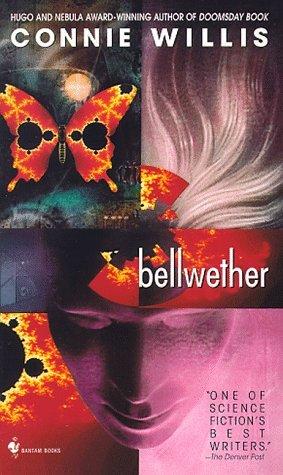
cover of Bellwether

A woman named Sandra studies fads, and she 'happens' to meet a man named Bennett who is a chaos theorist. They 'happen' to share a mail clerk / communications assistant / chaos creator who is named Flip, who 'happens' to do crazy things and think mainly of herself and not of others at all. Makes for interesting situations and attempts at explanations.

I appreciate connie willis – her unique writing and ideas. There is so much foreshadowing that just fits into the story – very fun if you can see it. Each chapter begins with a fad, and many snippets about rivers and their inexplicable beginnings, to mirror how fads and chaos are also inexplicable. Add to this 'Management' (always treated as one powerful and dumb man) and his desire to make science happen more efficiently and more managably, which makes things much more difficult all around.Sandy and Bennett happen to end up working together with sheep, and things get funnier from there. Sheep actually help them to figure out their work, as well as get many unexpected wonderful surprises. I really like this book, and would definitely read it again.

Title:Bellwether
Author: Connie Willis
Date published:1997
Genre: Science Fiction
Number of pages: 247 pages
Notes: 2nd reading

Read more...

Tuesday, September 20, 2005

read full post >

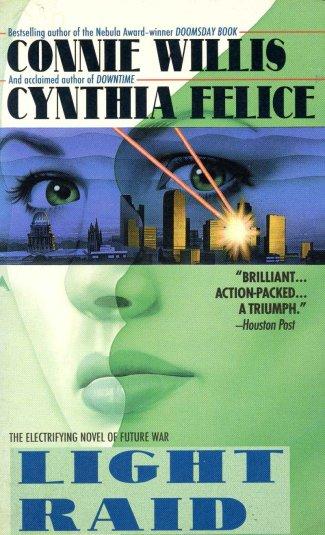
cover of Light Raid

I picked up this book to read just for some fun, light reading-- because I enjoy Connie Willis' work, and her other collaboration with Cynthia Felice that I have read (Promised Land) is an entertaining, quick read-- but it turns out, in a way, that it is [slightly] relevant to our current events, with hurricane Katrina. The main character, Ariadne, is a teenager who has been evacuated to Victoria because of the dangers of war between Quebec and the Western States-- and when I read about her fears and frustrations with being evacuated, I thought about all the people displaced by hurricane Katrina. The title comes from the main form of attack used: laser beams from satellites, which cut through anything and reduce houses to rubble (presumably based on the term "air raid", but upgraded for the future). Of course, most of the cultural relevance quickly disappears as the (of course) clever and beautiful Ariadne escapes evac and treks back home, out of concern for her parents' safety, and the novel quickly turns into something of a cloak-and-dagger story: where Ariadne is continually uncertain who she can trust, including her parents and the dashingly handsome ladies' man, Prince Miles Essex, and his "nice-looking" assistant Joss Liddell, who seems to be something more than a servant.

There's a delightful sort of Dickensian character in the early part of the book. Mrs. Ponsonsby has taken in to her home many of the poor children orphaned or evacuated because of the war. But, of course, this is only because of the money the Red Cross will pay her for taking care of the children, and she is delighted to have Ariadne (however briefly), who is old enough to take care of the babies. I don't know if it was the name or the behavior or both, but it seemed like the kind of character Dickens might create (particularly if he were writing speculative cloak-and-dagger war fiction).

One thing that bothered me a bit about this book was the slang-- some of it took me a while to figure out (they start you right in with "diping" as a verb-- to put a diaper on a baby), and some seemed a bit silly, such as "batellite", for a battle satelllite (those that cause the light raids, of course). In general, I think slang usually makes a fictional place feel more realistic and lived in-- but, when it is jarring, or just sounds like something people wouldn't actually say, it is distracting.

Also interesting was the use of Greek names. Ariadne's full name is Hellene Ariadne, her father is named Dares, and her mother is Medea. They work for a company called Hydra corp, and the powerful, intuitive supercomputer that runs behind everything at the company is called Minerva. The book suggests (although I think it never explicitly says) that the societal structure is based around companies that operate more like families, and this particular one is Hellenic.

I enjoyed reading Light Raid quite a bit. There are enough twists and turns to keep things unpredictable (although the romance is rather predictable). This is a better book than Promised Land, and makes me think that I really ought to check out some of Cynthia Felice's work sometime.

Title:Light Raid
Author:Connie Willis & Cynthia Felice
Date published:1989
Genre:Science Fiction
Number of pages:263

Read more...

Sunday, March 06, 2005

read full post >

cover of Promised Land

Promised Land is a variation on the standard plot of two people being forced to marry for some reason, and then gradually falling in love afterwards (usually because the man's unswerving and abiding love eventually wins the woman over). Just recently I've seen this plot in the TV movie "The Magic of Ordinary Days" and also in "Love Comes Softly" (based on Jeanette Oke's book of the same title). There are some fun quirks to Willis' and Felice's version of this familiar story, but I wonder if there is a draw to this basic plot itself? My pastor, in a recent series on love, claimed that none of us is capable of loving perfectly and unconditionally-- but in spite of our inability to love, we still all want to be loved perfectly, and we recognize real love when we see it. My suspicion is that this is the reason we are drawn to this familiar plot-- because, as unrealistic as it is, this story presents something that may be as close as humanly possible to the kind of love that all of us are longing for.

Despite the fact that the main plot of this book is familiar and predictable, I still enjoy it quite a bit-- as evidenced by the fact that I've read it three times now. It is a quick read, easy to breeze through and enjoy. The promised land of the title is a lanzye, or farm, named Millesflores on the colony planet Keramos, and this setting allows for some exotic scenery and fanciful creatures. In this case, the marriage is caused by planet laws relating to inheritance, and designed to keep lanzye's from being split up. The off-planet educated Delanna comes back to the back-water planet her mother hated and did her best to get her daughter away from-- and (of course) Delanna comes to see the beauty of the land and the people on this undeveloped planet. There are some points where the character development or dialogue isn't quite believable (including a line at the very end of the book-- it seems a detail the characters would be unlikely to forget). This is a bit disappointing (at times I found myself wondering which parts were written by which author-- I mean no offence to Felice, but I'm unfamiliar with her work and know a bit of Willis' brilliance); I suppose, as a reader, you put up with these inconsistencies because you know where the story is heading.

Title:Promised Land
Author:Connie Willis and Cynthia Felice
Date published:1997
Genre:Science Fiction
Number of pages:368
Notes:Third reading

Read more...

Sunday, January 09, 2005

read full post >

cover of Uncharted Territory

Connie Willis herself admits it in an interview:

"The answer to your question about Uncharted Territory is, no, you weren't supposed to have figured it out. Yes, I was trying to trick you. No, I do not intend to apologize."

I got this book partly for the sake of completeness (since I now own most of Connie Willis' books), without knowing too much about it. What comments or reviews I had come across were a bit inconsistent, but I love Connie Willis' work so much, I decided to take a chance.

Uncharted Territory is fairly short - it's probably classified as novella rather than a novel - and it is unusual (as far as I know) among Willis' work because, as she admits, to a certain extent she is trying to trick the reader. The story seems a little bit confusing at first, because you don't get all the details and things don't quite make sense-- but it helps to realize that this is intentional, and is certainly not the result of shoddy writing.

I don't want to reveal too much, because I would hate to spoil the surprise for anyone. I will say that this book has some interesting things to say about gender and attraction. And, by virtue of the way Willis tricks the reader, it may reveal some of our own assumptions, by the things we take for granted when reading a book, even when we have not explicitly been told.

Title:Uncharted Territory
Author:Connie Willis
Date published:1994
Genre:Science Fiction
Number of pages:160

Read more...

Google Search

Google