Book/page totals

Top 10 Lists

Showing posts with label spiritual. Show all posts

On this page:

Friday, April 03, 2009

read full post >

Read this in a few months. All in Romanian! 40 days .. most less than 10 pages .. ending with a one sentence truth and question. Warren contends that we are here with 5 purposes in life .. worship, fellowship, discipleship, service and evangelism. Written by an American, challenging particular ways of thinking in America, it does a good job. Americans (as well as others) are trained culturally to seek pleasure, to seek the simple way out, to care for self first. But God did not create us to do such things! He created us for Himself, and has plans for our lives that can have long-term effects, not just make us happy today.

Warren writes in a style that is a bit inflammatory, making bold statements in order to provoke questions and thinking. Not everything that he writes is perfectly true (although, honestly, there are few authors or people who speak only truth), but overall many good points are made. Warren encourages the reader to be well-balanced, not simply to choose one thing and do it well. We are made to do each of the 5 things mentioned above, and while one or two will be much more natural, the Church is called to participate in all of them.

Title:Viata Condusa de Scopuri (The Purpose Driven Life)
Author: Rick Warren
Date published:2002
Genre: Spiritual
Number of pages: 332
Notes: repeat reading

Read more...

Tuesday, August 19, 2008

read full post >

This is a book about five current missional groups: InnerChange, Servant Partners, Servants to Asia's Poor, Urban Neighbors of Hope, and Word Made Flesh. Bessenecker writes about the fact that historically, radical Christ-followers step away from the Church and to the the poor in order to call the Church back to the poor. These followers live simply, among those who are poor, making a difference in the small scale, suffering with and being present with their neighbors. He talks about how these people are radical not simply as an end, but in order to pursue Jesus. There are five different pursuits he focuses on: Jesus' descent into humanity, intimacy with Jesus, relational wealth, the Kingdom, and the edges.

Nice to read this book because I am part of one of the groups he discusses, and it's encouraging to know there are a number of us out there. And that this is not such a strange calling .. many throughout history have been similarly called to love those on the margins and to step down instead of reaching for those things the world values. Bessenecker makes these ideas accessible for the reader, without using fancy language or trying to prove his point strongly .. stories and examples from today are more than enough to do that.

Title:The New Friars
Author: Scott Bessenecker
Date published:2006
Genre: Spiritual, Nonfiction
Number of pages: 175
Notes: from t. lockie

Read more...

Thursday, May 15, 2008

read full post >

This book has an introduction, a closing, and 9 chapters in between, with each of the main chapters being specifically about one pathway toward God. These are: naturalist, sensate, traditionalist, ascetic, activist, caregiver, enthusiast, contemplative, and intellectual. How freeing to be told that we don't all need to relate to God in the same way. So often in churches, we are told one or two specific methods .. told indirectly that 'good Christians' will have their quiet time reading the Bible every morning, or other similar mandates. For some people, these are good - but for others they limit and create discomfort. Because, you see, we are all created differently! And God is gracious to relate to us in a variety of ways, so that we can best come to know Him and His love.

Many of these pathways fit with a specific denomination or branch of Christianity, and I wonder how many of the divisions in the Church have come about because of difference in the way we were created by God. As humans, it seems that we are so quick to expect others to be like us. When someone becomes a Christian, it is easier to say 'follow my example' and 'do what i do' than to say 'follow the example of Jesus' - because Jesus seems unreachable and too perfect. But Thomas uses Jesus in most if not all the pathways, because He showed us how to live each one. God is much bigger than we believe Him to be - and the ways that He can reveal Himself are also much wider than we believe them to be. This book encouraged me to know the ways that I most naturally relate to God and make sure those are part of my normal life. Other pathways and methods will happen, and are good ways to stretch myself and learn new truths -- but if I'm not making sure my soul is fed in a way that it can easily receive food and communication from my Dad, I won't have the energy to try to hear God in unfamiliar ways.

Title:Sacred Pathways
Author: Gary Thomas
Date published:2000
Genre: spiritual
Number of pages: 224
Notes: borrowed from diane, recommended by diane & lori

Read more...

Wednesday, April 16, 2008

read full post >

Actually got to hear Dawn speak at Wheaton for special services one year, so that's fun. There are four sections - four main categories of how Dawn sees the Sabbath: ceasing, resting, embracing, and feasting. Many people know that to keep the Sabbath means to not work, but there is a fullness in the day that Dawn describes. Sabbath is meant to be a gift .. to the individual, to the family, to the Church, to the world. When people can rest, be refreshed, and be reminded of what truly matters and who we are in relation to God .. the world is a better place for it. And we are better people. If lived well, Sabbath can affect not simply one day a week -- but the entire way one views time, relationships, and the way one measures value.

Dawn describes Sabbath as .. ceasing to be controlled by the expectations of the world; ceasing to live in the belief that we actually have control over our lives; ceasing the monotony of day to day existence. Whe calls Christians to rest as well .. not simply to take a nap on Sunday, but to rest as whole people -- physically, intellectually, emotionally, socially. The third section focuses on embracing, because when we say 'no' to something (aka ceasing to worry and to accomplishing) we must say 'yes' to something else: aka God's upside-down values; time and people instead of space and all that must be done; being who God has called us to be instead of who others or the world expect us to be. Finally, Dawn challenges the reader to feast on the blessings of God, that this day might really be special. It might be listening to beautiful music, going for a long walk in nature, eating particularly enjoyable food, or taking the time to really spend the day with friends and enjoy each other. Dawn find theological, Biblical reasons for all her main points. This book was a challenge to me. I want to keep the Sabbath .. not simply to have a day off, but to have a day to focus on God and who He is, to live out my belief that He is in control and not me, to have a focus on the celebration of Sabbath instead of just seeing it as another day in the week.

Title:Keeping the Sabbath Wholly
Author: Marva Dawn
Date published:1989
Genre: Spiritual, Nonfiction
Number of pages: 213
Notes: borrowed from Diane

Read more...

Saturday, April 12, 2008

read full post >

A fairly simple story with some good truth. The author becomes friends with a woman who is much older than her, named Nancy. They are both writers and find out that they both love road trips. Through travels together they become much closer, and Nancy often speaks into Mary's life. As with all good relationships, they both challenge and change one another over time. Nancy has had a pretty exciting life, and she loves getting to know people, and is able to relate with just about anybody .. little kids at church, college students, the mailman. Nancy teaches Mary three important truths over time: get your eyes off yourself, keep a positive attitude, pour your life into others. All very good things to learn .. and to keep being reminded of. A quick, positive read.

Title:Over Salad & Hot Bread
Author: Mary Jenson
Date published:2006
Genre: Nonfiction, Spiritual
Number of pages: 159
Notes: gift from Church of the Resurrection

Read more...

Friday, February 29, 2008

read full post >

A book based on Ignatian spirituality, which makes clear some important steps in discernment. Wolff defines discernment in the following way: "influenced by our values, we work with our intellect and our affectivity in order to determine, in time, our decision." The Latin verb which is the root of "discern" means "to separate, to distinguish accurately one object from another." He addresses how an individual can make a decision - with both one's head and one's heart. He also talks about how individuals who know this process and are experienced with it can also come together for group discernment, but is clear that discernment is in an altogether different category from a group decision.

One idea which was new to me is the idea of separation. There's a story about Ignatius and his companions seeking a consensus about becoming an order or not. After a number of days of prayer, they came together and each was asked to talk about if they were an outsider what they would believe. This is a challenge to do, but can be a very helpful toward objectivity. Ignatius also talked about indifference. Not in the modern usage, meaning not caring about anything - but in the sense that if one were standing at a fork in the road, one could go either way. If one want so discern about a decision, and are already drawn to one so much that any arguments or feelings toward the other would be ignored, it's not really a discernment. Wolff encourages us that we can learn how to better listen to ourselves, both our logic and our emotions, and we can also learn how to listen to God and to seek His way. In so doing, what we choose can be both what we want and what He wants.

Title:Discernment: The Art of Choosing Well
Author: Pierre Wolff
Date published:1993
Genre: Spirituality
Number of pages: 138
Notes: from Diane

Read more...

Thursday, February 28, 2008

read full post >

This book has been sitting on my bookshelf for a year or two now, and I haven't been able to bring myself to read it. Wurmbrand is a Romanian man who spent many years in jail for believing in Jesus, and this book is about those years in prison - what he experienced, what prison was like, conversations that he had - with a little bit about the years before and what happened after. I knew it would be an intense book, with stories of torture and pain. I recently picked it up, and actually read it in about three days - because the writing is that compelling. There were times i finished a chapter and put it down, sick to my stomach - but I picked it up again later that day to read about this man who truly loved Jesus.

Wurmbrand spent a total of 14 and a half years in communist prison. Most the first three years (or so) were spent in interrogation, torture, and isolation. After that, most of his time was spent in group cells of various prisons. But Wurmbrand and his wife had known this was coming, and had prepared themselves - studying the lives of others who had endured similar things, as well as asking God for strength. Throughout his time, Wurmbrand always found ways to share God's truth and love with those he came in contact with, be it other prisoners or guards or important communist officials. It has been said that prison (especially this kind of extreme, violent prison) makes beasts of some men, and saints of others. By the grace of God, Wurmbrand stayed a saint and faithful to God throughout much evil and pain.

Wurmbrand is an eloquent speaker, and able to answer questions well. Toward the end of his time in jail, the communists tried to make everyone pro-communist, with hours of propaganda lectures, statements over a sound system, and rewards for those who turned and betrayed other prisoners and their own beliefs. One Sunday they did an anti-Christian play, and then asked prisoners to talk about how wonderful it was. When they called on Wurmbrand, everyone waited to see how he would respond. He talked about how all the best parts of communism come from Christianity - reminding them that Jesus was a carpenter, a common laborer, that Jesus drove the rich moneylenders from the Temple and valued the poor, that the first Christians shared all they had as communists spoke of doing. He spoke of God's love and judgment in front of the whole prison, and they allowed him to speak. As a result, things became harder - but Wurmbrand was unafraid of speaking up. This man and his wife (who was also in a labor camp for 3 years) had souls of steel and deep faith, trusting God and standing up for what is right and good, no matter what. And bringing many other prisoners to saving faith, even in the hardest place.

Title:In God's Underground
Author: Richard Wurmbrand
Date published:1968
Genre: Spiritual, Biography
Number of pages: 268
Notes: gift from the Huggins

Read more...

Friday, September 28, 2007

read full post >

cover of The Irresistible Revolution

This man came to speak at my college while I was a student there, and incited a number of dialogues and questions. He's good at that, I think .. stirring up the way people are living in such a way that they have to ask questions and wonder and perhaps even change the way they are living. Which seems to me to be a very good thing. Claiborne's main premise is that many Christians don't actually live as followers of Christ. We may go to church and do good things periodically, but we don't actually do the things that we read about in the Bible. If Christ's words (and other words and ideas in the Bible too, of course) were taken seriously, our lives would have to change radically.

Claiborne's main ideas are conveyed through stories, most of which he has lived through himself. He spent some time in India working with Mother Teresa and getting to know some lepers. He has experienced a variety of churches and ways of doing Christianity. He lives in Philadelphia with a number of other Christ-followers, seeking to live out what it means to be a community and care for their community. He makes many of his own clothes (if not all?), doesn't settle for easy answers, and likes playing with the kids on his street. Claiborne has things to say, and is worth listening to .. not simply because they are good things, but because he is seeking to live what he talks about. To be a radical for Jesus not because it's cool or because he has to, but because it is simply what all those who follow Christ are called to.

Title:The Irresistible Revolution: Living as an Ordinary Radical
Author: Shane Claiborne
Date published:2006
Genre: Spiritual, Nonfiction
Number of pages: 358
Notes: borrowed from Diane

Read more...

Tuesday, July 24, 2007

read full post >

An Italian catholic activist is called by God to go to the desert. He joins a group called the "Little Brothers of Jesus" in north Africa and some of his thoughts and stories are collected in this book. Life is greatly simplified by his move .. with more time for prayer, for silence, for listening, for slowly traveling from one place to another, for preparing dinner over a small fire under the stars. A life which is simple .. and yet so complex. God has much to say to this man and to question about the way he had been living and what is important in life. Accomplishment, action, power, are all brought into question. Carretto was an activist and did much for God, but once God called Him to the desert it became much more about loving God and being a living example of what it looks like to love God and live the Gospel.

One of the main topics Carretto discusses is that of prayer. Learning to pray in the desert. Prayer as relationship with God. Understanding that it is God who wants us to pray, who gives us energy to pray, who blesses us as we spend time with Him. Acknowledging that as we grow closer to God, sometimes we need words much less than we just need to be present. Prayer as an exercise of love to our good Father. Challenging to read, but also very encouraging. Somehow it's nice to hear that someone who spent years in the desert seeking to love God and love those around him well still has much to learn.

Title:Letters from the Desert
Author: Carlo Carretto
Date published:1972
Genre: Spiritual
Number of pages: 132
Notes: borrowed from Diane

Read more...

Saturday, June 16, 2007

read full post >

This woman is one I had as a professor a couple times during my time at Wheaton College, and I have deep respect for her. Each of her books that I've read have been both enjoyable and challenging. This book speaks about what it might mean to be content in our day and age. Two of the phrases she uses repeatedly are 'mellowness of heart' and 'walking gently'. We are given an example of walking gently in the way McMinn writes, speaking truth in ways that can be heard without condemnation. The end of each chapter has a series of questions, which comes from the Quaker background in which she was raised, reminding the reader that if something is read it can easily be forgotten .. but if it is pondered and applied to my life the ideas will stay present much longer.

On the surface, many of the pieces of advice and ideas that McMinn shares are easy to do: finding my limits and keeping them; taking time to savor and enjoy this moment; taking care to value and work to create community; remembering. But as with so much of life, those things which are simple are not necessarily easy. McMinn comes to this topic with an acknowledgment that she still has much to learn, and is on the journey as her readers may be. At least a couple of times the idea of mentors is raised, perhaps not people who are formal mentors, but those who are older than us who live well and in doing so call us to walk as they do. This idea, of looking for traits you value in others and then imitating them, is echoed throughout creation, (like baby ducks imprinting and following whomever is in the room with them when they first hatch,) and probably for very good reasons. Having examples of humans to follow and be encouraged by can give us the strength to choose well today, as we slowly learn how to walk gently.

Title:The Contented Soul: The Art of Savoring Life
Author: Lisa Graham McMinn
Date published:2006
Genre: Nonfiction, Spiritual
Number of pages: 174
Notes:

Read more...

Sunday, May 13, 2007

read full post >

This book took me a couple of months to finish, although I read the bulk of it in a couple of weeks, a chapter many nights before I went to bed. Chittister takes the Rule of St. Benedict that guides the lives of Benedictine monks, and puts it into everyday language, seeking to apply it to the lives of Christians .. even those who are not monks and will not be. Many of the chapters begin with stories or images from her time in the monastery (since she is a nun), which helps to connect abstract ideas to daily life. And Chittister takes care that things don't remain abstract, but gives concrete examples wherever possible.

I don't like to highlight or underline in books, but I will write down quotes if the author hits a nerve or makes me verbally agree. (Yes .. sometimes I do make sounds to myself when reading..) There have been two or three books that are full of these quotable lines, and this definitely fits in the category. Whenever I sat down to read, I'd automatically grab the journal my quotes go into, because I knew I'd need it.

Each chapter is about a specific topic, ranging from prayer to humility to hospitality to stability .. all sorts of characteristics and practices which help to define Benedictines -- but also can help to define all those who follow Jesus. One recurring idea is that our definitions have been skewed. For example .. humility often is taken to mean 'someone who thinks lowly of themself' but Chittister says "humility comes from understanding my place in the universe" (p55). If someone is a gifted artist and they don't do art and don't use art to refresh their spirit, to speak to those around them, and to glorify themselves .. they aren't being humble. Understanding who I am and who God is .. that's humility. Throughout the ideas Chittister covers, one theme is that of right understanding. We are to seek to be humble, but if we don't know what that really means our seeking may be taking us further from God. We are called to obedience, but if we don't know what that honestly means, we can easily obey ourselves instead of God. Chittister powerfully reminds us of the reasons the Benedictines have been around for so long .. their focus is on God, and they work hard to stay connected as communities, to value one another, to speak and live truth with one another .. so that God may be glorified. This is a book worth reading.

Title:Wisdom Distilled from the Daily
Author: Joan Chittister
Date published:1990
Genre: Spiritual
Number of pages: 207
Notes: Part of InnerChange reading

Read more...

Monday, April 30, 2007

read full post >

Lamott's thoughts and stories and unconventional comparisons are good to read. And her writing is very enjoyable -- with just enough details and images to slip easily into place. The overture (prolog of sorts) sets up what is to follow, with Lamott saying that her faith journey has been rather haphazard and unorderly, but looking back there is a clarity in the ways God has moved. This looking back and seeing God at work is true in my own life, so hearing His presence reflected in the life of another is quite enjoyable.

One of my favorite things about Lamott is her blunt honesty. The chapter titled "Forgiveness" begins with "I went around saying for a long time that I am not one of those Christians heavily into forgiveness -- that I am one of the other kind." (p128) After living a life without forgiving, suddenly deciding to forgive others is a big struggle (even when one has practice forgiving others, it can still be a challenge!). She shares a story about a certain woman who she was able to learn to forgive. Not perfectly, and not so that they suddenly became best friends - but so that they could live at peace together. It seems like too often we hear stories about people who decided to be good or to stop a certain sin and suddenly everything was perfect. That does happen sometimes. But humans are works in progress. The amazing thing is that God loves us anyway. In spite of the fact that we can only learn grain by grain instead of spoonful by spoonful, usually. Lamott graciously invites the reader to enjoy and be encouraged both by her own humanity, and the God who loves her in the midst of it.

Title:Traveling Mercies: Some Thoughts on Faith
Author: Anne Lamott
Date published:1999
Genre: Autobiography, Spiritual
Number of pages: 272
Notes: Repeat reading

Read more...

Wednesday, February 28, 2007

read full post >

This is a book of informal essays that capture Miller’s reflections on God, Jesus, and the issues of living as a Christian in a fallen yet hopeful world. Miller dispenses with some of the more formal guidelines for good writing to establish a more conversational style. I appreciated his approach because it led to an authentic, often humorous tone, though sometimes it became a bit too casual. But the ideas and their thoughtful expression were what were most important in this book, not necessarily the quality of the prose. I was attracted to this book not so much because Donald Miller answered my questions about why the church and fellow Christians are often so disappointing to me, but because he let me know that I am not alone in my diappointments. And he did this from a standpoint of strong Christian faith and hope for God’s work in the church.

My favorite chapter title is "Church: How I go without getting angry." It resonated in my mind because for the last 2 years I have dreaded going to church, and I often come home thinking, "Can I continue to attend without being angry?" In this chapter the author talks about aspects of most churches that bother him: people who try to "sell Jesus as a product," the blind acceptance that Republicans are God’s party, and the war-talk against "liberals and homosexuals" and America-haters. These traits irk me about my current church and many Christians I know. And, since I can, I will list a few more:

-Gender stereotyping and the resulting limitation of ministry: men all love red meat, fishing, and sports; women love crafts, children, and pink, ruffly comfort.
-Self-absorbed giving and spending: it seems church budgets often go toward building even nicer sanctuaries, "life centers," offices, and private schools. Why don’t more funds flow out from the church in love toward missions and poverty-relief and health and clean water for people in need?
-Provincial, materialistic, complacent worldview: Christian faith seems to be domesticated within a wealthy, comfortable, suburban lifestyle that isn’t conducive to spiritual discipline, sacrificing any comfort for the good of others, or loving people who are different or poor or sick or needy. A preoccupation with shopping and consuming is embraced as spiritually-neutral or even beneficial to Christians.
-Utter disregard for preserving God’s marvelous creation: for most Christians, stewardship of resources, natural areas, and the earth’s ecological systems is completely unrelated to participating in Christ’s kingdom and loving others as we have been loved by God.

If a believer doesn’t buy into these parallel Christian assumptions, often that person feels left out of the faith; instead of being welcomed into the family of God, he can stand out as an outsider or foreigner. What's more, I believe earnest seekers and even long-time believers can be alienated from the church because of such cultural issues. Miller’s solution in this book, one that I’m not satisfied with, is to find a church where you fit in. He describes his own church, where he finally found like-minded Christians. I am extremely sympathetic to his decision and am tempted to do the same myself. There is a church I really like – but it’s in Seattle, 40 miles away. It seems like a cop-out, somehow, yet one more example of how the marketplace drives spirituality: I can choose the congregation that fits my needs. Does God want that? I don’t know. For now I’m staying at the church where I grit my teeth during the service and praying that God will help me to keep growing.

One of the most insightful ideas I gleaned from Blue Like Jazz was that our fallen natures can be characterized as an all-consuming addiction to self. Miller says that the world is depraved, but that "the problem is not out there; the problem is in the needy beast of a thing that lives in my chest." We should be more concerned with cleaning out our own sin closets than that of our neighbors as we follow Christ. That coincides strongly with the passage I read this morning from Elton Trueblood, that Christians should rightly view their own sin:

heed the words found in The Imitation of Christ, “Be not angry that you cannot make others as you wish them to be, since you cannot make yourself as you wish to be.” The essence of pietism, by contrast, is the limitation of primary interest to personal salvation. Even today, by the highways, we can see signs paid for by somebody, which urge us to “get right with God.” The evil of this well-intentioned effort lies not in what it says, but in what it so evidently omits. The assumption is that salvation is nothing more than a private transaction between the individual and God and that it can become an accomplished, dated event.

The truth is that we are continually in need of God’s forgiveness and redemption; too often we behave as if we’re planted firmly on God’s side and criticize those on the other side of the fence, neglecting to tend to our own festering sin and complacence. (So I should take back all that stuff I said about church earlier?)

There is also an excellent chapter about how to better love other people, as well as many moving stories, funny anecdotes, and thoughtful reflections on Christ’s work in our human lives. It’s a book I could discuss at length with friends; a book whose ideas will come back to me for several years; a book about what I most care about.

Title:Blue Like Jazz
Author:Donald Miller
Date published:2003
Genre:Spiritual Non-fiction
Number of pages:242

Read more...

Sunday, November 19, 2006

read full post >

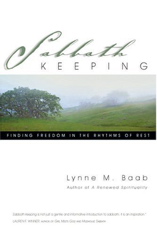
This is a slim volume that contains gentle and persistent encouragement to keep a sabbath one day a week apart from the other six days. The spirit of gentleness is evident in the absence of guilt, obligation, or to-do lists in relation to the sabbath. For those trying to rest on their sabbath, Baab devotes a couple of chapters full of details and ideas about what to cease from doing, what to do, and how to approach the day. But she writes with “fear and trembling,” saying,

“if they create in you a sense of obligation, I will have defeated the very purpose of the sabbath. If the various possibilities—worship services, candles, festive meals, prayers, walks, special games and so on—become one more way to be successful or productive, one more burden to carry, then the spirit of the sabbath will be violated.”

Baab has been thinking about the sabbath for decades. It was surprising to learn that some of her friends were hostile to her idea that Christians would benefit from keeping a sabbath, describing it as legalistic. For this reason, she spends much time justifying the practice, asserting that God’s grace to us overflows abundantly and allows us to rest in the conviction that he loves us simply as his good creation (and in His image!). It is a very helpful and accessible book that strives to help others “find freedom in the rhythms of rest.”

Title:Sabbath Keeping
Author:Lynne M. Baab
Date published:2005
Number of pages:130
Notes:Recommended by Intervarsity staff person

Read more...

Thursday, September 21, 2006

read full post >

cover of The Great Divorce

Another Lewis classic. The story of a dream. A man who finds himself in a grey dreary town (between the sunset and full night), waiting for a bus. This bus will take them to the other place (heaven) for a visit. And if they'd like, they can stay. Our narrator interacts with many characters and also observes other interactions which give insight into this place and the people who exist there. Lewis makes it very clear this is not what heaven is really like, but simply some ideas to affect the way we live now.

One phrase which rings throughout the book is that hell and those who live there are 'so nearly nothing.' The people have become the worst parts of themselves and lost all good (or almost all in some cases). The narrator has a hard time understanding this, so his Teacher, or companion, in heaven tries to show that good must in the end overcome evil. That evil cannot be larger than good. That good is much better at being fully good than evil -- so heaven must be incomparably bigger. Nobody from heaven could go into hell even if they wanted to because it is too small. A tiny crack in the ground.

One idea that keeps returning to the forefront of my understanding of what it means to be a Christ-follower is that of naming. God names us -- He calls out the true person. By choosing to follow Him and be obedient to Him, I do not become less myself -- but somehow more myself. I become more solid, more real, deeper. Not because of anything that I am doing, but because God is all the time changing me to be more like Himself -- and more like the person He created me to be. For instance, one woman our narrator observes finds all her value in 'caring for' (aka controlling) someone else. She cannot believe that she or this person she wants to 'care for' have any value simply because of who they are or who they were made to be. she wants to earn her worth. It's not possible. One heaven dweller says 'everything is here for the asking and nothing can be bought.' (p28)

Lewis has such a way of putting large ideas into comprehensible ideas, that his works are entertaining to read but also dredge up questions long forgotten or never asked. It's easy to get caught up in the daily tasks of life and enjoying the present moment (or surviving it, perhaps). But life can be so much more than that - living today in light of what has happened and what is to come. Not just events of yesterday, but the Event -- God coming in the form of a man to save humanity and bring us back into right relationship with Him. When the fact of God's love is allowed to affect each day (and parts of each day, as it becomes more natural), the simple tasks of today are seen to have eternal affect. Which is intimidating and frustrating and exciting.

Title:The Great Divorce
Author:C.S. Lewis
Date published:1946
Genre:Fiction
Number of pages:146
Notes:repeat reading

Read more...

Monday, May 01, 2006

read full post >

cover of Catch Your Breath

Read this book during the contemplative current. Read it slowly, practicing the suggestions at the end of each chapter for a week or two -- because Sabbath is not just something that you read about, but something that must be done and practiced and set aside because if not it gets forgotten, ignored, and compartmentalized. I am glad to be part of an organization that makes a point to carve out time for Sabbath.

Sabbath as -- mindfulness, rest, refreshment, receptivity, release, refocusing. So often Sunday is just a day to do all the tasks there aren't time for during the week. But -- God meant it to be much more. We are called to take time to enjoy Him. To look forward and backward. To remember what God has done. To do different activities. To have a different pace of life. To let that one day affect all our other days. This book was a challenge to me, because I do not value Sabbath as much as I could or would like to. This is an area I can grow in and hope I continue to grow in. That my definition of rest, release, Sabbath (etc.) would become deeper.

Title:Catch Your Breath: God's Invitation to Sabbath Rest
Author:Don Postema
Date published:1997
Genre: Spiritual
Number of pages: 88
Notes: Read with LA team

Read more...

Friday, April 21, 2006

read full post >

cover of Sleeping with Bread

A simple book. With one main idea that is explained in various ways for various situations. The idea is 'The Examen', which is originally from St. Ignatius of Loyola. The process of asking two questions each night (or day, week, life, meeting..) -- For what today am I most grateful? For what today am I least grateful. There are other ways to ask similar questions which get at the same main ideas.

Christians have the pleasure of God living inside of them. Which means that by listening to our own lives and their experiences, we can hear the voice of God. Especially by listening for our consolations and our desolations. Desolations make one sad, angry, frustrated, or drained of life, while consolations make one loved, happy, satisfied, full of life. God longs for us to become more like Jesus and to have our lives filled with giving and receiving love.

Sometimes the things we are doing are not bad, but the way that we are doing them is. By doing the examen, one might realize that it is good to eat a nice dinner, but not to eat it in front of the tv. That dinner can be a time to enjoy friends or family. In listening to our experiences, the things we enjoy doing will become more apparent. Not simply the things we should do, but what we were made to do!

Title:Sleeping with Bread: Holding what gives you life
Author:Dennis, Sheila, and Matthew Linn
Date published:1995
Genre: Spirituality
Number of pages: 64
Notes: recommended by and borrowed from Jude

Read more...

Sunday, April 16, 2006

read full post >

cover of Reliving the Passion

A devotional reading for the Lenten season. Short sections (2-3 pages) with daily readings for Monday-Saturday throughout Lent, based on the events leading up to the Crucifixion using scripture from the Gospel of Mark. I found the readings interesting & often quite insightful. Wangerin's approach makes it easy to personalize the events leading up to the cross, to imagine yourself in the position of some of the characters around Christ, and to re-engage with the story, even if it is already quite familiar.

I was never that impressed with Wangerin's much-acclaimed Book of the Dun Cow, and haven't read much else of his work; of course the often-cited, (sometimes too often-read) short piece "Ragman" is quite good, but I've never been very moved by any of his other work enough to seek out more of his writing. So, I was pleasantly surprised by this devotional. It's thoughtful & easy to engage with; the entries are short enough that it isn't a huge commitment to read them (and if you should happen to fall behind in your reading, it's not impossible to catch up again-- not that I would know anything about that). Each entry starts with scripture, continues with some kind of meditation or approach to that part of the story, and ends with either a kind of prayer, or words from Christ to the reader.

Title:Reliving the Passion: Meditations on the Suffering, Death, and Resurrecditon of Jesus as Recorded in Mark
Author:Walter Wangerin Jr.
Date published:1992
Genre:Devotional
Number of pages:156

Read more...

Wednesday, March 15, 2006

read full post >

cover of A New Kind of Christian

Been wanting to read this for a while, and so it was nice to finally read it. McLaren takes ideas and some situations and characters from his own life, fictionalizes them, and then tells a story that is basically about ideas. Modern worldview is normal for us, and we need to realize that it is not the only right view, but simply the one that is most comfortable and known. Lots of challenging ideas (many of which I have already heard in some context or other) that were connected to each other so they make more sense.

Some interesting thoughts about what postmodern Christianity might look like -- more emphasis on story, liturgy, ritual, the arts, community, mission. One idea is that the postmodern church will look like a triangle, with points & energy going in three directions -- community, spirituality, and mission. That seems like a healthy church. Exciting to think about the ways I am already seeing this and ways I am participating in some communities where these are some of the values. Change is coming. And it will be exciting to see what God's going to do to intersect this new culture. He is present and working. Change may be hard, but it is necessary and will help us as individuals and communities to relate to God on a new, different level. Well worth reading, this book is.

Title:A New Kind of Christian
Author: Brian D. McLaren
Date published:2001
Genre:Spiritual Nonfiction??
Number of pages: 164
Notes: Got to hear the author speak earlier this year!

Read more...

Monday, December 19, 2005

read full post >

cover of Soul Survivor

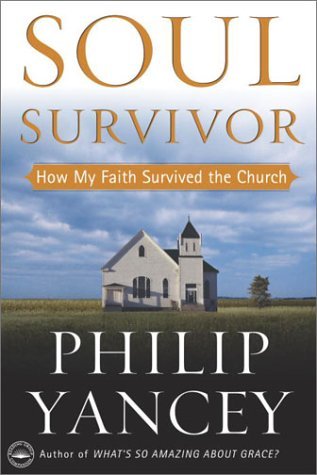
This book deals somewhat with Yancey's own wounding by the church, and most of the pages are dedicated to the people that Yancey believes helped him to survive, and even thrive, as a Christian. In each case, he provides biographical data, and his own interactions with these people-- whether he has met them (which he has, in many cases), or how their writing or work have affected him. It is a book that takes a while to read, because there is so much to digest and take in, but it is well worth the time.

The book is made up of 13 chapters, and each one focusses on a different person (or people, in the case of Tolstoy & Dostoevsky, who are paired together). Each person provides different kinds of lessons and encouragement.

  • Martin Luther King, Jr. - the courage to make moral choices, despite being a flawed person
  • G. K. Chesterton - the joyous, energetic outlook of the prolific journalist and author
  • Dr. Paul Brand - a physician who studied pain and made great progress working with leprosy patients
  • Dr. Robert Coles - an insightful psychologist who studied the poor and downtrodden, among others
  • Leo Tolstoy and Feodor Dostoevsky - two Russian authors who understood the human psyche and could portray it so well, and who grasped different parts of the gospel; Tolstoy understood the call to perfection in spite of human flawedness, while Dostoevsky understood grace.
  • Mahatma Ghandhi - one man who accomplished amazing things, often more than armies could do; while not a believer, Ghandhi adopted principles from the life of Jesus, and lived more like him than most believers did.
  • Dr. C. Everett Koop - a Surgeon General who did his best at his job, remained upright in a corrupt political world, and alienated many because of the stands he took
  • John Donne - the poet and pastor who dealt with death and faith honestly in the meditations he wrote when he thought he was dying
  • Annie Dillard - the contemporary author who observes the things around her so carefully, and can see such horror and splendor in the world of nature.
  • Frederick Buechner - the author who wrote sermons and theological works that read more like novels and memoirs
  • Shusako Endo - the Japanese author who experienced alienation in so many ways, and instead of the martyrs and heroes of the faith, identified more with the Japanese Christians who renounced their faith in order to survive
  • Henri Nouwen - the priest and professor who gave up worldly success in exchange for "downard mobility" and "inward mobility", choosing poverty and life in a community of the kind of people society does not value

Many of the people Yancey writes about are authors, so the topic of writing and what it means to be a writer comes up more than once, in interesting ways and with different insights. At the end of each chapter, Yancey also provides suggestions for books to read as a starting point to find out more about each of these amazing people.

Title:Soul Survivor: How My Faith Survived the Church
Author:Philip Yancey
Date published:2001
Genre:Spiritual Biography
Number of pages:336
Notes:Read over a couple of months.

Read more...

Google Search

Google