Book/page totals

Top 10 Lists

Wednesday, November 29, 2006

read full post >

This book fits the Crichton I know .. a thriller, a mystery, an adventure, a visit to some unknown place, and a bit of psychology thrown in, of course. A high-tech (extremely so) company is on the search for a certain type of diamond that would revolutionize the computer industry. A few other companies (& countries) are also on the search for these diamonds. They are somewhere in the Congo .. but to find them and to get out alive .. that's the challenge.

One interesting theme Crichton brings up is that of time. The book is written with a chapter for each of 13 days, minus the prologue and epilogue. The company that is seeking diamonds has only days to find them. A comment is made that in the past, people had months to find information and make decisions -- now they are made in a week, and in the near future huge business decisions will be made in a day. This need for speed drives two main characters to do dangerous things, which of course bring all sorts of new factors and challenges into the story. And the Congo is a place that seems outside of time .. with pieces of history that are actually reality in the present and things that should be gone which are alive.

Another idea I enjoyed is a gorilla who has learned sign language. She and her trainer go with the expedition to the congo (for various reasons), and are important to their survival (of course). Amy has the largest vocabulary for a gorilla on record. But she is still a primate. Very sensitive to emotions and able to read people much better than most humans. This means that she knows which people are trustworthy and when they are lying. But in all her interactions with humans (to learn sign language and as they studied her), she's also picked up interesting habits -- like smoking as a reward, going to the drive-in, and wearing lipstick. I firmly believe that humans are different than all other animals -- but that doesn't mean animals can't do amazing things and have real personalities. Or surprise us now and again.

Title:Congo
Author: Michael Crichton
Date published:1980
Genre: fiction
Number of pages: 313

Read more...

Sunday, November 26, 2006

read full post >

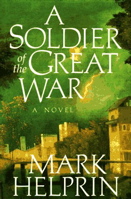
The exquisite use of language and enthralling storytelling in this book left me slightly stunned. In describing the experiences of a young Italian soldier, Helprin includes uncanny details and provides a very close encounter with the sights, smells, tastes, and sounds of his character’s world. Alessandro’s matter-of-fact courage and his yearning for his family are very moving.

Alessandro is Italian, in his mid-twenties when he enters the armed forces during World War I. His four-year tenure is astounding, partly because he is at once an ordinary and a very gifted person. Alessandro takes improbable risks, and while he is not able to avoid misfortune, he does escape death. The book follows him from his duty as a part of an elite guard unit, then as a deserter, a death-row inmate, then again a fighter, and later a prisoner of war. The scope and depth of knowledge displayed is remarkable: mountaineering, rock-climbing, horse-riding, weaponry, geography and topography, painting, music, and military procedures.

This book is about war, and so there is a lot of blood and a lot of death, often in cruelty. There were moments when my heart seemed to stop with the significance of an event. But there were also times when I found myself laughing out loud at Alessandro's gutsy impudence. Alessandro's faithfulness to beauty and his hope of reunion with his loved ones allow him (and the reader) to surface through the horror. Though the war seems to him meaningless, he suffers without relinquishing his joy in family, God, art, humor, and the beauty of nature. An amazing book.

Title:A Soldier of the Great War
Author:Mark Helprin
Date published:1991
Number of pages:792

Read more...

Saturday, November 25, 2006

read full post >

cover of Fool's Run

This is a mysterious, moving, and haunting work, and the first science fiction by Patricia McKillip that I've read (she's only written a couple, as far as I know). As in other McKillip works, there is a beauty and a power to her language, although here her tone and imagery seems perfectly suited to the futuristic setting. The story begins and ends with the likely-insane prisoner Terra Viridian, who has been sent to the space prison orbiting Earth, known as Underworld. All the other characters and threads of the story eventually get connected to Viridian and the unearthly vision that made her kill over a thousand people and made her crazy.

McKillip's futuristic is different and believable; it makes sense without an overwhelming amount of detail. For instance, the Suncoast Sector is immediately recognizable. Music also plays a large role in the story, and the futuristic musical instruments are referred to just enough to give hints of what they might be (for instance the "cubes," which are some kind of strange percussion instrument akin to drums). The music is also still connected to the past by way of the ancient instruments pianos and guitars that bar owner and music afficionado Sidney Halleck collects and the ancient music, such as Bach, that the Magician plays.

The book is full of interesting, fascinating characters, all with their own stories and problems. A psychologist comes to Underworld to run an experiment on Terra Viridian; they hook up a computer to her brain and train it on her thoughts so that they can see the images she sees, but even then they can't make any sense of it. The Magician's band gets invited to give a performance for the prisoners at Underworld, and unbeknownst to them they bring along Terra's twin sister (who has been in hiding for years), and the guard Aaron whose wife was murdered by Terra and has been trying to track her sister down for years.

The fool's run of the title is a poker hand: "Ten, Jack, Queen, King, Ace of Hearts, and the two wild cards, the jokers, the jesters", but it's also the foolish race through space that the Magician makes from Underworld in his ship, the Flying Wail-- he knows he won't be able to get away, and has no weapons to protect himself, but it gives him and Terra Viridian enough time to communicate some part of the vision that made Terra crazy.

There are hints early on that the Magician is psychic-- he knows things about peole he shouldn't, and claims that he heard it in the intonation of their voices. When he meets Terra at Underworld (almost by chance), he sees her vision-- and during the fool's run of a chase, he is able to share enough of it to Aaron and the head of Underworld. Terra is a psychic who has somehow been caught up in the compelling, beautiful, foreign vision of some immense alien creature far away as it goes through its harsh life cycle, and this was what caused her apparent insanity and why she killed all those people. It's a beautiful, strange vision, and even the other people who only experience it second-hand are clearly haunted by it.

Very poetic; even the prison, Underworld, and the Magician's flight from it, becomes a version of the Orpheus myth. Beautiful descriptions of music, as in many of McKillip's fantasy works. Sidney Halleck, the lover of antique music, says:

I don't believe anything is ever really lost. Not a note of it. I think we dwell among the echoes of all the music ever played just as surely as we dwell among our ghosts. No instrument is ever obsolute; someone is always born to play it. You play music hundreds of years older than you are; it lingered for that long in the air, beyond all the noises of the world, until you heard a fragment of it, between noise and noise, an intimation of its existence. Then came the quest for it. The hunger.

Title:Fool's Run
Author:Patricia McKillip
Date published:1987
Genre:Science Fiction
Number of pages:221

Read more...

Tuesday, November 21, 2006

read full post >

cover of The Cloister Walk

I savored this book for at least a month. Reading a chapter before bed sometimes, or a couple chapters during a slow morning. Then I got close to the end and read even more slowly because I didn't want to finish. In this book, readers are invited to join Norris during a year of her life. A year in which she spends much time at monasteries, with monks and nuns, doubting, returning to life in South Dakota, and reflecting on how liturgy, prayer, psalms, and metaphors can fit into regular life.

Norris has a wonderful way of writing, and of thinking -- she asks good questions and makes connections between people and ideas that feel true. Norris also writes humbly -- not as someone with all the answers, but someone who is seeking and who has been found and is in awe when she glimpses the Kingdom of God. In many chapters, monks (from a variety of centuries including the most recent) are set alongside regular society. What does it mean for Christians to set themselves apart from the world? What do their interactions look like when they come in contact with the world again? What does it mean to be celibate in a society where sexuality is exploited and over-emphasized? What does it mean to continue rhythms (daily, weekly, monthly, yearly, lifetime) and remember the past, when society so often longs to forget it and move on?

One set of ideas I really appreciated was those connecting artists with theology and prophecy. (By artists I mean all varieties.) Artists see the world differently, and artists who are Christian are called to share this different vision. It doesn't mean that artists are better -- but that artists often grasp different pieces of God's character and are able to make connections for others in ways that minister to the whole person. This is important to me because I consider myself an artist and sometimes find little encouragement in Christian circles. It's easy to get caught up in words and abstract ideas and forget about what it means to live practically as a Christ follower in this world. Artists and pastors and other truth-speakers have the opportunity to call us back to reality. To connect ideas with concretes and emotions and colors and the future. To take what has become mundane and remind us how amazing and incomprehensible truth actually is. I'm glad for the encouragement and understanding and exhortation Norris gives to herself and others in these pages.

Title:The Cloister Walk
Author: Kathleen Norris
Date published:1996
Genre: Religious, Nonfiction
Number of pages: 380
Notes: repeat reading

Read more...

Monday, November 20, 2006

read full post >

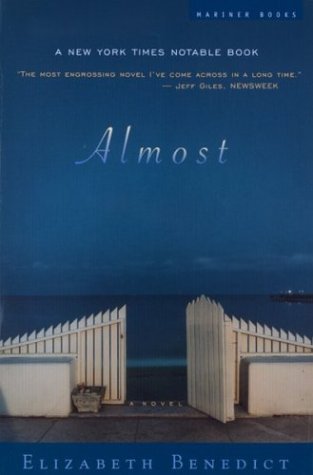
A fairly interesting story without too much thinking required. Sophy recently left her husband of 10 years to live in New York City. She gets involved with a man and his four children, when interrupted by the death of her husband. She abruptly leaves to return to the island they lived on and sort out both his life and her own. Sophy deals with questions of what it means to be a woman & a mother, what she needs to write about, where her hope comes from, who her friends are.

Sphy's husband was in the CIA, which adds an interesting element to the story. When he is discovered dead, he's been there for about three weeks, so there is little which can be determined about how he died. When his son died he almost committed suicide, so many wonder if Sophy's leaving caused his death. Sophy wants to find clues to his death -- to see if he left messages for her, for his two daughters, and his ex-wife. But at one point she realizes that she needs to stop investigating and just let herself grieve.

I was disappointed with this book. Didn't seem to have much to say. Started with some inflammatory remarks about sex to get your attention, but they didn't really pertain to the story. In some sense - but not worth being the first thing mentioned. Various individuals are seen as 'shallow' or 'deep', but most of them fall into the shallow category. Everyone is hiding something, trying to cover certain parts of their life so others (including family) won't see. That doesn't work well -- and when it does, life can be pretty empty and scary because there's nowhere to be yourself. Toward the end sophy is perhaps discovering room to be herself and deal with her own pain and acknowledge her past, but there doesn't seem to be much hope for the future. Or even that much hope for today.

Title:Almost
Author: Elizabeth Benedict
Date published:2001
Genre: Fiction
Number of pages: 258
Notes: Read in less than 24 hours

Read more...

Sunday, November 19, 2006

read full post >

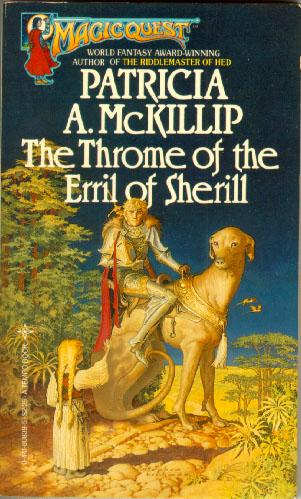
cover of The Throme of the Erril of Sherill

I've read most of McKillip's more recent books (pretty much everything I could get my hands on), so I've started to look for some of her older works. This one is only McKillip's second published book, and it's a little strange in some ways-- but it also has the fairy tale feel that so many of her books do. The story centers on the Cnite Caerles, who loves the King's Damsen (his daughter) and asks for her hand in marriage. But the King is pining away for the great Throme of the Erril of Sherill and demands that Caerles quest to find the Throme before he can marry Damsen. However, this is an impossible task (as everyone else tells Caerles), because the Throme doesn't exist. However, Caerles loves Damsen and sets out to find the Throme-- even if it doesn't exist, he intends to find it-- and this leads him on an interesting journey.

Caerles meets all manner of interesting people and creatures on his quest, and gradually trades or gives away (all for honorable reasons) all the trappings of a Cnite (his horse, shield, sword, and even his boots) so that by the end of his journey, he no longer even looks like one. Everyone he meets tells him that the Throme does not exist-- but each sends him to a completely different place to look, such as the Floral Wold at the end of the world, or the Dolorous House of the Doleman. Finally, he meets a country woman who gives him some sensible advice-- he must write the Throme himself. He is able to do this, but only because of the experience of the Quest. In fact, his throme is so wonderful that the King is convinced that Caerles succeeded-- but Caerles is unwilling to win his Damsen by a lie, and tells the truth. The King demands that Damsen refuse to marry him, but after seeing what he has gone through for her and laughing at him, barefoot in his leaf cloak with a starry staff and riding a fire-breathing hound, she finally stands up to her father and chooses to live with her love.

The names and language in this book are a little strange, which suits the kind of story McKillip tells, although sometimes it is more jarring than magical. Caerles come across a "dagon," a huge hound with violet eyes and fiery breath that is large enough to ride like a horse, and falls into a Borebel pit, and falls asleep in a norange grove. Even the names of the people that Caerles meets, such as the Earl Merle, seem more like they belong in a Dr. Seuss book than in a McKillip fairy tale.

An enjoyable little tale, and a quick read, with entertaining, musical language. Also shows some hints of the magic and depth of McKillip's later works (Caerles reminds me in some ways of Cyan Dag in The Tower at Stony Wood; even his emblem of three moons bears a similarity).

Title:The Throme of the Erril of Sherrill
Author:Patricia McKillip
Date published:1973
Genre:Children's Fantasy
Number of pages:69

Read more...

read full post >

This is a slim volume that contains gentle and persistent encouragement to keep a sabbath one day a week apart from the other six days. The spirit of gentleness is evident in the absence of guilt, obligation, or to-do lists in relation to the sabbath. For those trying to rest on their sabbath, Baab devotes a couple of chapters full of details and ideas about what to cease from doing, what to do, and how to approach the day. But she writes with “fear and trembling,” saying,

“if they create in you a sense of obligation, I will have defeated the very purpose of the sabbath. If the various possibilities—worship services, candles, festive meals, prayers, walks, special games and so on—become one more way to be successful or productive, one more burden to carry, then the spirit of the sabbath will be violated.”

Baab has been thinking about the sabbath for decades. It was surprising to learn that some of her friends were hostile to her idea that Christians would benefit from keeping a sabbath, describing it as legalistic. For this reason, she spends much time justifying the practice, asserting that God’s grace to us overflows abundantly and allows us to rest in the conviction that he loves us simply as his good creation (and in His image!). It is a very helpful and accessible book that strives to help others “find freedom in the rhythms of rest.”

Title:Sabbath Keeping
Author:Lynne M. Baab
Date published:2005
Number of pages:130
Notes:Recommended by Intervarsity staff person

Read more...

Saturday, November 18, 2006

read full post >

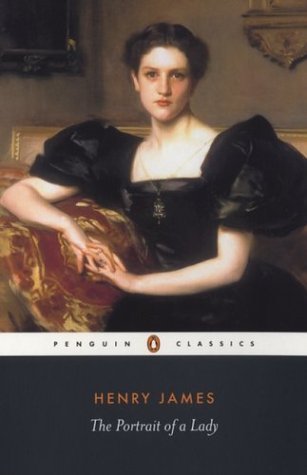
A long and enjoyable book. Isabel Archer, a young American, is taken by her aunt to Europe. Shortly thereafter, she inherits a large sum of money and then has the opportunity to choose how she desires to spend her life. Her cousin, Ralph Touchett, is sick with tuberculosis, but finds many things to enjoy in life, particularly watching Isabel to see what she will do with her life. The question of marriage (if, who, when) of course comes up, and plays a large part throughout the story. Isabel is a woman who is self-aware and a wonderful character to observe, as are many with whom she interacts.

Before Isabel decides whom she will marry, she turns down two other suitors. One is a well-to-do American, another is an English lord, and the third whom she decides to marry is an American with distinguished taste who has lived in Italy most of his life. Those who know she turned down the first two have a hard time understanding why, especially when they learn of her final decision. In the narration, we discover that Isabel feels that this is the right decision to make - even though she does not know how to justify it to anyone but herself. Some things are simply right for now and must be done. It makes one wonder, though -- what does it mean to choose well? to love well? to be loved well? Out of Isabel's choice comes suffering for many, especially herself -- and one wonders if suffering is thus an essential part of life, and how much a part suffering has in creating people who are solid and deep.

Madame Merle is present through much of the story, as someone who is practically perfect. A Mary Poppins of Europe during this time period, if you will. Except that she has accomplished little. She has many talents and an ability to fit in and be comfortable almost anywhere -- but has little to show for it. She knows when to speak and when to be silent, how to make others aware of her presence but not uncomfortable in it, how to manipulate while seeming to be unassuming. Ralph says that she is too perfect. Too kind. Too everything. That everything about her is studied and planned. Which is true. Madame Merle is very good at pleasing people -- as long as she can still reach her own goals, of which only one is truly vital. When the reader understands this goal, everything that has been done and said can be seen in a very different light. Which is true in life too -- we think we understand someone or know why they act a certain way, and then something else happens and suddenly their motive or experiences clear the air. Sometimes for the better, and as in Madame Merle's case, sometimes for the worse. Overall, James does a marvelous job of revealing character and personality. Although it does take quite a number of pages to do so!

Title:The Portrait of a Lady
Author: Henry James
Date published:1881
Genre: Fiction
Number of pages: 613
Notes: recommended by lark

Read more...

Google Search

Google