Book/page totals

Top 10 Lists

Tuesday, July 10, 2007

read full post >

cover of League of Extraordinary Gentlemen, Volume 2

This volume starts out in a red desert with people speaking a language with foreign characters-- I thought maybe it was Arabic, but it turns out they're on Mars, in the middle of a battle that is a prelude to an invasion of Earth. The Martian tripods crash to Earth, and the League is summoned to deal with them. The invisible man turns traitor (decides the invaders have better odds, especially with his help), and Mina and Allan Quartermain are sent to retrieve a weapon from Dr. Moreau (no longer on an island, but still conducting experiments). In a twist on the original, the invaders are destroyed not by the common cold but by an biologically engineered virus.

Some interesting things along the way-- I particularly like the discovery of a certain kind of rapport or sympathy between Mina and Hyde. He thinks she doesn't fear him; she admits that she does, but she has seen something more fearful and terrible than him (it's never spoken, but of course she must mean Dracula).

This volume includes a couple of sexual encounters that I thought were unnecessary and a little too graphic for my taste (one of them rather violent). I don't think I enjoyed this one as much as the first volume-- it just didn't hold my interest as well, and certain aspects were off-putting.

Includes a very long "travelogue" of all the extraordinary places on the globe, organized by continent. Sometimes this seemed a little dry, but other times it was quite fun-- especially when it referenced books I know (whizzing past Garcia Marquez's Macondo, or mentioning a small town in New England with a deadly yearly lottery). Early on it has a long section on the other side of the story of Alice in Wonderland (what everyone else must have thought). When they get to the Arctic, they encounter a land of sentient polar bears who mention that they had been approached by the representatives of a soda company to participate in an advertising campaign. The travelogue affords an opportunity to tell a little more of Mina and Allan's story, as many of the places are described in Mina's journal. Descriptions of other parts are taken from writings of members of earlier incarnations of the League.

Title:The League of Extraordinary Gentlemen, Volume 2
Author:Alan Moore
Date published:2004
Genre:Graphic Novel
Series:League of Extraordinary Gentlemen
Number of pages:228

Read more...

Monday, July 09, 2007

read full post >

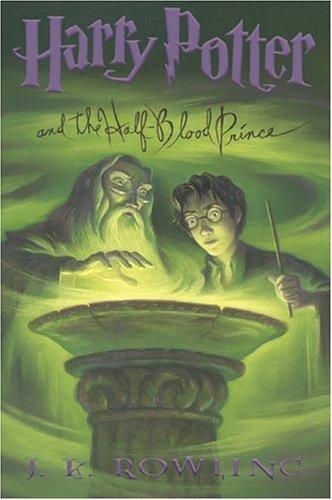
Cover of Harry Potter and the Half Blood Prince

In Harry's sixth year at Hogwarts, he begins taking special lessons from Dumbledore-- you could call them "Voldemortology," since Dumbledore is sharing all the painstaking research that he has done in collecting memories and tracking Voldemort's movements. All this is done to give Harry as much help as possible for when he eventually must face Voldemort. Harry also gets an old potions book owned by someone who called themselves "the Half-Blood Prince," and who left all kinds of interesting notes in the margin-- adjustments to the directions for potions that make Harry look brilliant (and Hermione very frustrated), spells in the margins, and the like. All year long, Harry suspects that Malfoy is up to something, but no one quite believes him. Harry's instincts are usually pretty good, and in this case (unfortunately) it turns out he's right.

It's interesting how much Harry trusts the scribblings of the Half-Blood Prince (in spite of previous experience with dangerous books). He randomly tries out on Ron a spell scribbled in the margins of the book, which, as Hermione points out, is really pretty stupid. Later on he uses a spell that the prince had labeled "for enemies"; the spell is horrible, dark magic and Harry feels betrayed. Near the end of the book you find out (don't read if you don't want to know!) that Snape was the Half-Blood Prince-- which gives a real sense of how brilliant Snape must have been, to fix potions directions and invent his own spells (however terrible).

Dumbledore seems a lot weaker in this one. His hand is blackened and shriveled, a memento from destroying one of Voldemort's horcruxes. Especially at the end, it seems like he makes some poor decisions-- but we don't have the whole picture, so perhaps (hopefully) there's something we don't know. As with Snape-- Dumbledore had some reason for trusting him (and I think it is more than what Harry says), but it hasn't been revealed to us yet.

The horcruxes are, of course, the crux of how Harry must deal with Voldemort. In his fear to death, Voldemort split up his soul into seven parts and stored those parts in various objects. Reading this again, I had a real sense of pity for Voldemort-- so afraid of death that he has maimed himself repeatedly to protect against it. Perhaps it's no wonder that he no longer looks or seems human, since he's only got a seventh of a soul. And, of course, that there could be a power in a soul that was whole and pure.

The ending... is crazy (and comes with a heartbreaking loss). It really leaves you wanting to know what Rowling isn't telling us, which side Snape is playing for, and how Harry will do without Dumbledore's direct guidance (I suspect he will still have Dumbledore's guidance indirectly, in some form or other). Fortunately, I guess, I don't have to wait so very long to find out.

I feel like I've timed my reading all wrong! Now I have to wait an agonizing week and a half before I get to find out what all this means. (How did I wait after I read this last time? I guess I kind of forgot about it.)

Finished in about four days.

Title:Harry Potter and the Half Blood Prince
Author:J. K. Rowling
Date published:2005
Genre:Young Adult Fantasy
Series:Harry Potter
Number of pages:652
Notes:second reading

Read more...

Monday, July 02, 2007

read full post >

cover of Great American Speeches

A collection of speeches from American history, organized chronologically and sometimes excerpted to keep them to a reasonable, readable length. I was actually a little surprised at how much I enjoyed reading the speeches-- it felt like I was getting a taste of real history. For each speech, there was a short paragraph with a little bit of context about the speaker and the speech, which I found very helpful, and in one case was amazed to read that an antislavery speech by Angelina Grimke was given in a building surrounded by a violent, angry mob. For me, it heightened the sense of these speeches as an active part of our history. Unfortunately, as the speeches get closer to our modern day they were more disappointing; I became less and less convinced that they were either "great speeches" or given by "great Americans."

Some surprising synchronicity with these speeches and other things I have been reading at the same time. When I got to the civil war section, I was inspired to re-read Lincoln's Dreams; other books connected with the world wars, etc.

With the more contemporary speeches I found myself more skeptical-- sometimes about the speeches, sometimes about the editor. I know that political speeches these days are written by other writers, so it seems less immediate, less honest. However, I don't know when that practice started or which speeches in this book it might apply to. Other times, I wondered if the speakers really believed what they were saying; e.g., Nixon claiming he was stepping down for the good of the nation, so that it not get involved in a long, drawn out impeachment process; or when Truman announced the dropping of the atomic bomb, did he have any idea of the scale and kind of destruction it would cause?

The other problem when history intersects the current time (the last speech is from Jesse Jackson in 1992) is that it's hard to be objective, and it seemed that the more modern speeches were somewhat skewed to a more liberal perspective. In some cases there were interesting speeches that maybe should have been influential or important, but it's not clear that they made much of a difference; e.g., Newton Minow encouraging television producers not to cater to the lowest common denominator in their audiences but to continue to use the medium of television to educate; or Ralph Nader's speech about the legal profession encouraging law school graduates not to get bogged down in materialism.

It also seemed like there have been some modern events that should have given rise to some great, important speeches, but they weren't in this book. While the speeches from further back in our history were more tied to events and issues that our nation was struggling with, the more current speeches (which take up more of the book) seem to be all over the place with ideas and issues. Again, probably the perspective problem-- perhaps only later generations will know which of those were most significant in the long-term.

Read over several months, usually reading a speech or two in the evening.

Title:Great American Speeches
Author:Gregory R. Suriano (editor)
Date published:1993
Genre:Speeches, American History
Number of pages:308
Notes:gift from Mom

Read more...

Sunday, July 01, 2007

read full post >

cover of Harry Potter and the Order of the Phoenix

Angry Harry. For various reasons, Harry spends the bulk of this book, his fifth year at Hogwarts, being very irritable and the slightest provocation will start him raging and shouting. Hermione and Ron seem to take turns patiently reminding him that they're on his side and would he please stop taking it out on them. And Harry has some pretty good reasons for being so on edge, the biggest of which is that Voldemort is back, and Harry's scar is twinging all the time (and flares up and really hurts whenever Voldemort is particularly angry or happy). The Ministry of Magic is trying to suppress rumors of Voldemort's return, using the newspapers to make Harry out to be an attention-seeking liar, and even interfering at Hogwarts in the form of the despicable Dolores Umbridge. There are also some interesting ideas about how seeing death alters your perception.

One of the things haunting Harry is Cedric's death at the end of the last book. While there has been plenty of death and loss in Harry's life, he's never exactly witnessed it first-hand, and in this world that changes your perception. The most obvious way we see this is the Thestrals-- beasts which have invisibly pulled the carriages from the train to Hogwarts every year, only now Harry can see them (along with the delightful character of Luna Lovegood). Later on, when they are in the Hall of Mysteries, there is an arch with a veil-- and only Harry and Luna can hear voices whispering behind the veil, calling to them. There are some pretty interesting ideas about death here, and I guess we will get to learn more about Rowling's ideas of death in the last book.

One of the really great things in this book is the Defense Association (aka Dumbledore's Army). Umbridge steps in as the ministry-appointed Defense against the Dark Arts teacher, and decides to give them a "purely theoretical" course-- designed to keep them from practicing any practical magic that might be used against the ministry. At Hermione's instigation and encouragement, they start an underground group led and taught by Harry to learn Defense spells. It's clear that Harry really enjoys teaching this stuff, and is a good teacher (the other students are able to conjure Patronuses, which Lupin wasn't sure Harry would be able to do in book 3). It made me think that if Harry survives his final encounter with Voldemort, he should eventually come back to Hogwarts and teach.

The DA is the source of the group that eventually goes with Harry to the Ministry of Magic and ends up facing off against the Death Eaters (along with some help from Dumbledore's Order of the Phoenix). Seeing Harry and his classmates practicing and learning made me see that the DA is sort of the next generation of the Order of the Phoenix.

Finished in about five days.

Title:Harry Potter and the Order of the Phoenix
Author:J. K. Rowling
Date published:2003
Genre:Young Adult Fantasy
Series:Harry Potter
Number of pages:870
Notes:repeat reading

Read more...

Saturday, June 30, 2007

read full post >

This novel begins charmingly but becomes brooding and introspective once its main characters grow out of childhood. Sam is eldest brother to his three siblings and feels a heavy responsibility to keep them happy and together when both his parents die in an Italian train bombing. His various quirks are very humorous, especially if you know any families with controlling older brothers and happy-go-lucky younger sisters. Add to the mix the unique perspective that living abroad affords, and you have a very interesting bunch.

Sam struggles to negotiate the challenges of growing up as an outsider among his schoolmates in Grand Rapids and of maintaining a tight-knit family with his brother and two sisters. Eventually he becomes a writer of a television comedy series based on their family life in which they all star. Their fame draws unwelcome attention in the form of a stalker, and Sam grows increasingly paranoid and standoffish with the television producers. After effecting a lurid finale to the tv show, he mysteriously disappears...to retrace his steps and discover the connection between his present life and the day his parents died in Italy. This book is worth reading, but I wouldn’t blame you if you put it down after the first 95 pages.

Title:Plum and Jaggers
Author:Susan Richards Shreve
Date published:2000
Genre:Fiction
Number of pages:228

Read more...

Tuesday, June 26, 2007

read full post >

cover of Silver on the Tree

The fifth and final book of the series, with all the characters together at last. There are six .. Will & Bran & Simon & Jane & Barney & Gumerry .. who must complete the circle. This is the final battle between good and evil, and there are many pieces which must be in place for the battle to be won. They find themselves in wales again, and find the beautiful old lady (who is vital to the health and wholeness of the old ones), two take a trip to the lost land and four a trip to the past, and then a trip to a land that only partially exists. But with these characters (and John Rowlands, of course!) the journey is well worth following.

The battle is between good and evil, but there are humans involved, and always will be humans involved. Because the world belongs to humans, and not to Old Ones or their evil counterparts. The three Drew children are simply human, as in John Rowlands, but without them the battle would not be won. At the end there is a vital decision that must be made .. and the one to make it is a man, not an immortal being. A man who has a good heart and great strength, but is trusted by the Old Ones to choose well. And as humans, that is sometimes all we can do .. choose well. And step forward to the challenge even when we desperately want to run away. And after the battle is over .. what is there to do, but to choose to live each day well. A series I've read multiple times and will certainly revisit!

Title:Silver on the Tree
Author: Susan Cooper
Date published:1977
Genre: Young Adult, Fantasy
Series: The Dark is Rising
Number of pages: 274
Notes: Repeat reading

Read more...

Sunday, June 24, 2007

read full post >

cover of Harry Potter and the Goblet of Fire

Harry's fourth year at Hogwarts and the revival of the Triwizard Tournament. The names of the school champions are magically selected by the fiery goblet of the title, and, of course, somehow Harry ends up getting selected-- even though he's younger than the age limit, and the three champions have already been selected. As Harry muddles through his tournament tasks as best he can (and with lots of help from friends), unaware that there is a traitor at Hogwarts, although he is suspicious that Voldemort is getting stronger and strange things are happening at the Ministry of Magic. Re-reading the book and knowing who the impostor is the whole way through makes it quite interesting-- it almost strains credulity that someone could keep up that guise for so long, but not quite. And the resemblance between extremes of good and evil is even clearer.

If you haven't read this book yet (or at least seen the movie), perhaps you shouldn't keep reading, because I'm going to write about what interested me most: the idea of this traitor keeping up appearances and pretending to be someone else for an entire school year. Perhaps Crouch's job was simplified by the fact that Moody was such a shifty, jumpy, suspicious man anyway. The moments that rang most true for me were when Crouch said or did something Moody would have done, although for different reasons. It made me think about those similarities (even if only on the surface) between good and evil, which are pointed out explicitly in Crouch Sr., who became so harsh in his treatment of Voldemort's followers that he approached the cruelty and abuse of power of Voldemort himself. At one point, the faux Moody says something like "there's nothing I hate more than a Death Eater that went free"-- not because they weren't punished for their deeds, but because they weren't loyal to their master.

I also wondered about Crouch using the unforgivable curses on his students. He claims he has permission from Dumbledore to teach them the worst that they can expect, and to learn how to resist it-- and, whether he means to or not, he really does Harry a favor by teaching him to resist the Imperius. It's within the realm of believability that Moody would do this, but when I think of Crouch doing it, I can't help but imagine he got a sick satisfaction from torturing the students he was supposed to be teaching and protecting.

It's fun to see Harry making his ways through the challenging tasks of the tournament. He has help from friends (and one enemy), but that has always been the case, especially with Ron and Hermione. He even does the incredible, and stands up to Voldemort in the flesh-- although, again, he has help. One of the things that makes Cedric's death even more heartbreaking (on top of Voldemort's callous disposal of that for which he has no use) is Harry's sense that it is his fault-- he was trying to do something decent and generous in sharing the victory with Cedric, and instead Cedric was killed.

Read in about four days.

Title:Harry Potter and the Goblet of Fire
Author:J. K. Rowling
Date published:2000
Genre:Children's Fantasy
Series:Harry Potter
Number of pages:734
Notes:second reading

Read more...

Saturday, June 23, 2007

read full post >

cover of The Grey King

Fourth in the series, and this time Will Stanton is sick and goes to stay with relatives in Wales to recover his health. And this just happens to be the place where the next step needs to be taken by the Old Ones. Within the first few days there, will meets Bran Davies .. who has white hair and pale skin and amber eyes and just doesn't fit in. So they rather fit together, in some senses. Together they have adventures to find the golden harp and to wake the sleepers. Will, who as an Old One usually knows about people, has a hard time judging or knowing Bran. But someone has been there ahead of him to prepare the way and make sure these two boys will both meet and trust one another.

The Grey King is the name that has been given to the huge mountain in the area of Wales where this story takes place. That's what everyone calls it, because of legends from long ago. But Will can feel that they are not just legends. That the Grey King is a presence that wants to control and bring a heaviness to this place. And because the Grey King has become almost part of the land, his power is strong .. but will must fight against him both carefully and powerfully. Through a series of 'accidents' Will & Bran and Bran's dog, Cafall, end up in a stairway that leads to the one place they could find the harp where they must answer three questions. Before they step into the stairway and right after the Grey King seeks to attack them and ruin their chances .. but he does not succeed. The idea of a menacing presence that is part of the land feels very real to me. When evil has occured in a place, it can take root. Making echoes of itself felt long after the evil has passed. For good to conquer over evil in a place takes much time and something powerfully good. The imagery and legends are used well to bring this malevolent presence to life in a way that feels dangerous and almost possible.

Title:The Grey King
Author: Susan Cooper
Date published:1975
Genre: Young Adult, Fantasy
Series: The Dark is Rising
Number of pages: 165
Notes: Repeat reading

Read more...

Google Search

Google