Book/page totals

Top 10 Lists

Tuesday, February 20, 2007

read full post >

cover of Astonishing X-Men: Torn

I've been waiting a while for the latest Whedon/Cassaday X-Men, and it seemed too short and ends with a cliff-hanger-- so it doesn't seem like enough. But I still enjoyed it. We finally get to find out why Emma Frost is double-dealing on the X-men, and get to see Kitty in action.

Emma's been secretly working for the Hellfire Club-- although there's a twist at the end that changes all of this, and I didn't feel like I knew enough about the Hellfire Club and Cassandra Nova to get it. But it's pretty interesting the way Emma is able to neutralize pretty much all of the X-Men (through dreams or mental constraints).

Some interesting interactions between Emma and Scott; I especially liked when he comes around and helps save the day. We finally find out that Colossus is the one destined to destroy the Breakworld (seems like that storyline has been hanging around for a while, so it will be nice to see what comes of it).

The artwork, as usual, is gorgeous. And there's even some bits of conversation in foreign languages, which made me miss Firefly a bit (and wonder where I can find translations).

Title:Astonishing X-Men Volume 3: Torn
Author:Joss Whedon (artwork by John Cassaday)
Date published:2007
Genre:Graphic Novel
Series:Astonishing X-Men
Number of pages:152

Read more...

Monday, February 19, 2007

read full post >

This devilishly clever book traces the interlacing lives of two men, William Kane and Abel Rosnovski, who were born on the same day in 1906. One is the privileged son of an elite Boston family; the other, an orphaned peasant in an impoverished Polish village. William follows the trajectory expected of him, achieving high grades, earning academic awards, and winning a math scholarship to Harvard. He eventually becomes the chairman of a very influential East Coast bank. Abel’s early life, meanwhile, is spent enduring and finally escaping violence, oppression, and poverty. His homeland of Poland is overrun with German soldiers who destroy towns and lives, and send Abel to a prison camp where his most probable fate is death. With good fortune and hard work, he manages to flee to the United States and construct his own business empire.

A key encounter in the lives of the two men sparks an intense enmity between them, though they never knowingly meet. They spend the next several decades trying to bring vengeance on the other; the conclusion is surprising and sad.

While this is not great literature, the book is wholly worthwhile. The author depicts each man sympathetically and builds a good deal of suspense into the story. The writing is intelligent and spare; a terrific vacation read.

Title:Kane and Abel
Author:Jeffrey Archer
Date published:1979
Genre:Fiction
Number of pages:579

Read more...

read full post >

cover of Ultimate X-Men: Blockbuster

Wolverine leaves the X-Men and goes out on his own, and ends up getting hunted down by some rogue operation with pretty sophisticated weaponry. Wolverine ends up going to Peter Parker's house to recover from his first shellacking by this group, and then Spiderman tags along with him for a while. Then they run into Daredevil, who is incensed that Wolverine would bring this violence into his neighborhood where the gunshots could hit anyone. It was fun, if a little odd, to see those characters in an X-Men book, and I enjoyed Spidey's wisecracks (even if Wolverine didn't).

This didn't seem like a particularly eventful episode. That seems silly to say in one sense, because there is lots of action and blowing things up. But it doesn't feel like the larger story moves forward so much, or you learn too much more about Wolverine. The villains turned out to be former Weapon-X soldiers who were taught to hate mutants (and Wolverine in particular) who are being used by some shadowy leader who may or may not be trying to overthrow the government. There is one woman in particular who seems an interesting character-- hates Wolverine and comes after him with a vengeance. But they don't go into it much more than that.

Some fabulous artwork, as usual with this series. One section in particular was the great full-spread shots of Jean Grey going into Phoenix mode to take out some of the people hunting Wolverine before they take out Xavier's school.

Title:Ultimate X-Men Vol. 7: Blockbuster
Author:Brian Michael Bendis, David Finch (illustrator)
Date published:2004
Genre:Graphic Novel
Series:Ultimate X-Men
Number of pages:144

Read more...

Saturday, February 17, 2007

read full post >

This is an anthropological book, written by an English woman about the English. I enjoyed it very much. Haven't read anything like it before, and don't think it's going to become my new favorite kind of book, but it was worth my time. Kate Fox takes a step back from her own culture, to try and explain it to outsiders. Most of us (all of us?) grow up inside at least one culture, and know how to act, what to say, how to dress, what to value .. even if we couldn't explain it to anybody else. Having someone take the time to share a bit about Englishness was a gift. And after reading the bulk of it, I found myself reading an Agatha Christie novel and realizing 'oh! this character is just being English.' And, as I have opportunity to interact with the English, hopefully I'll be able to understand them better and be able to interact in ways that are valuing to both of us as individuals as well as our separate cultures.

The last chapter is a summary, where she wraps up all she has learned into a few short words. These words cannot express everything, but they do a good job of summarizing. (As they are supposed to!) The core of Englishness she calls social dis-ease (being uncomfortable with others unless they are very well known). There are 3 reflexes (which are learned so deeply they often cannot be stopped): humour, moderation, and hypocrisy. 3 outlooks: empiricism, eeyorishness, and class-consciousness. 3 values: fair play, courtesy, and modesty. All of these characteristics became clear as Fox did much research, including participant-observation research. This kind of research means watching queues to see what happens when someone tries to jump to the front. It means purposely bumping into people on the sidewalk to see if they respond "sorry" which they almost always do. It means asking lots of questions and pushing social boundaries to see if they are really there and how others react when they are pushed (or shattered, as the case may be).

One of my favorite parts of the book was the underlying humour, which one would expect from a truly English author. Since the English usually extend courtesy by not prying into others' business, it was funny to read about Fox working up the nerve to push a boundary everyone knows should never even be looked at (like how much home renovations cost). As she discovered/observed certain characteristics, she duly noted them in herself. Reading a book like this written by someone who is so aware both of her own culture, and her individual reactions, was a treat. I consider myself somewhat self-aware, but in terms of cultural awareness .. I have a long way to go. (If I were english, a statement like that would mean "I'm brilliantly aware, but wouldn't admit it for the world.") But I'm not, so it means I really do have a long way to go. See? I did learn something!

Title:Watching the English - The Hidden Rules of English Behaviour
Author: Kate Fox
Date published:2004
Genre:Nonfiction, Anthropology
Number of pages: 416
Notes:found in a Romanian bookstore!

Read more...

Friday, February 16, 2007

read full post >

cover of Jonathan Strange and Mr. Norrell

Set in England during the early 1800s and the Napoleonic war, this is the story of two magicians who bring "practical magic" back to England. Norrell is a little, scholarly gentlemen who wants magic to be respected and important, but also wants it under control-- he wants to be the only magician (which he very nearly accomplishes), and he wants everyone to think the way he does about English magic. Strange is younger and more charismatic, and much less restrained in his practice and theories about magic. Norrell is particularly vehement that fairy magic and the legendary Raven King, the mysterious and powerful magician king of northern England (as well as parts of fairy and another land beyond Hell), should not be considered so central to English magic.

The book is narrated in a very pleasant, witty voice that some of the blurbs on the book compare to Jane Austen-- which seems fairly apt. When Norrell comes to London, the two men who immediately befriend him and begin introducing him to the rest of polite society (all the while making sure that they are his particular friends and advisors) are really quite dandies, social butterflies. One of his first magic acts is bringing a young woman back from the dead, and I love the way the narrator describes society's response:

It has been remarked (by a lady infinitely cleverer than the present author) how kindly disposed the world in general feels to young people who either die or marry. Imagine then the interest that surrounded Miss Wintertowne! No young lady ever had such advantages before: for she died upon the Tuesday, was raised to life in the early hours of Wednesday morning, and was married upon the Thursday; which some people thought too much excitement for one week.
The book is also written with lots of footnotes-- sometimes references to books by or about Strange or other magical tomes, but often other stories of magicians and fairies that are quite entertaining. Sometimes the footnotes seem a bit overwhelming (going on for pages), but they also seem quite appropriate to these gentlemen magicians who are far more scholarly than we might usually imagine.

The book also deals with some very interesting issues of class and race. Norrell has a servant, Childermass, who is incredibly useful, and has picked up some magic of his own; he's also quite capable of reading things in the Tarot cards, in spite of Norrell's disapproval. But in spite of all he does, Norrell does not trust Childermass or treat him like an equal the way he does with Strange. Another very interesting character is Stephen Black, a butler of African descent. The fairy who figures quite a bit in the book (always described as "the gentleman with the thistle-down hair") meets Stephen and takes quite a liking to him-- sees him as regal and wise, and gives him all kinds of gifts, and wants to make him king. While I don't think we are meant to completely trust the fairy's opinion, since he is capricious, selfish, and bloodthirsty, he certainly recognizes something in Stephen that most of the Englishmen around fail to notice. Stephen does reflect at one point on the strange fact that slaves are not allowed on English soil, but Englishmen are allowed to hold slaves elsewhere.

There is so much in a book this long, and I can't comment about everything. There's a delightful sequence where Strange accompanies Lord Wellington on his campaign against Napoleon, and Strange often moves parts of Italy around to suit Wellington and his troops, but forgets his promise to move them back when the war is over. The final section is impressive; we finally get a glimpse of John Uskglass, the Raven King, and see that he hasn't abandoned England completely (as many thought). His book of prophecy (now on the skin of the street-magician Vinculus-- which is a strange and delightful thing, to have this character be the book) was being fulfilled by the very actions of Norrell and Strange as they attempted to bring magic back to England, and Uskglass has much larger purposes and a great deal more power than either of them could imagine.

Title:Jonathan Strange & Mr. Norrell
Author:Susanna Clarke
Date published:2004
Genre:Historical Fantasy
Number of pages:1006
Notes:Read in two weeks

Read more...

read full post >

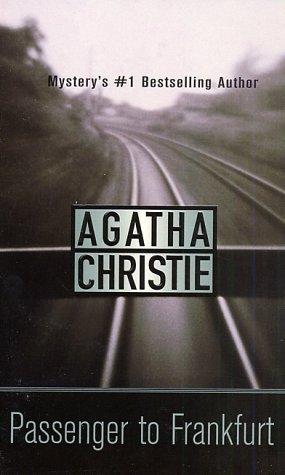
Sir Stafford Nye is a diplomat who likes to do things a bit out of the ordinary. He likes things which are interesting and challenging and a bit unacceptable. So he is chosen to join a powerful few who are seeking to discover who is behind all the chaos in the world. Students in almost every country are revolting .. being violent for the sake of violence, championing anarchy, and they have plenty of training and weapons and power. Who has provided these things? And how can they be stopped? These are the questions which must be answered if the whole world is not to be dramatically, drastically changed.

Mary Ann aka the Countess Renata Zerkowski is an agent with the British government. She travels all over the world gathering information, discovering secrets, playing roles. She brings Stafford into the mix for a variety of reasons, and together they are able to help pin down exactly who is in power, who is giving money, who the youth of many countries are following, and how they may be stopped. It's rather scary to think about this, because it seems somewhat possible. As humans we are easily tempted by those who are powerful, especially when we are promised the chance to share in their power, or in the 'better world' they are seeking to create. Story after story has been written along these lines. And stories always contain bits and pieces (or large pieces, sometimes) of truth. What stops us from such deep evil? I suppose my answer is simple: the grace of God.

Stafford has a great aunt .. Aunt Matilda. She is rather old and suffers from rheumatism and arthritis and other aches and pains, but she is remarkably astute and well connected. Many key players in this story are childhood friends, or at least people she knew 'way back when'. Stafford is continually amazed at how much she knows and what is normal for her. I appreciate this about Agatha Christie -- how so often 'old women' which the world thinks powerless as actually powerful, key characters. Miss Marple comes to mind, but I'm sure there are others. Christie values age and wisdom and common sense and understanding which comes when someone has lived well for a number of years. As well as the British modesty of Aunt Matilda, who plays it off as though it were 'all in a day's work' .. nothing to be proud of. A very enjoyable character, as well as a value (that of honoring and listening to individuals) which I appreciate.

Title:Passenger to Frankfurt
Author: Agatha Christie
Date published:1970
Genre: Mystery
Number of pages: 262
Notes:not a typical Christie

Read more...

Wednesday, February 14, 2007

read full post >

Dorian Gray is a beautiful young man. When he walks into a room, everyone notices him, and believes him to be good. Dorian is discovered by a painter, who does an amazing portrait. The painter's friend happens to be at his house on the day the portrait is being finished, and starts to influence Dorian for the worse. He tells Dorian that the portrait will never grow older or less beautiful, but Dorian is already older than the portrait. Dorian then wishes it would be opposite, and for some mysterious reason .. it works. The portrait changes with his actions over time, but outwardly he remains young, fresh, uninfluenced, good.

With my family, the idea of inside and outside appearance has often been raised. Some of those who on the outside appear so beautiful have souls which a dog would not wish to smell. Others who appear plain or even ugly, have souls which could put the sun to shame. Okay. Not quite, but .. would we be different people if we could see our own souls? If others could clearly see our souls? Dorian can see how each action and decision affects his soul, but it does not make him a better man .. instead it makes him worse, because everyone still believes him to be unspoiled and perfect due to his young features.

Lord Henry is the man who takes Dorian's innocence from him. Lord Henry says what he does not believe, and believes what he does not say. He speaks in paradoxes and opposites and things which sound good but are not. Dorian Gray takes these to heart, and lives as a hedonist .. seeking, finding, taking pleasure wherever he may find it, and caring not for others who happen to cross his path. Lord Henry cares to watch the process. He doesn't care much for outcomes, but champions feelings and moving forward and pleasing oneself. It makes one sick. And Dorian is given freedom (in some sense) to pursue this sort of life, to care only for himself and what interests him, and to forget, ignore, revile the rest. It makes me angry that someone who speaks lies and does not love can have so much power, but I know that it is often so. That for some reason or other, we find certain people and voices and ideas powerfully attractive. May we learn to listen to those voices which speak truth, and challenge those which sound sweet but ruin all those relationships and people they touch.

Title:The Picture of Dorian Gray
Author: Oscar Wilde
Date published:1891
Genre: fiction
Number of pages: 288
Notes: repeat reading. read online at gutenberg

Read more...

Tuesday, February 13, 2007

read full post >

The fairy tale of Robin Hood, made into a long wonderful story. McKinley has done this often and well .. taking vague tales and making them believable and with depth. Robin accidentally kills a man and goes into hiding, and with the help (and persuasion) of two good friends takes others with him. They become a banner for Saxons who are frustrated and angry with the Normans who unfairly tax them and take control of more than belongs to them. Robin is more than flesh-and-blood to those who keep surviving under Norman rule -- he is the embodiment of a legend -- he symbolizes their hope.

All the regular characters are here .. Robin Hood, Little John, Friar Tuck, Maid Marian, Much, the Sheriff of Nottingham, Will Scarlet. Characters as unique as one could hope for .. each with quirks, fears, dreams, humor. The band in the woods is made believable by the way they care for each other, the ways they interact, the mundane problems they have to deal with (food, rain, shelter, hiding, uncomfortable trees). An intruiging idea .. something that to us is only a tale becoming living people. How quickly normal people can become larger-than-life. I wonder if we need that to survive. Humans need stories .. but do we also need stories that are 'impossible' .. heroes who survive more often than they should, relationships that are saved and not broken as they so often are in our world, people who need hope and to whom it is given. Things that perhaps are not .. but perhaps should be? or could be? or may yet become?

Title:The Outlaws of Sherwood
Author: Robin McKinley
Date published:1988
Genre: fantasy, fairy tale
Number of pages: 275
Notes: repeat reading

Read more...

Google Search

Google