Book/page totals

Top 10 Lists

Saturday, August 05, 2006

read full post >

This site has been live for about a year now, and I recognized recently that I hadn't ever posted anything about it, or how it started. I finally decided it was time to post some kind of explanation, however long overdue.

Sapphire and I have been readers and book-lovers for a long time, and we enjoy sharing those written worlds we enter; like the quote from Katherine Mansfield (one of the randomized quotes in the header), the pleasure of reading is increased by sharing books with others who also love them. For a few years now, Sapphire has been keeping track of what she reads and making little notes about them; not only that, but she takes book recommendations from people she meets, as a way to make connections, and she actually writes those recommendations down and reads them. For a while now, I have wanted to do something similar, but I didn't want to start it until it could be "perfect"-- some database driven website that allowed me to search or list the data in any of a number of different views, and automatically total page numbers; something very powerful and extensible and completely impractical for me to create or host at that time. I recognized that it wasn't something I could implement, so I never pursued it. Sapphire's example made me realize that I could at least keep track of what I read, if nothing else (since something is better than nothing); when I read more about Blogger later on and discovered the many creative "blogger hacks" that clever users have figured out, I thought it might be a fun tool that could easily accomplish many of the things I had wanted to keep track of my reading. I shared my idea with Sapphire, and eventually she agreed to contribute to the site with me. (For those who are interested, these are some of the hacks I'm currently using: expandable post summaries; delicious tags; randomized quotes in the header, listing the titles of all posts on a page, along with some hacks of my own-- like using a blogger post for special shared content, like the page totals & favorite book lists on the main page.)

Since then, I have posted everything I've read (and was able to back-post the books I had read earlier that year, since I'd kept track of them and even written about some in my personal journal). Sapphire doesn't post everything she reads, but she posts things she finds particularly interesting or wants to write about (or has time for), and she does update her page and book total numbers.

Our posts are not organized by when we write them, but rather by when we finish the books. When del.icio.us added their "linkroll" feature, I added that to our front-page navigation as a way to make recently posted books visible, whether they were read recently or a while back. This organization also makes it challenging to distinguish between non book posts, like this one (which is one reason I haven't gotten around to writing it yet). Sometimes I feel constrained by the limits of Blogger, but then I remind myself that I have something much better than anything I would have otherwise. This site has become a way for Sapphire & I to share what we read with each other and with other people who care about us and are interested in what we read-- and also with complete strangers who are interested in the books we read, although they know nothing of us.

If you like the site or the books we read, or if you have books to recommend, please leave us a comment and let us know!

Read more...

Thursday, August 03, 2006

read full post >

cover of The Difference Engine

It's a bad sign when you're 100 pages into a book and feel that it hasn't grabbed a hold of you yet. It is probably an even worse sign when you are fifty pages from the end of the book and still waiting for some piece of information or connection that will make sense of what you've been reading. I experienced both of these sensations as I made my way through the confusing, disorienting world of The Difference Engine. The book is set in an alternate London of the 1800s, a world where Babbage completed his "difference engine" and stared a pneumatic cog-driven computer revolution much earlier than in our history. However, the book never really explains this and only vaguely hints at it near the end of the book; and the true history of Babbage's work is not so familiar to most people as, for instance, Christopher Columbus. Fortunately for me, the blurb on the back cover of the book tells this vital information that made the book slightly less confusing.

Part of the reason I found it difficult to engage with this book is that it jumps around from character to character. There are three main characters, and the book focuses on them in succession (in unequal portions)-- but the connections between them are really rather tenuous. The one connection that is supposed to be the most significant is the set of computer punch cards-- the "modus" developed by the Lady Ada, or perhaps by Mick Radley-- but the authors never fully convey the significance or power of these cards in any way that makes sense of the other characters willing to kill to get the cards.

An interesting book in some ways, but not one I am likely to recommend or to pick up again. Sections of the book are compelling enough, if you are willing to suspend disbelief or authorial-enforced ignorance, but the book as a whole never quite comes together. Another strange device that never made sense-- at the beginning or end of some of the chapter sections (which are labeled as "iterations"), the authors describe some photo or physical artifact-- as if we were examining the evidence from these historical events at some future time. But it isn't done consistently enough to be effective, and it never ties in to anything, so it remains insignificant and odd. There is also an extended encounter with a prostitute that I found unnecessary.

Title:The Difference Engine
Author:William Gibson & Bruce Sterling
Date published:1991
Genre:Science Fiction / Alternate History
Number of pages:429
Notes:recommended long ago by Jeff M.

Read more...

Wednesday, August 02, 2006

read full post >

cover of The Mermaid Chair

This is the second book I've read by Kidd, and enjoyed both of them. So much truth. Jessie grew up on Egret Island and her mother is still there. Her mother does something insane, and she goes back to live with her mother for a while and try to help her become healthier. But, she hasn't been back to this island off the coast of New England for many years. She's married to Hugh and they have a daughter named Dee. Going back to her roots is both good and bad, as so often the case. She begins to discover that she is her own person and not just who others want her to be.

There are three women who are bound together. Nelle, Kat, and Hepzibah. Three women with strong character and an ability to love each other in spite of their large differences. Hepzibah loves the Gullah culture, which is the culture of slaves who came to live on the island after slavery. (Sort of true. Not this particular island because it doesn't exist, but islands in similar places that really did and do exist.) Their culture and myths and beliefs got mixed in with some of the traditions of the islanders. Kat loves to have her own opinion, keep her own hours, say the unexpected, and push peoples' boundaries. Nelle has turned to religion to keep her sane, helping to keep meals for the monks at the nearby abbey. As a result of a horrible thing that happened many years ago tries to leave behind everything that reminds her of it. Together they hold one another up, challenging, loving, accepting, understanding one another. so refreshing. As humans we are made to be in deep, lasting relationships. Not just marriage, but also friendships that give us true glimpses of what it means to be known and loved.

Jessie's mother, Nelle, has started to do crazy things. Which it turns out are her way of trying to relieve the guilt of something that happened twenty some years ago. This guilt is not just her own, but also happens to belong to others who know the secret. (Spoiler coming!) All her life, Jessie believed that her father died on a boat because of a spark from the pipe she had given him as a present. On this trip to the island, she was looking in the drawer of sacred things (broken rosaries and crosses, the newspaper clipping of her father's death, etc.) and at the back she found the pipe. Didn't know what to make of that. But the climax comes when Kat decides that they need to speak the truth. That Nelle will only be set free when the truth is finally revealed. Her father chose to die instead of slowly losing all memory as his father had done, and a number of people were involved to make it a sacrament of sorts. The boat accident was a cover up. Jessie is hurt and surprised and anguished to find out about this thing that happened so long ago, but at the same time she is relieved to finally know the truth. It was already in her bones. Somehow truth imprints itself on our bones and bodies and when we find it there is a sense it has already belonged. This is such a Biblical concept -- that the truth will set us free. To live what we know is real life, in the strength and freedom only God can give to us.

Brother Thomas, previously known as Whit, plays a major role as well. He is a catalyst. He is more than that, but that is a piece of what he does in the book. He is a monk who came to the abbey to find God. To take a breath and see what it was like to live outside of the cares of the world. His devotion, passion, commitment to God and the abbey are characteristics which draw Jessie to him. There are other things like lust and proximity, but the single-hearted commitment is something she does not have in herself. By having an affair with him, she damages his commitments (which is bad), but it somehow helps both of them to choose to live life fully again. I do not believe that sin is ever good. Sure, God can use evil for His own purposes -- but that does not mean it was good in the first place to choose poorly. Seems like this book could be taken that way -- that the affair was good because the end was good. But the end does not justify the means -- even when the end seems right.

Title:The Mermaid Chair
Author:Sue Monk Kidd
Date published:2005
Genre:Fiction
Number of pages:332

Read more...

Wednesday, July 26, 2006

read full post >

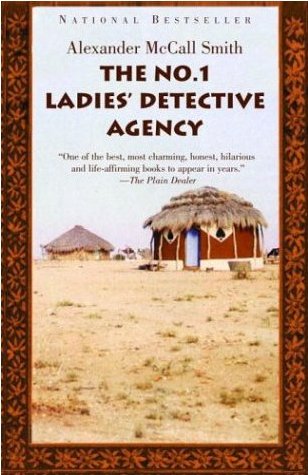
cover of The No. 1 Ladies' Detective Agency

The first book in this series, which I read after the second, instead of the usual order. But still enjoyed the characters and the glimpses into Botswanan culture. Mma Ramotswe is very clever in the ways that she goes about her cases. There are a number of smaller cases which she is hired to solve, so her problem solving skills become very apparent. Also, there are pieces of Mma Ramotswe's history that are shared to give an understanding of who she is -- these were helpful for me, especially having already read another book.

One humorous section involved Mma Ramotswe thinking about her weight. That she has nothing to be ashamed of when she visits the doctor. She is built like a traditional African woman. Which means that she is strong and rather large. She has had enough food to eat, meaning she is wealthy enough to eat as well. A couple of times in the book this subject comes up and she reminds herself she should be confident and enjoy her appearance. And two men offer to marry her, so they must think she is beautiful as well. Different ideas than our current American ideal of beauty.

Title:The No. 1 Ladies' Detective Agency
Author:Alexander McCall Smith
Date published:1998
Genre:Mystery
Series:The No. 1 Ladies' Detective Agency
Number of pages:235
Notes:

Read more...

Wednesday, July 19, 2006

read full post >

cover of The Westing Game

A fun mystery. Begins with a new apartment building opening, and invitations to live there being sent to only a few specific people. Who all get to know each other fairly well over the next few months. Because, you see, there is a murder. Not just any murder -- but one with sixteen 'heirs', all of whom happen to live in this new apartment building. The will is a series of clues and rules for them as they set about to solve the mystery and figure out who is the murderer and win the inheritance. And also for the reader to discover the truth, of course!

At the reading of the will, every heir is placed into a pair. Which turn out to be very intentional. Through this pairing, each person gets something they would not have known to ask for. One man is paired with a woman who speaks Chinese and only a few phrases in English. They don't really care about winning, but they do enjoy getting to know one another as he teaches her English and they value one another as people. The most popular young woman is paired with the most unpopular woman, and they also learn to value one another and become friends - which neither of them would have suspected or pursued without this impetus.

Turtle Wexler is one of the main characters. She is the youngest daughter of a mother who does not favor her and often ignores her. But Turtle is smart and curious and wants to be listened to and loved for who she is. She is paired with an older woman, Flora Baumbach, who lost a daughter and wants someone to love. as Flora listens to Turtle and values her, both become more themselves and more confident in who they are, which is exciting to read about. Of course this fireball of a character turns out to be a lot like Mr. Westing, who was murdered. She figures out the puzzle and nobody else does. (It's a young adult novel! It's okay if it's not always logical..) Sad that at the end everyone is happy and gets to do what they wanted to without many problems. Not like real life at all, even though it's nice to read about.

Title:The Westing Game
Author:Ellen Raskin
Date published:1978
Genre:Young Adult
Number of pages:185
Notes: Repeat reading, read outloud with parents

Read more...

Tuesday, July 18, 2006

read full post >

cover of Pastwatch

Card displays his brilliance once again in a book that is both science fiction and history, both well-researched and truly "revisionist." In our future, the scattered remnants of humanity on Earth have developed a technology that enables them to see and hear the past, like a video camera that they can position any place and time they choose. Based on that technology, there is a world-wide organization called Pastwatch, which recruits talented scholars and historians to work on various projects. From one woman's study of slavery throughout history springs a new project; their investigation leads them to Christopher Columbus, and to the possibility that they might be able to change the past.

Eventually, the leaders of the Columbus project discover their technology can actually be used to send things back and alter the past-- although this would erase their own existence. One of the brilliant twists of this book (don't read if you don't want to know!) is their discovery that history has already been altered once: in an alternate past, Columbus led a successful crusade to free Constantinople, and the future people of that version of the past sent a holographic vision of the Trinity to send him West, in order to avert a terrible event: in their history, Europe was invaded by a South American empire that still practiced human sacrifice. So, the members of the Columbus project create a plan to alter history once again, but with a much more careful touch that will give the possibility for a more peaceful human future.

Interwoven with the stories of the future of Pastwatch are snippets from the life of Christopher Columbus. Card clearly did a significant amount of research, both on Columbus and on South America, and one of the most interesting ideas is his figure of Columbus as such an ambitious, passionate, charismatic man that could accomplish whatever he set his heart on, whether it was a crusade or a westward voyage, or peace.

Another aspect of this book that intrigued me was the proliferation of fascinating ideas. Pastwatch is really a community of scholars, and Card provides many of them with fascinating and plausible ideas of research-- one man's discovery of Atlantis and the origin of the flood story, another man's research into the South American cultures to discover the empire that was about to rise and never got the chance, and particularly one woman's approach to history: by moving backwards through the lives of the people she watched, instead of forward, she became more attuned to causes than effects. Perhaps Card is borrowing these ideas from other scholars, but it is astounding to me to see a writer throwing out so many different ideas, any one of which could occupy a scholar for years.

Title:Pastwatch: The Redemption of Christopher Columbus
Author:Orson Scott Card
Date published:1996
Genre:Science Fiction / Alternate History
Number of pages:416

Read more...

Monday, July 17, 2006

read full post >

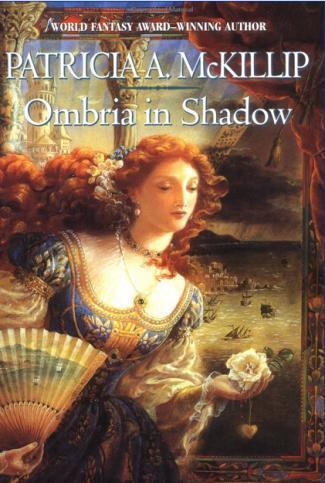
cover of Ombria in Shadow

Enjoyed this book, as I have enjoyed the other few things I've read by McKillip. A story of individuals who together create a force strong enough to radically change the world. Not that they aim for that, but it begins to happen when their lives intermingle. Domina Pearl, who wants to rule the land of Ombria and suck the life out of it (as she has done to herself) begins the book by gaining power to rule, and wants more. Few are willing to stand up to her or to ask her questions, but those few who do make all the difference.

The characters almost fit into categories for a fairy tale. The Evil Stepmother -- Domina Pearl, who has been alive longer than anyone can remember and whose magic skills are almost first among the land. The Knowledge-Seeker -- Camas Erl, who loves knowledge almost more than life itself. The Grieving Prince -- Ducon, who does not fit anywhere well, but because of that can draw together the unexpected. The Young Prince -- Kyel, who wants to be loved but those he trusts are taken from him. The Beautiful Young Woman -- Lydea, mistress to the dead ruler, who now fits neither in the court or in her father's tavern, also drawing together the unexpected. The Sorceress -- Faey, who lives beneath the city, working for anyone who will pay, with more power than anyone expects. The Waxling -- Mag, who has a knack for disappearing and knowing more than she should.

Mag, the waxling, is a wonderful character, who discovers she is human when she is seven. She lives under the city in the past with Faey, the sorceress. The city is sinking underground and has done so for many years, so there are pieces of the city's history. Mag knows all the passages from 'normal' life into this ancient amalgamation of life where she lives with Faey. Mag is the piece that ties together everyone else in the story. She is curious enough to be willing to get into trouble in order to find information, and tricky enough to usually not get caught. Even willing to meddle in Faey's work, when it is important enough. Mag grew up knowing Faey and not really anyone else, but she still has ideas of what is right and wrong. Which seems so true -- most people have ideas of right and wrong, which may be part cultural. Enjoyable to read about this girl who discovers what it means to think for herself, to trust herself, to grow up, to love.

Title:Ombria in Shadow
Author: Patricia McKillip
Date published:2002
Genre: Fantasy
Number of pages: 298
Notes: Recommended by Lark (who last read it in 2005)

Read more...

read full post >

cover of Ultimate X-Men

As far as I can tell, Marvel's "Ultimate" series are re-imaginings of their classic superheroes in a contemporary setting-- probably targetted at people like me, who want to enjoy reading the comic books but don't know where to start. I'm not familiar enough with the X-Men to know if there are any significant departures here from other versions of their beginnings; and, in a way, I don't really care-- because this book is brilliant. It's well-written and engaging, and the artwork is absolutely gorgeous. The story begins with mutants being hunted down by government-sanctioned Sentinels, and Xavier, with the help of a teenaged, punk-looking Jean Grey, rescuing and recruiting the young, powerful mutants who will become his X-Men.

The story does a great job of fitting into a contemporary setting; I particularly liked the idea of Wolverine as a legendary assassin who had been photographed once (maybe, fleetingly) in Kuwait during Desert Storm. The other characters are equally fascinating-- for instance, seeing Hank's progressive transformation into something much bluer and beast-like.

In The Tomorrow People, the team comes together and faces off against Magneto's Brotherhood, trying to live up to Xavier's ideal of protecting the Homo Sapiens despite their hatred towards mutants. In Burial Service, Quicksilver and the Scarlet Witch mourn the loss of their father, Magneto. In Return to Weapon X, the majority of the X-Men are captured by Weapon X in their attempt to recover Wolverine (their most powerful & successful asset, before they lost him). Nick Fury plays a fairly significant supporting role in this section, and it's fun to see him operate.

Great stories, great writing, fabulous artwork. This book is high at the top of my favorite comic book collections, and I'm delighted to discover that several volumes of Ultimate X-Men are already out, because I can't wait to read more.

Title:Ultimate X-Men : Ultimate Collection (collects #1 The Tomorrow People, #1/2 Burial Service by Geoff Johns, and #2 Return to Weapon X)
Author:Mark Millar
Date published:2006
Genre:Graphic Novel
Series:X-Men
Number of pages:336

Read more...

Google Search

Google