Book/page totals

Top 10 Lists

Sunday, July 16, 2006

read full post >

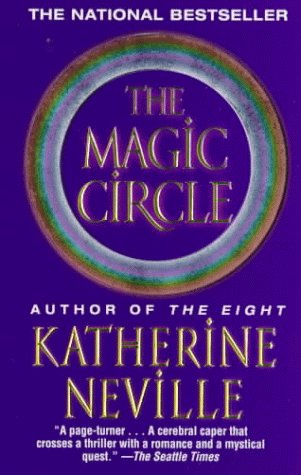
cover of The Magic Circle

Mostly enjoyed this book. Neville's writing is wonderful, involving the reader quickly and thoroughly. Ariel Behn is thrust into an adventure she didn't want. She inherits dangerous manuscripts from her dead cousin and is sent on a number of travels to figure out what they are, why they are so important, and who wants them. She gets to discover all sorts of interesting facts and stories about her convoluted family as well. Stories she's never heard, as she finally has opportunity (and necessity) to interact with some members she never spent time with before. This main plot is the most exciting part of the novel.

Another piece comes with the title -- the magic circle. This is the idea that there are number of objects that must be together for the next millenium to come. With myths, astrology, and history, fictional conversations interspersed throughout the book tie together these ideas and what they might have looked like in the past. Several important historical figures, including Christ are represented as having had all thirteen of these objects together at pivotal moments in their lifetime. I guess it bothers me a bit because writing stories from history is so often stretching the truth -- taking pieces of truth and elaborating to a point that they are truly story with only a glimpse of truth. But humans believe stories so easily -- so if I didn't know the Jesus of the Bible, I might find some of these ideas and possibilities very enticing, but as it is, I mostly found them distracting and a bit frustrating.

Title:The Magic Circle
Author: Katherine Neville
Date published:1998
Genre:Mystery / Thriller
Number of pages: 552
Notes: repeat reading

Read more...

Wednesday, July 12, 2006

read full post >

cover of Villains United

I thought the idea of a bunch of villains banding together to fight other villains sounded kind of fun-- and it was. One problem: this book is part of a much larger story (the Infinite Crisis) that I really don't know that much about; the book did a nice job of giving an intro (with snippets from lots of different series and stories and characters that feed into this larger story), but I still felt a little bit lost. Another problem: maybe I usually don't read about villains because they tend to be rather nasty-- and bad guys beating up on other bad guys, even more so. I found it hard to identify with the characters, or want to care too much about them. With these reservations, it was an enjoyable quick read.

Lex Luthor has started a society of villains, and is basically forcing everyone to join with him-- and because of some recent poor treatment of another vilian by the Justice League (they wiped his memory after a particular atrocity), most are pretty willing to join in. But this book focusses on a group of six small-time villains who have been drafted by the mysterious Mockingbird, most of them against their will, to fight against Luthor's society. They are the "secret six."

There's lots of intrigue-- traitors and insiders, secret information and informants on all sides. Even the rather interesting notion that because one of the six secretly wants to be a hero rather than a villain, he is a traitor to his fellow bad guys. By the end, the various tasks the Six have done come to seem a little pointless-- just maneuvering on both sides. I suspected that Mockingbird was working from his own agenda entirely, and even thought it might be Lex playing both sides-- and I was half right. Turns out there were two Lexes in play, one from an alternate earth (who was running the Society), and the Lex from our earth wanted to eradicate all the competition-- not only the Justice League, but the other villains as well. Which is an interesting notion, but the very idea of alternate dimensions makes that idea seem rather short-sighted: there will always be competitors, in this dimension or another one.

A fun read, with really great artwork. It was fun to see the wide array of different villains, even though I'm not that familiar with them. (They kindly provided a kind of visual index in the back with a listing of all the villains featured, and it is amazing how many there are.) I didn't hate reading it, but I don't feel a need to re-read it anytime soon.

Title:Villians United (Countdown to Infinite Crisis)
Author:Gail Simone
Date published:2005
Genre:Graphic Novel
Number of pages:144

Read more...

Friday, July 07, 2006

read full post >

cover of The Curious Incident of the Dog in the Night-Time

This is an amazing book written from the perspective of a 15-year-old autistic boy. Everything about the book was immediately engaging and unique, and particularly apropros since I had just finished reading Oliver Sack's Anthropologist on Mars. Christopher, the narrator, finds a neighbor's dog dead with a garden "fork" (some Britishism?) stuck in it, so he decides to investigate (or, as he calls it, "do detecting") and solve the mystery. Although he is very logical, has an amazing memory, and is brilliant at math, because he is autistic Christopher can't interpret facial expressions and doesn't like to talk to strangers. Along the way on this adventure, Christopher uncovers all kinds of adult tragedy and emotional pain (mostly rooted in his own parents difficulty in dealing with him) that he really doesn't understand. I found this to be a brilliant and moving book.

I found the writing style completely believable and engaging-- I especially love the fact that Christopher says he is writing this book as a project, with the encouragement of a teacher at school, and the way diagrams are included, and even an appendix with the solution to one of the problems on his math test that he thought was particularly interesting. During the amazing sequence when Christopher travels on his own to London, I was intrigued to read how he notices every detail of the places where he is (not just that there are cows in a field, but how many, what color, which way they were facing, etc.); the reader even gets to experience this a little bit when Christopher is in the train station-- first he is reading all the signs, without discriminating or dividing, and then he becomes overwhelmed by them and they all get jumbled together.

I highly recommend this book to anyone. Not only is it delightful and often funny, but it offers a unique perspective into someone who is "different." It's particularly telling (and troubling) to see Christopher interact with people who don't know him, and they either think he is retarded, or incredibly rude, or weird because they don't understand.

Title:The Curious Incident of the Dog in the Night-Time
Author:Mark Haddon
Date published:
Genre:Fiction
Number of pages:
Notes:Recommended by Kendra

Read more...

Monday, July 03, 2006

read full post >

cover of An Anthropologist on Mars

The neurologist Oliver Sacks writes in depth about 7 different, strange cases. He writes much more in depth here than in The Man who Mistook his Wife for a Hat, going into greater detail, referencing other research and ideas that relate more generally to the specific case, using these strange conditions to increase and expand our understanding of what it means to be human. In this book, Sacks works to keep an awareness of the individuality and personhood of his patients, and he does that partly through narrative-- by sharing their stories. The book is fascinating and well-written. This is my second reading of this book (the first was several years ago), and I noticed how well-read Sacks is, and not just in the scientific literature of his field. He is familiar with a wide range of literary texts and authors, and he connects them clearly with the scientific cases he discusses.

Each of the seven chapters focuses on a specific case.

The Case of the Colorblind Painter. An adult man develops "achromatopsia" (complete inability to see color) and because he is a painter, he is able to communicate clearly what his colorless world is like. Sacks uses this case to explore theories of color and finds insight into how the brain generates color, which provides us visual stability in a world of shifting wavelengths.

The Last Hippie. A rebellious young man lived as a hippie and then joined a religious cult, where a tumor causing blindness and personality changes went undiagnosed because his demeanor seemed "spiritual." This man's condition is similar to that of lobotomized patients, and Sacks uses this story to go into the history of the lobotomy procedure.

A Surgeon's Life. Sacks spends some time with a surgeon who has Tourettes-- the disease of nervous tics, sudden movements and repeated tic-like words or phrases-- and sees that when he operates on a patient, his Tourettes goes away for the duration of the surgery. Sacks writes about the uninhibited movements of Tourettic people, which gives them incredibly faster reaction times than that of a "healthy" person.

To See and Not See. A man who lost his sight as a child has surgery to remove his cataracts, and must struggle to learn how to process the world by sight instead of touch. [This story was the basis for the movie "At First Sight."] Virgil's struggle to process visual input, and the contrasting ease with which he can identify objects by touch, provides Sacks the opportunity to explain how much of the brain is devoted to interpreting visual input. Seeing and recognizing things seems so natural and instantaneous to us, but this is because as children, a great deal of time and energy was spent training our brains how to process this information. Virgil's story is a sad one-- he never fully acclimates to vision (his restored eyesight is not very good), and his poor health complicates the problem. Sacks also addresses the problem of blindness as a part of Virgil's identity which was lost when he regained his sight.

The Landscape of His Dreams. An Italian man with photographic memory has a mysterious illness, and suddenly finds himself remembering and even re-experiencing Pontito, the small Italian village he grew up in (even in three dimensions, as if he had a model in his head)-- and he discovers he has the artistic skill to paint it with extraordinary accuracy, from any angle. The tradeoff with this extraordinary memory is that Franco is like a man possessed, he lives almost entirely in his past and in his imagined, remembered Pontito.

Prodigies. Sacks talks about savants and prodigies generally, and then gives more detail on a young autistic artist named Stephen who has an extraordinary gift for drawing, particularly architecture. Due to the assistance and kindness of other people, and fame in England due to a documentary, Stephen was able to travel and draw the famous buildings of foreign cities, and his art has been published in several books. Sacks has the opportunity to meet him and travel with him, and struggles to guess what is going on inside his head, and whether he feels any emotion or connection to his traveling companion, who has made his life possible.

An Anthropologist on Mars. Sacks spends some time with a "high functioning" autistic woman named Temple who is a very successful engineer, designing humane facilities for the holding and treatment of cattle and other livestock. Temple is a visual thinker, and easily understands cows, but can only infer the emotions and behaviors of other humans logically, without truly understanding it. Clearly a brilliant woman, Temple also lectures and writes about her autism (she was the first autistic person to publish an autobiography), sees it as part of her identity, and recognizes the strengths and abilities it has granted her, in spite of the aspects of human life she knows she is missing.

The title of the book comes from Temple's description of herself-- because humans and their emotions are, at times, so alien to her. But it applies equally well to Sacks, who investigates into these people with strange conditions that not only affect their abilities, but also their identities, and give us surprising insights into the depth and breadth of what it means to be human.

Title:An Anthropologist on Mars: Seven Paradoxical Tales
Author:Oliver Sacks
Date published:1995
Genre:Nonfiction
Number of pages:316
Notes:Second reading.

Read more...

Sunday, July 02, 2006

read full post >

cover of Od Magic

Another enchanting book from McKillip-- about magic, but more about seeing and listening to other people. Od is a mysterious (female) magician who founded a magic school centuries ago in the capital city of Numis; Od herself has been seen now and then in various places, usually surrounded by the many animals she is working to heal. Over the years, the kings of Numis have come to feel that Od's school and its magicians belong to their kingdom, and have made rules to keep the magic under their control, lest it be a political threat. Od is still around, and influences events and people indirectly to steer her school back to where it belongs, and to bring back a sense of wonder and awe to the study of magic.

One of the ways Od brings changes to her school is through Brenden Vetch, who she invites to come work as a gardener. The significant thing about Brenden is that, while he is very powerful, he hasn't been trained by anyone or learned any rules; he loves plants, and has simply learned how to "listen" to things until they talk to him-- they tell him how to take care of them, what they might be good for. One thing I found particularly interesting-- Brenden doesn't recognize his power for a long time because of the weight of grief he carries (his parents died in a plague and he couldn't cure them, other loved ones left him). When he suddenly uses his power in an unmistakable way, he finally sees this.

Tears he held, a deep welling of grief, and something else, more powerful than either, that he had mistaken for sorrow. It had no name, this power, and no face but his own.
I wouldn't have associated power and sorrow, but McKillip's beautiful language convinces me of it.

Brenden's magic is different from the other magicians in that he simply learns by listening and watching his plants (McKillip also makes a language/image distinction). There are a number of nale-female pairings where this is also significant. One man falls in love with the magician Tyramin's daughter-- and she falls in love with him, too, because he recognizes her, and sees her as beautiful, without the masks on she wears in Tyramin's performances. The princess Sulys becomes engaged to the powerful wizard Valoren Greye, who is so busy with politics that he fails to take the time to see and listen to his future bride. Another pairing, Ceta & Yar, seem so well-suited to each other-- perhaps precisely because they do listen to each other, and see each other for who they really are.

This is a beautiful book, and very engaging (I read in just a few days). Probably not my favorite of McKillip's, although I'm not quite sure why... It seemed like there were too many characters, and I guessed that some of them were not what they seemed (like the curious and powerful magic young student Elver); perhaps having so many characters made it more difficult to engage or connect with any of them deeply. Also lots of oddities (like the twilight quarter, which wakes up at dusk and sleeps during the day) which added uniqueness and interest to the scenery, but didn't seem particulary purposeful.

Title:Od Magic
Author:Patricia Mckillip
Date published:2005
Genre:Fantasy
Number of pages:315

Read more...

Wednesday, June 28, 2006

read full post >

cover of Top 10 (Book 2)

Top 10,the police station in the science-hero and science-villain populated city of Neopolis, is actually the 10th precinct in a police force in a series of alternate Earths. This was mentioned in the previous book, but wasn't significant to the plot until this one, where it plays a huge role and is part of the mind-blowing answer to one of the bigger investigations that spans both books. I tore through this because there was so much fascinating stuff going on, but there is a lot of richness that is worth coming back to-- I'm sure when I read it again, I'll find that I missed things.

It was fun to get the answers to one of the bigger investigations that started right away in book 1-- and while I was pretty surprised & taken aback, the resolution made perfect sense. Pretty much all aspects of the writing-- plot, characters, language-- are excellent. Some highlights from this one: there are some fun visual jokes I noticed (I wouldn't be surprised if these were in the first book and I just didn't see them). One of the detectives goes to Grand Central (the main earth in the series of alternates), and the stargate team is sitting in the waiting area in the alternate-earth transportation center. Grand Central is a Roman-centric world (where the Roman empire never fell), and when Corbeau is fighting as a gladiator, I'm pretty sure that I saw agreat rendition of Asterix & Obelix in the crowd looking on.

There's a new cop character who shows up about half-way through book 2-- an AI robot named Joe Pi. I really enjoyed the stuff with this character-- he was believably written, and the human reactions and interactions were really great (and some of them were quite hilarious). Really, all the characters are so diverse and have depth-- all of them have their own stories, even if we only get hints and glimpses of those stories.

I hope there's more Top 10 being written, because I would love to read more of this stuff.

Title:Top 10 (Book 2)
Author:Alan Moore
Date published:2003
Genre:Graphic Novel
Number of pages:144
Categories: , ,

Read more...

Monday, June 26, 2006

read full post >

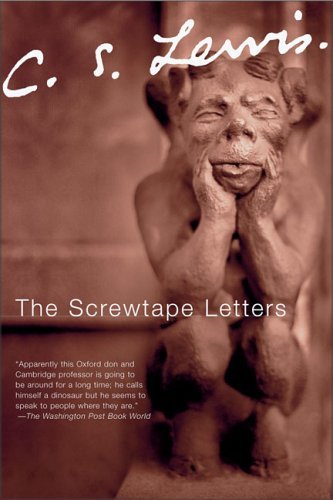
cover of The Screwtape Letters

This is the first time I actually finished this book. I've read the beginning before and got caught up in something else. Anyway, this is probably one of Lewis' most famous novels. The premise is that Screwtape has a young nephew, Wormwood, with whom he corresponds about life. And both of them happen to be in the service of 'Our Father Below'. Wormwood has a 'patient' who he is supposed to corrrupt and keep from joining the service of the 'Enemy' aka God. Lewis takes the opportunity to imagine what demons might reason about various things, to give a fresh perspective to the reader about sin and choices and what it means to serve God.

Wormwood and Screwtape have a few discussions about prayer. About what it means to corrupt prayer and make the prayers of this patient useless. Which raises plenty of good questions. If you are praying to someone who is not God, but simply your idea of God, does the real God still hear your prayers and answer them? Does praying simply mean thinking good thoughts? By praying, is it better to be vague and nebulous or to ask for specific things and bring up specific questions to God? Prayer is a vital part of knowing God, and so easy to get sidetracked from. Prayer can become a rote piece of the day instead of remembering that prayer is really a conversation that brings humans into the presence of the Most High God, which is not something to be taken lightly. Perhaps all the prayers that are said without real intent and focus behind them are not really said to God at all? And yet -- I know that grace is extended to each of us more often and in greater measures than we could ever deserve. So -- God must extend some grace to us in our prayers and hear us even when we are quite unsure of what we are praying or who we are praying to, as long as we are generally aimed toward Him and not from Him. Perhaps. Still in process on this...

Title:The Screwtape Letters
Author: C. S. Lewis
Date published:1941
Genre: Religious Fiction
Number of pages: 134

Read more...

Sunday, June 25, 2006

read full post >

cover of Top 10 (Book 1)

If you look at the comic book shelf or see all the superhero movies that have been made or are in progress, it seems like there are an awful lot of different superheroes and villains, maybe too many. Well, Moore takes that idea and imagines a world where there were so many superbeings that a city was created just for them-- Neopolis. While this might solve some problems, obviously it causes others-- the major one being, how do you keep some semblance of order in a society of elite, powerful beings? Precinct 10 (affectionately known as Top 10) is the police team that does just that, and all of the cops have the kind of powers necessary to do their jobs in Neopolis.

This series is a bit like Swords of Haven, in that it takes regular mysteries (or incidents of the kind that cops would have to investigate) and adds an extra wrinkle-- in that case, magic; here, it is a world of superpowers, monsters, and aliens. The world of Neopolis is a richly realized one (and I thought the artwork was really fantastic); there is so much detail to take in and enjoy, and it makes the city feel real. The ads on the train, the billboards and trucks on the city streets, the music-- all truly belong to this world of heroes and monsters. Among these many delightful details, there's a boy band named "Sidekix", and just in passing you see a middle-aged mother in her cape & tights with a whiny young teenage daughter in tow who's begging for the new prismatic cape that all the other girls have.

The stories focus somewhat on Robyn Slinger (aka Toy Box), a new cop who has just joined Top 10-- but they don't stick just to her experiences, and there is always plenty going on, so there are several different stories going on at once. All of the cops felt like real characters, with a wide array of gifts and personalities. I particularly liked the power of the pathologist, whose nickname is Micro Maid: she wears a suit that can shrink her, so she can go spelunking in the arteries of corpses and really see what went wrong. This power also comes in pretty handy when the drunk has-been movie monster Gograh (a Godzilla type) comes looking for his son and causing all kind of wreckage.

This is delightful stuff, and I can't wait to read more.

Title:Top 10 (Book 1)
Author:Alan Moore
Date published:2001
Genre:Graphic Novel
Number of pages:208
Notes:recommended by GeeksOn

Read more...

Google Search

Google