Book/page totals

Top 10 Lists

Sunday, October 16, 2005

read full post >

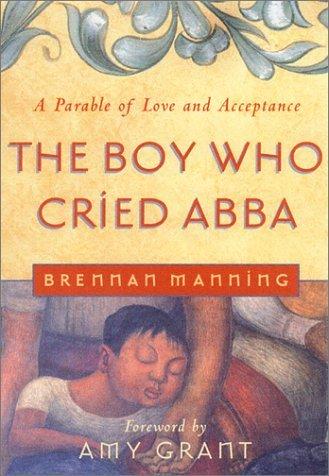
A book about a young boy who is an outcast who gets to meet Jesus and have his first friend. There is some real truth in this book, stated simply but honestly. We are all outcasts and desperately need for someone to accept us as we are, and to teach us to accept ourselves and others in that same manner. Beautiful imagery clearly showing that Christ felt our own pain as completely as we do, and He is willing to share it with us -- to love is in that manner and that completely.

Title:The Boy Who Cried Abba
Author: Brennan Manning
Date published:2001
Genre: Religious
Number of pages: 83 pages
Notes: recommended by and borrowed from miriam

Read more...

Friday, October 14, 2005

read full post >

cover of The Hiding Place

This is the amazing story of a Dutch woman and her family during the German occupation of Holland in World War II. The Ten Boom family became part of the Dutch Underground, helping to find places in the country for Jews, and getting ration cards so they could eat and survive. When they ran out of other places, they opened up their own home to people. At some point, they knew their organization was getting too large, that too many people knew about their work, and that eventually they would be discovered-- but even then, they could not stop helping people. So Corrie, along with many members of her family and friends, was sent to prison. Then, with her beloved sister Betsie, she was moved first to a camp for political prisoners, and then finally to the dreadful concentration camp at Ravensbruck. In all of these dreadful circumstances, God supplied her needs and carried the burdens too heavy for her, and made it possible for her to minister to the suffering people around her.

If you were stuck in prison, in horrible living conditions and filth, and someone secretly asked how they could help, what would you ask for first? Corrie asks for a Bible. Only after that does she think to ask for soap, or a needle and thread. The Ten Boom family is simply amazing, with their faith in God and their love for his Word. In the beginning of the book, we get a brief glimpse of Corrie's childhood in this wonderful family; she never realized her family was "poor", because they were always busy taking care of others. Even when her mother was ill and could no longer get around, she still ministered to shut-ins and other people around her. Reading this book, for a while, I got to keep company with wonderful people-- and I found it challenging to my own selfish attitudes, but also profoundly encouraging.

It seems perfect to me that we get this story through Corrie's eyes and memory; it is much easier to identify with her than with her more saintly father and sister. She may seem like a saint, and amazingly courageous woman, but she is well aware of her own faults and weaknesses, and she willingly admits them. She is the one who always asks why, who questions their hardship and suffering; she finds it difficult to love her enemies, and is amazed to discover at different times that, when she is pitying the weak and wounded victims, her father and her sister are praying instead for the people who are inflicting the wounds.

The hiding place of the title is not just a secret room in a house in Holland where Jews hid when the Gestapo came looking for them. It comes from the Psalms: "Thou art my hiding place and my shield", and Corrie returns to this idea more than once. In prison, she makes a friend of the ants in her cell; when they disappear into the crack in the wall, she realizes that

...I too had a hiding place when things were bad. Jesus was this place, the Rock cleft for me.
Later, at Ravensbruck, Betsie reminds her that God's will is their hiding place, as the sisters continue to trust God in the midst of terrible suffering. The Hiding Place is an amazing story of God's grace and power as he cares for the people he loves (those who know him and those who do not), even-- or perhaps especially-- in the midst of terrible suffering.

Title:The Hiding Place
Author:Corrie Ten Boom (with John and Elizabeth Sherrill)
Date published:1971
Genre:Autobiography
Number of pages:242

Read more...

Tuesday, October 11, 2005

read full post >

A well written quick read. This book picks up after the fair tales end, and it's not 'happily ever after.' Ella is engaged to a prince who can't make decisions on his own, has no emotions, vacant eyes, and a handsome face. She has a whole lot to learn about proper etiquette and other such things that princesses are expected to know.

Ella ends up being introduced to a young man about her age, named Jed, who doesn't agree with the way things are in the palace or the kingdom, so they get along fine. She also meets a young girl, named Mary, who is a servant at the castle and takes time to listen to Ella and treat her like a real person and tell her the truth. Ella decides to call off the wedding, and that changes all sorts of things. One good question this book asks is 'what does love look like and feel like?' Since the book begins by saying that 'happily ever after' doesn't necessarily mean true love, Haddix can give a contrast of what love is not. Good questions without easy answers. And that's always good.

Title:Just Ella
Author:Margaret Peterson Haddix
Date published:2001
Genre:Children's
Number of pages:185 pages

Read more...

Monday, October 10, 2005

read full post >

cover of View with a Grain of Sand

This collection of Szymborska's work contains 100 poems, selected from seven different volumes of poetry, which were published between 1957 and 1993. The poetry is thoughtful and intriguing; often, they offer a fascinatingly different take on life and reality. There is also a great deal of playing with language (most notably in "The Onion"). It seems like it must have been a very difficult to job to translate Szymborska's work into english; the translators did a fabulous job in keeping a sense of play and rhythm and even a distinctive voice in these english versions of the poems.

Some of Szymborska's poems are quite playful. Sometimes the playfulness is in the language, as in "The Onion":

In an onion there's only onion
from its top to its toe,
onionymous monomania,
unanimous omninudity.
Sometimes the playfulness is in the ideas, in a reversal of opinions, or suggesting a new and different interpretation of something familiar. For instance, in "True Love", almost the whole poem is spent discussing the ridiculousness and illogicality of so-called true love, but the ending flips the whole poem around, suggesting that this is the belief of people who never find love, and that this belief makes life easier for them. The poem "Pi", where the lines are interlaced with numbers from pi, among other things, Szymborska compares the never-ending, irrational digits of pi to various other things of long and short duration and length. In the delightful poem, "Theater Impressions", Szymborska plays on an extended metaphor of the "sixth act" of a tragedy, when all the dead come back to life, and enemy and villain grab hands and bow together for the cheering crowd.

It's hard to trace any kind of progression in a poet's work, and especially from any kind of selected poems, but it did seem like there was a greater preponderance of heavier, darker poems in the selections from the later volumes-- although even these are still consonant with the witty, clever, playful style of the other poems.

What I valued the most in Szymborska's poetry is the attention she gives to the world-- to notice the grain of sand of the title in the midst of a larger view, and consider the fact that the grain of sand has no awareness of itself. Her poetry comes across as the work of a very thoughtful person, who considers things carefully, and is not afraid of interpreting what she sees differently than the rest of us.

Title:View with a Grain of Sand: Selected Poems
Author:Wisława Szymborska
(translated from Polish by Stanisław Barańczak and Clare Cavanagh)
Date published:1995
Genre:Poetry
Number of pages:214

Read more...

Sunday, October 09, 2005

read full post >

cover of Rose Cottage

The heroine of this Mary Stewart novel is a young war widow who returns to her childhood home (the cottage of the title) to take care of a few things for her grandmother. One of those things is a secret safe, hidden behind the plaster and the wall-paper; the contents of the safe are not rare jewels, but rather the family treasures and documents (birth, baptism, and marriage certificates, and the like). Our heroine is surprised to find that the safe has been uncovered and opened-- with a key-- and that the documents are gone. Her perplexity increases, as she and her childhood friend Davey keep running across odd stories from the neighbors and strange occurrences around the cottage which suggest someone has been around. Although there's no evidence of maliciousness or mischief, the missing papers make no sense to Kathy, because the only living family members are herself and her grandmother.

I enjoyed this book because it seemed to deviate a bit more from the usual Mary Stewart mysterious romance book. In this case, the main character is a widow, which means she isn't looking for love; there is still a romantic sub-plot here, but it is more subdued than in some of Stewart's other books. Certainly, there isn't more than one love-interest, one of whom turns out to be evil. I also enjoyed the mystery, because it is so much more personal to the character, rather than a dangerous political conspiracy or illegal smuggling. The heroine is struggling a bit with her identity-- this is brought to the fore by the play of names. Her married name is Kate Herrick, but when she returns to Rose Cottage she is once again the Kathy Welland everyone knew. Kathy's identity questions are compounded by the fact that she was born out of wedlock, never knew who her father was, and was left by her mother at a young age. So it's quite charming that the mystery touches on Kathy's own questions about her identity and roots.

Rose Cottage is an entertaining read, which doesn't take long to finish. Stewart's descriptions of rural English and Scottish countryside are pleasant, and there is enough local color in the dialogue of the characters to be both believable and entertaining. The central mystery of the plot is not a complete surprise; I guessed the main secret a while before the main characters figured things out-- but this story is different enough from the other Stewart novels I have read, and more personal in its dynamics, that it was still quite fascinating to find out how exactly the story ended. As in other novels by Mary Stewart, she doesn't give you all the details, doesn't bring everything to complete closure-- she gives enough to satisfy the reader, and finish the main story threads (or suggest where they will end), while still keeping a slight air of mystery.

Title:Rose Cottage
Author: Mary Stewart
Date published:1997
Genre:Mystery / Romance
Number of pages: 264

Read more...

Saturday, October 08, 2005

read full post >

This is the true story that 'The Sound of Music' was based on, but is much better than the movie. The Trapps were a family that sought to follow Christ and do the will of God in all things.

To hear the story of what they learned and who God provided to take care of them is very encouraging. They came to America to escape because both the father and oldest son were called to serve Hitler, as well as their family being called to sing at his birthday celebration. So – they left the country (with their own priest/choir director) and ended up in America, where they got to discover all sorts of new things. Scripture is referenced throughout, to see that God does come through on His promises. This remarkable family did not call themselves poor – just without money – because they got to see God provide all they needed, to see what skills and talents each family member had because of necessity, and to see God giving family and friends and home more than they imagined. This is a biography of faith and a testament to God being who He says He is. It is also fun to read, and I believe it would have been enjoyable and refreshing to hang out with maria and her family! And to sing beautiful music.
Title:The Story of the Trapp Family Singers
Author: Maria Augusta Trapp
Date published:1957
Genre: Autobiography
Number of pages: 312 pages
Notes: Way better than the movie!

Read more...

read full post >

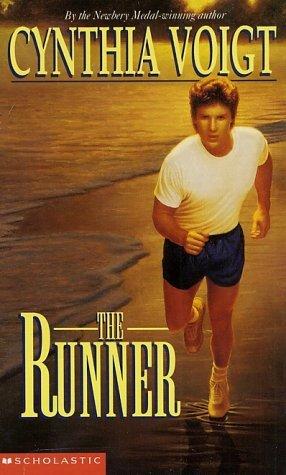
A book for teens by a woman who isn't afraid to acknowledge that life isn't always easy. The main character, Bullet, was created to run - and does so throughout the book as a way to deal with life.

Running comes naturally to Bullet, but he also works hard to make himself better. Not for the purpose of winning, but to feel how his body can work well and for the pleasure it brings him to conquer his body. His father isn't a father and has nothing but pain and mistrust to bring into his son's life. There are very few characters – Bullet, his family, one main runner from school, one friend he works with – and that's about it.

Interesting that a book can be 281 pages and get the reader interested enough in the story of one person and their story alone, mainly. A well-written book worth reading and digesting. Bullet is confident and makes his own decisions and takes responsibility for himself, something which few people do today – refreshing to read that it is possible, though not easy.

Title:The Runner
Author: Cynthia Voigt
Date published:1994
Genre: Young Adult Fiction
Number of pages: 281 pages

Read more...

Thursday, October 06, 2005

read full post >

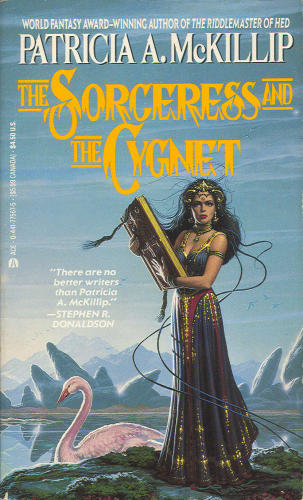
cover of The Sorceress and The Cygnet

Corleu is a young man of the Wayfolk, a wandering people hesitant to pass over thresholds, but his mysterious heritage is visible in the white-blond hair he inherited from a great-grandfather he knows only by a story. He loves to read and tell stories to the other Wayfolk children, but discovers that words have power when he begins to encounter the characters from the tales he tells-- the Gold King, the Blind Lady who wears the silver ring of time, the dancer who brings dreams to humans, the blood fox with the shadow of a man, all of whom are also constellations, bound by the powerful Cygnet. These powerful beings send him on a quest, and he encounters the sorceress Nyx, the daughter of the Lauro Ro, the powerful mistress of Ro Holding. Nyx helps Corleu in his quest, but out of a desire for more knowledge and power. Along the way, Corleu's story intertwines with that of Nyx's cousin Meguet, a woman with her own unknown and powerful heritage.

McKillip has created a complete world here, with different peoples and customs, and their own legends and constellations, which come to life. As in many of McKillip's books, we also find many strong female characters, of several different types-- the powerful sorceress Nyx, who left behind family and love to study the arcane arts anywhere and with anyone who might increase her knowledge; Meguet, who is a warrior and guardian; Lauro Ro, loving mother to Nyx and her sisters, but still managing an entire holding. Even Nyx's sisters are all different. Iris is practical and unmagical, but discovers she has the ancient power to move the entire house of Ro Holding, when necessity demands it. Nyx's sister Calyx loves to read the histories and ancient books in the tower of Ro Holding.

"I watch the stars," Calyx said simply. "Sometimes it seems that all the constellations exist in a strange, ancient tale that we only catch glimpses of in our short lives, while they move slowly as centuries through it."

Where do you hide your heart? Is it hidden away somewhere? Corleu's "heart" is Tiel, the Wayfolk girl he loves; this is why he does the bidding of these powerful beings he fears, because they have captured his heart. When Corleu frees the Warlock from the shape of a blood fox, he makes a blood star to do so-- the Warlock's heart. Nyx is so caught up in knowledge and power that she has forgotten about her heart. And the Cygnet's heart itself, which Corleu is looking for, is hidden in an unlikely and surprising place.

I read this book once many years ago, and did not understand it. I remember feeling like I was reading the sequel to something, as if I had come into the middle of a story and things didn't make sense. As for the conclusion... what happens is only touched on briefly, once. Things aren't explained completely (this is a McKillip book, after all), and what happens is a bit of a surprise-- so if you aren't paying careful attention at that one point, it seems possible to be very confused about what has actually happened. This strange, evocative ending suggests that the tales, and the stars, don't always mean what we think, and that the stories don't always end or begin where we think they do. In the evocative words of the tinker,

... whatever sun touches, whatever dreams, whatever works magic, whatever flies... When the heart casts a shadow instead of dancing light, there story begins.

Title:The Sorceress and the Cygnet
Author:Patricia McKillip
Date published:1991
Genre:Fantasy
Series:Cygnet
Number of pages:248
Notes:Second reading.

Read more...

Google Search

Google