Book/page totals

Top 10 Lists

Monday, July 18, 2005

read full post >

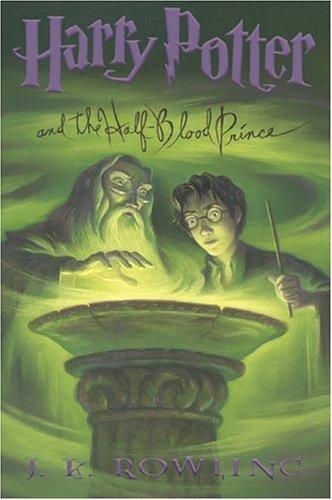
Cover of Harry Potter and the Half Blood Prince

I know Harry Potter & the Half-Blood Prince is one of the "most talked about" books online now (at least according to Technorati), so it's hard to know what to write. I will say I was a bit surprised by the interest & reactions of friends who haven't read any of the Harry Potter books and have only seen the movies-- one heard all the brouhaha in the news about someone dying and had to know who it was that died; the other's first question was whether or not this book was better than all the others (a question I find extremely difficult to answer), and wanted to be reassured that his favorite characters hadn't been killed. As well-done and enjoyable as the Harry Potter movies have been, I find the books so much more pleasurable. You get so many more hours of entertainment (even if I do tend to cram it into just a couple of days, at least on the first reading); you get to know the characters better, and you get more details than you do in the movies. It's amazing how many people and how much time & money it takes to create a two hour movie... I suppose it takes many hours of J. K. Rowling's work, and the help of editors and publishers, but that seems different, somehow.

I didn't start The Half-Blood Prince right away (that is to say-- not on Saturday, when our Amazon pre-order arrived). I wanted to let G read it first, and usually once I start a book like this I have trouble putting it down, so I tried to show some self-restraint. (A couple of summers ago when The Order of the Phoenix first came out, I waited until we were on vacation, and then I read the whole thing in just a day or two.) But on Sunday, G told me I could go ahead and start reading (I thought it very generous of him to share), and of course I ended up spending most of Monday reading it (figured I might as well finish it and get it out of the way, so it wouldn't be distracting me from everything else I should be doing). I was lost in the world of the book, so I remember distinctly that when I finally closed the book and looked up, and rejoined the world of normal reality, it was exactly 2:30 in the afternoon.

I think I came across on J. K. Rowling's website a hint in answer to a question about how the Order of the Phoenix communicate-- she said they only used their wands, and that we'd seen them do it before (I don't remember when, but will have to look for it next time)-- it seems pretty clever to use the Patronus as a method of communication, and it has a built-in kind of identification. I wonder if Harry & his friends will be able to use that, too, now that Harry knows about it. I like how Rowling sometimes will take some magic we are familiar with and use it again, or in a slightly different way.

I was hit pretty hard by the ending... I think I was crying for the last several chapters. But I like the fact that Rowling makes the stakes real-- this is a real war, and there are real casualties, major players that we and the characters in the book care very much about. I was also fascinated, almost the whole way through, to see the ambiguity about Snape's position. Right from the beginning of the book, we don't have enough information to know who he is lying to and who he is deceiving. I think Dumbledore must have had a pretty good reason indeed to trust Snape (more than what Harry comes up with), and I partly wonder if maybe Dumbledore had Snape swear an unbreakable vow to protect and/or help Harry (since Rowling has previously introduced a particular kind of magic once, and then brought it back in a larger role later). I will be very interested to see how Rowling deals with Snape and Snape's relationship with Harry in the last book (among other things, of course)-- but I will try to be patient.

Title:Harry Potter and the Half Blood Prince
Author:J. K. Rowling
Date published:2005
Genre:Fantasy
Series:Harry Potter
Number of pages:652

Read more...

Sunday, July 17, 2005

read full post >

Demoness Metria (not to be confused with her soul-less worser half D. Mentia, or her younger self, Woe Betide) wants to have a child with her husband. They signal the stork often enough, but haven't gotten any deliveries yet. This is the story of the adventures to appease the powers that be, in the punny, mostly acceptable way in which Anthony specializes.

Metria ends up doing the Simurgh (large, old, powerful bird/being) a large favor. There is a trial for Roxanne roc, who's been sitting on the Simurgh's egg for about 600 years now. Metria summons all the important people to the trial, having to go to Mundania and all sorts of other places to do so. She does many important things, and ends up having to decide the trial as well for the jury so they are not (literally) a hung jury. An enjoyable read, fairly quick. some bad puns, as usual, but worthwhile.

Title:Roc and a Hard Place
Author: Piers Anthony
Date published:1996
Genre: Fantasy
Series: Xanth
Number of pages: 337 pages

Read more...

Tuesday, July 05, 2005

read full post >

cover of Rose Daughter

Robin McKinley's later version of the Beauty & the Beast tale bears some marked changes from McKinley's earlier version of the tale-- this one, in some ways, reads more like a fable because of the names (like Lionheart and Jeweltongue, Beauty's sisters, or Mr. Horsewise). Perhaps the most significant thing, though, is the way that McKinley modifies and adapts the familiar fairy tale and turns it into a new story.

The character of Beauty in Rose Daughter is rather a departure from most of the other women in McKinley's books. It's almost as if the main character of McKinley's Beauty had been split into three characters-- the bold, horse-loving Lionheart (who even masquerades as a boy), the scholarly and witty Jeweltongue, and Beauty herself-- a kind, practical girl who loves to garden. She really loves all living things, as is made clear when we see her making friends by caring for unwanted animals and finding them homes. Beauty is also a much more reserved and less public person than her more flamboyant sisters. I also love the detail of the roses-- what would dead roses look like, to someone who loves plants but has never seen roses? All thorns and black and ugly-- but Beauty can tell they were important to whoever set up the garden, so she decides to wait one season to find out if they are worth all the trouble and the pain, and she loves them more than any other plant when they finally do bloom.

One interesting difference from the traditional version in this tale is the reason for Beast's form. He was a sorcerer-philosopher seeking knowledge who went too far-- but he was not evil or power-hungry in his search, so in restraining him the guardians of that knowledge accidentally touch him and give him something like their own form. This Beast is a rather different character from the spoiled young prince who is the first of his proud family to slip and be hit by an anicent curse.

The biggest point of difference in all of McKinley's Beauty & the Beast retellings is the ending. [Note that you may not want to read this if you have not yet read Rose Daughter or Sunshine and don't want to know how they end.] The ending of Beauty is right out of the fairy tale, although maybe a little grander and populated with the specific personages from Beauty's world. When you look at that ending in comparison with Rose Daughter, there is a bit of an inconsistency-- even in the first book, Beauty's family seems happier living a simple country life. Gervain can try on the fancy clothes from Beast and look like a Lord, but he's actually happier being a blacksmith. I sense this much more strongly in Rose Daughter-- the whole family is happier in their tiny country cottage than they were in their huge city mansion; they realize the duplicity of their city friends (most obvious in the two cancelled engagements of the older sisters). The father finally recovers from his wife's death and starts writing poetry. It would make much less sense for this family-- Beauty especially-- to go back to city life. However, as in the first version, this book still ends with a triple wedding.

It seems that sometimes writers must tell the same story repeatedly, and that they must first tell it one way before they can tell it another. I think this may be the case for McKinley-- it is only in her second re-telling that she is able to let her Beast remain a beast, and to let her characters stay in the simple lives they have come to love. And this is where I see the biggest connection to Sunshine: there, the beast is truly a monster inimical to humans. What happens on a smaller scale there happens here-- the girl saves the monster, the monster protects the girl. Allowing the beast to remain a beast at the end of Rose Daughter seems to open the door for Constantine in Sunshine-- he is an ancient monster, who is allowed to stay what he is. Also, the relationship between Con and Sunshine is different-- there are hints of attraction (and maybe more than hints), but it is against their very natures (and what would a marriage between Beauty and her untransfigured Beast look like, anyway?).

In her afterword, McKinley comments on this act of supposedly repeating herself, and what it means to her as a writer:

I read somewhere, a long time ago, a French writer, I think, saying that each writer only has one story to tell; it's whether or not they find interesting ways to retell it that is important. The idea has stuck with me because I suspect it's true. Maybe I shouldn't be surprised that my favourite fairy tale came back to me, dressed in a new story, after twenty more years in the back of my mind and the bottom of my heart-- and the odd major life crisis to break it loose and urge it into my consciousness.
Maybe it'll come to me again in another twenty years.

Title:Rose Daughter
Author:Robin McKinley
Date published:1998
Genre:Fantasy
Number of pages:202
Notes:Second reading.

Read more...

Monday, July 04, 2005

read full post >

cover of Beauty

This book, as the title suggests, is a novelization of a beloved fairy tale. McKinley doesn't offer any major twists or revisions-- she just fleshes out the characters, makes them real and believable, and gives them human motivations. Some friends have expressed the feeling that the ending is a little bit "over the top", but I was young when I first read it, and loved it pretty much from start to finish, so I find it hard to dislike the fabulous ending even the tiniest bit.

The character of Beauty in this book bears a remarkable resemblance to many of the other women in McKinley's writing (most of whom she actually precedes)-- she's a tall (at times ungainly or awkward), stubborn, tomboy of a girl who loves horses and books (both of which are important in her relationship to Beast), is terrible at sewing and other more traditionally feminine pursuits, but inexplicably loves roses (it is called for in the plot, after all). It doesn't seem like all those characteristics should all belong to one person, but when I'm reading the book, I believe it-- and it also seems that Beauty's very uniqueness is what makes her capable of loving and saving her Beast.

I wanted to re-read McKinley's two explicits versions of the Beauty & the Beast story after reading Sunshine again, because I think there is a continuity between them. It would be reductive to say that Sunshine is merely another Beauty & the Beast story (does a story just need a woman and some kind of monster to qualify? What about Aerin fighting the dragon Maur in McKinley's Hero and the Crown, does that count?), because it is certainly much more than that. Whatever the case may be, I sense some connections between Sunshine and McKinley's two Beauty & the Beast stories, Beauty and Rose Daughter.

The character of Sunshine definitely has some of this Beauty's stubbornness, and it is one of her strengths. Beauty is written in first person, and re-reading it this time, I found some hints of a voice a little like Sunshine's-- but McKinley's more mature work has a greater depth, and seems much freer.

This book also contains one of my favorite lines about story-telling, when Beauty returns home for a visit and begins to try to tell her family about the kind Beast she has come to know.

Pictures of the garden, the castle, the incredible library, and the Beast himself crowded into my mind. "I don't know where to begin."
"Begin in the middle and work outwards," said Hope. "Don't be stuffy."
"All right," I said. So I told them...

Title:Beauty: A Retelling of the Story of Beauty & the Beast
Author:Robin McKinley
Date published:1993
Genre:Fantasy
Number of pages:247
Notes:This is a repeat reading.

Read more...

Friday, July 01, 2005

read full post >

  • Properly, we should read for power. Man reading should be man intensely alive. The book should be a ball of light in one's hand. - Ezra Pound
  • Woe be to him that reads but one book. - George Herbert
  • A book is a version of the world. If you do not like it, ignore it; or offer your own version in return. - Salman Rushdie
  • Some books are undeservedly forgotten; none are undeservedly remembered. - W. H. Auden
  • A book burrows into your life in a very profound way because the experience of reading is not passive. - Erica Jong
  • Reading furnishes the mind only with materials of knowledge; it is thinking that makes what we read ours. - John Locke
  • If the riches of the Indies, or the crowns of all the kingdom of Europe, were laid at my feet in exchange for my love of reading, I would spurn them all. - Francois de Fenelon
  • The pleasure of all reading is doubled when one lives with another who shares the same books. - Katherine Mansfield
  • Read the best books first, or you may not have a chance to read them all. - Henry David Thoreau
  • We shouldn't teach great books; we should teach a love of reading. - B. F. Skinner
  • We read to know we are not alone. - C. S. Lewis
  • Books are not seldom talismans and spells. - William Cowper
  • Books are like imprisoned souls till someone takes them down from a shelf and frees them. - Samuel Butler
  • Even bad books are books and therefore sacred. - Günther Grass
  • I enjoy books as misers enjoy treasures, because I know I can enjoy them whenever I please. - Michel de Montaigne
  • Fairy tales are more than true: not because they tell us that dragons exist, but because they tell us that dragons can be beaten. - G. K. Chesterton
  • A room without books is like a body without a soul. - G. K. Chesterton
  • ... the creek runs on all night, ... as a closed book on a shelf continues to whisper to itself its own inexhaustible tale. - Annie Dillard
  • Good books, like good friends, are few and chosen. - Louisa May Alcott
  • A reading, which has pleased, will please when repeated ten times. - Horace
  • Reading maketh a full man. -Francis Bacon
  • Books are meat and medicine/ and flame and flight and flower/ steel, stitch, cloud and clout,/ and drumbeats on the air. - Gwendolyn Brooks
  • Literature is a luxury; fiction is a necessity. - G. K. Chesterton

Read more...

Thursday, June 30, 2005

read full post >

cover of The Tower at Stony Wood

It took me a bit longer to get into this book than is usual with McKillip's work, but once I did, it was as if I had been ensorcelled-- rather like several of the characters in the book. There are several different towers in this book, and one of them is a tower where a young girl, Melanthos, goes to see things-- fragments of stories-- in a mirror, and then she embroiders what she sees. The reader of this book has a similar experience: you enter this tower, this book, and you glimpse fragments of several different stories, and slowly those stories are woven together until you become part of the story, too.

The main thread of this interwoven plot centers on a knight named Cyan Dag (whose emblem, incidentally, is three towers), who is sent on a quest by a mysterious woman bard-- but his quest is not quite what he thinks when he embarks. I had my doubts about the veracity of the reason for his quest early on, but I didn't guess the real reason for his quest. It is all the more beautiful and moving when you discover why it is that Cyan Dag, and he alone, was chosen for this quest. It is mentioned more than once that Cyan Dag sees with his heart, that he has ancient eyes. He could never have accomplished what he did if he'd been asked directly-- he would have thought it impossible for anyone, and perhaps his brain would have gotten in the way of his heart. The bard explains to him, after his quest is over:

We needed you... We wanted all your courage and your gentleness, your determination, your loyalty, and your gift for seeing and for doing, as when you heard the young boy crying in the rain, what must be done.

This is a beautiful book-- three towers (and more), three sisters, and one faithful knight bringing peace and magic back into his world.

Title:The Tower at Stony Wood
Author:Patricia McKillip
Date published:2001
Genre:Fantasy
Number of pages:304
Notes:This book was a birthday present.

Read more...

Sunday, June 26, 2005

read full post >

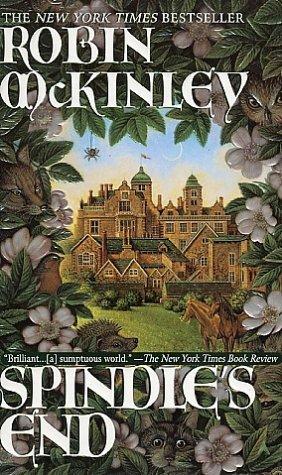
cover of Spindle's End

Another delightful fairy tale re-telling from Robin McKinley, this time (if you couldn't guess from the title), we get her version of Sleeping Beauty-- although there isn't so much slumbering in this story. McKinley creates a new country so saturated with magic that it settles around like dust and has the potential to invade such ordinary, every-day tasks as boiling water or slicing bread. This also allows McKinley to set up a dichotomy between the more academic and intellectual wizards, in contrast with the wilder, and ultimately more powerful magic of the fairies, both good and evil.

As with so many of McKinley's heroines, the girl who should be a slumbering princess is instead a tomboy who talks to animals, hangs around the smith's yard helping him shoe horses, and learns to be a horse doctor. Rosie detests the silly fairy-gifts she was given by her fairy godmothers at her christening (things like ridiculously long eye-lashes, curly blond hair, and the like), and has a stubbornness familiar to those who have encountered some of the other women in McKinley's books.

Because we all know the fairy tale, I'm not giving anything away when I say that the evil fairy Pernicia is defeated in the end. But the way that Rosie wins out is largly due to the strength of her own individuality, and also due to the loyalty of her many friends, both human and animal. Pernicia's strength is clear, and it is very obvious that things could have easily gone another way. This is one of the more creative retellings of a fairy tale I've read; the ending is fresh, and the characters (especially characters who never come into the traditional version of the tale) are delightful and lovable.

Title:Spindle's End
Author:Robin McKinley
Date published:2000
Genre:Fantasy
Number of pages:354
Notes:Second or third reading, at least.

Read more...

read full post >

Cover image of Fray

I don't read many comic books, but I am a big enough fan of Joss Whedon's work in other media that I thought it was worth giving Fray a try-- and it is well-worth the time. It doesn't take a long time to read, but it may take longer to process and think through the fascinating world and characters that Whedon (with the help of the visual artists, of course) have created here.

Melaka Fray is a street-savvy "grabber" who fetches (steals) things for a price. She lives in the darker part of the city, where the poor people live, and where mutated or deformed humans are common. There are vampires around ("lurks", in the street slang-- Fray doesn't even know them by the term "vampire"), but there hasn't been a Slayer for centuries-- so when the need for a new slayer arises and Fray is the chosen one, she doesn't get a lot of help. As was often the case for Buffy, there are always personal complications in the fight against vampires, and this story is no exception to that rule. I like that Fray is drawn fairly realistically (and not as some juvenile fantasy of what a woman might look like), and I also like the fact that she has a very particular and distinct style (there are some pencil sketches reproduced at the end of the book, and it is fun to see Fray next to Buffy).

One thing I wondered about is how Fray's world fits in with the end of the Buffy TV series, because at the end of the series they changed the rules about slayers-- and this seems to predate that rule-change, in a way. The story does reference a huge battle involving the last slayer, which banished all the demons (although if that is the case, why are there still vampires in the slums?). I suppose if it has been centuries since there have been any slayers, and even the watchers are a little bit crazy, there is a little bit of leeway for how the rules might apply to Fray-- after all, she doesn't seem like the type to follow them, anyway.

Title:Fray
Author:Joss Whedon
Date published:2003
Genre:Science Fiction / Horror
Series:part of the Slayerverse
Number of pages:216
Notes:This is a graphic novel.

Read more...

Google Search

Google