Book/page totals

Top 10 Lists

Tuesday, June 21, 2005

read full post >

cover of Sunshine

So far as I am aware, this is the first book by Robin McKinley to be found in the Horror section of the bookstore (I know because I had to look it up in the bookstore computer when I went to buy my copy and couldn't find it). No doubt Sunshine is classified as horror because of the strong presence of vampires-- but in spite of this, there is a clear continuity with McKinley's earlier books, which include mostly fantasy and a few re-tellings of fairy tales-- and there is a definite connection with McKinley's two previous versions of the story of Beauty & the Beast.

I love this book and the characters-- even though Sunshine's world is a dark one I might not want to live in, it is a very believable world. This is partly accomplished through the minute details that flesh out Sunshine's world, in particular the slang. If there is a slang word for vampires (they call them "suckers"), then you know that they've been around for a while and people have sort of gotten used to the fact. The same goes for all the different kinds of magic and charms and the like that are a part of Sunshine's everyday world-- there is an incredible level of detail and logic to how these things work. Sunshine herself is also such a matter-of-fact narrator, with a very individual, believable, and even humorous voice.

In the past, when I've discovered a new book by Robin McKinley in my local bookstore, I've purchased it immediately without knowing anything about it (this actually happened with Spindle's End). That is how much I love McKinley's work (I own most of her books-- I think I probably have every full-length novel she's written). But when I first found out about Sunshine, I read some unflattering reviews on Amazon.com, which made me doubt this book. As a result, I didn't immediately pursue getting a copy, and forgot about it for a while. Somehow I was reminded about the book, but since I still had my doubts, I actually read a public library copy of Sunshine the first time... But I tore through the book, and I could hardly wait to get a copy of my own when the paperback edition came out.

I haven't read a lot of vampire fiction (in fact-- I'm not sure I've really read any besides Sunshine), but I'm familiar with Buffy & Angel, and I like the way McKinley spins the vampire tradition-- again, McKinley has thought things through and the details are completely fleshed out and logical. The character of Con, of course, is fascinating, and I love the idea that there are different ways of being a vampire. I think I prefer McKinley's descriptions of vampires-- It seems like vampires ought to look obviously different from humans (unless they are "passing"), although I can imagine that would be much more difficult and expensive to do on film or TV. In this world, vampires are clearly creatures of the night who are inimical to humans; their senses work differently, they travel differently, even though they are also very wealthy, powerful, and clever (they even have their own technology that hooks into this world's version of the internet).

The whole book is a treat to read, and even though it's a decent length book, it reads pretty quickly. The ending is perfectly suited to the rest of the book... but it also leaves me with some hope that perhaps McKinley will return soon to this fascinating world and the wonderful characters of Sunshine and Con.

Title:Sunshine
Author:Robin McKinley
Date published:2003
Genre:Horror
Number of pages:405
Notes:Third reading.

Read more...

Sunday, June 12, 2005

read full post >

cover of Harry Potter and the Order of the Phoenix

G & I wanted to prepare ourselves for the release of Harry Potter book 6, and when G found an unabridged book-on-tape edition of book 5 at the library right before a long road trip, it seemed like perfect timing. Normally, I don't do books on tape very often (if at all); G does more since he has a long commute to work right now. At first it took me a while to warm up to the reader's voice, but he did such a great job with all the different character's voices that it was delightful to listen to. It was also fun to enjoy the book together and talk about what we remembered and didn't remember, or speculate about things. As long as our road trip was, The Order of the Phoenix was longer-- we didn't have time to finish the book on the road. But that worked out fine for me: G listened to the rest on his work commute for the next few days, and I just read the last few chapters in our copy of the book.

Reading this book made me want to go back and read all the other Harry Potter books, too (the practical part of me realizes both that I don't have time for that right now, and that there are lots of other books I want to read-- maybe I will re-read them all before book seven comes out). Sometimes I think that Rowling's writing is not so fabulous (on the level of wording or style), but somehow the characters she creates are so memorable and likable-- which is a far more powerful literary gift than perfect style.

One of the interesting things about this book is the different kinds of evil Rowling presents. Umbridge is clearly an awful woman, and she is evil-- she uses dark means to what she considers to be "good" ends, and she is very interested in power and control (without even the wisdom or the skill to be able to manage them well-- it's made quite clear she's not nearly as talented in magic-practicing as the other Hogwarts teachers, as exhibited by her inability to clean up the portable swamp Fred & George created in a hallway). Umbridge is clearly evil-- she is both like and un-like Voldemort. And, just as in the real world, Harry has to learn that not all evil people are in league with each other. There are plenty of evil people even in supposedly good institutions.

Title:Harry Potter and the Order of the Phoenix
Author:J. K. Rowling
Date published:2003
Genre:Fantasy / Young Adult
Series:Harry Potter
Number of pages:870
Notes:Second "reading".

Read more...

Tuesday, June 07, 2005

read full post >

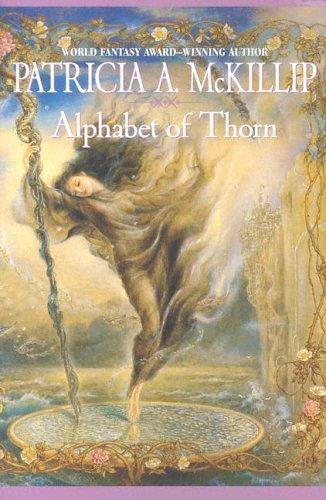
cover of Alphabet of Thorn

The more I read Patricia McKillip, the more I think that she knows just where to end her stories. She doesn't tie up all the loose ends, she leaves you wanting more of the world & characters she's created. The main conflict is usually resolved (or begun to be resolved), but the other pieces are left more open-ended. At the end of Alphabet of Thorn, the Queen is wondering how she can possibly explain the recent, extraordinary events to her people in language they will understand. Her advisor, the Mage Vevay, says, "Just begin at the beginning and proceed whichever way you can into hope." I wonder if McKillip operates that way for her own work?

As might be expected from the title, much of this book is about language and writing; the main character is a foundling who has been trained as a translator, and she is a gifted one. Nepenthe finds a magical book written in thorny letters, and it ensorcels her so she spends every waking moment working to translate it. Similarly, as a reader, I found it easy to be drawn into this book of Nepenthe's world. This thorny alphabet also conveys a powerful message about the power of writing to communicate and connect people.

There are plenty of interesting characters and history in Nepenthe's world; I would have been pleased to read more about many of them. The forest and the floating Wizard school are delightful; the student of magic, Bourne, is just beginning to discover the extent of his powers; the mage Vevay has had a long lifetime, doubtless full of adventure; the young queen Tessera, who is trying to discover how to rule without being her father; the ancient first King of Raine, who awakes to warn Tessera of danger, and who turns out to be a warrior queen; and of course the fascinating legend and history of Axis & Kane.

Ultimately, the mystery behind the magic of the alphabet written in thorns is compelling, and does not disappoint. It is fascinating to see Nepenthe's story connect with the legends she is translating, and the resolution, while perfectly believable, is not the one you might expect.

Title:Alphabet of Thorn
Author:Patricia McKillip
Date published:2004
Genre:Fantasy
Number of pages:291
Notes: This book was an early birthday present.

Read more...

Monday, May 30, 2005

read full post >

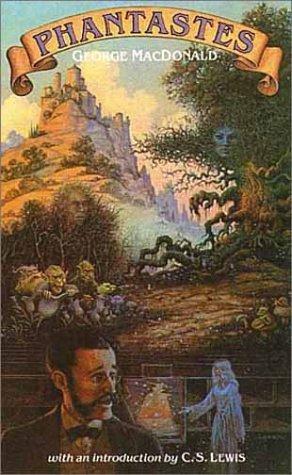
cover of Phantastes

Told from the point of view of Anodos, a young man who has just inherited his father's house and possessions-- and who discovers that his grandmother was actually a fairy. At first he doesn't believe her, but expresses a desire to go to Fairy Land. The next morning when he wakes up, his bedroom gradually transforms into a forest glade in Fairy Land. The rest of the story is made up of his travels through Fairy Land, and the people and creatures he meets.

Phantastes is one of those books that I've heard about for a long time-- supposedly it inspired people like C. S. Lewis and Tolkien, and helped them believe that it was possible to write Christian fantasy and original fairy tales. Lewis says in his introduction that the imaginative world of MacDonald's works is "the divine, magical, terrifying and ecstatic reality in which we all live", and suggests that Phantastes sort of baptized his imagination, long before he became a Christian. So, I had some pretty high expectations, and as a result of that, I was a little disappointed. This book feels more like a series of short stories, which all happen to feature the same character, the narrator. It didn't feel like there was a great deal of progression, and it certainly didn't feel like a novel, as MacDonald's Lillith does.

Many of the episodes are obviously allegorical, and of course Anodos' whole journey is supposed to be some kind of spiritual progression. In one village, Anodos finds that all of the people look attractive until you get within a certain distance of them. One time, Anodos is protected by the lady of the Beech tree from the evil Ash tree. Another episode seems like a somewhat disturbing allegory of female sexuality; Anodos meets a young girl who is almost a woman, with a little crystal globe which is "at once her plaything and her greatest treasure"-- she doesn't want to him touch it, but when he does, the globe vibrates and makes beautiful music. Eventually the globe becomes irresistible to Anodos, and he wants it so badly that he fights the girl, and breaks it. Later on, Anodos meets her again, and she says losing the crystal globe was a blessing in disguise, because without it to make music for her, she learned to sing. At some point, Anodos finds a beautiful white lady asleep within a block of clear marble, so he sings her to wakefulness and freedom, and spends much of the rest of the story searching for her. Another time, Anodos opens a door he has been warned not to-- and his shadow finds him, and trails along with him for the rest of his travels through Fairy Land.

MacDonald's style is not always my favorite-- the story is interrupted with "songs" that the narrator translates and records for us (often noting that the words were different, but it was "something like this", or that "I could not understand, but which left in me a feeling like this"). The quality of this work seemed a little uneven; some of the stories are much more engaging and compelling than others. Anodos' journey didn't seem quite as life-changing as it ought to have been, although perhaps I have missed details or not understood aspects of MacDonald's story. Phantastes is definitely worth reading at least once, if only for the better stories and the influence it has had on other writers. It is a book I will probably come back to in a few years, and maybe I will understand it better then.

Title:Phantastes
Author:George MacDonald
Date published:1858
Genre:Fantasy
Number of pages:185

Read more...

Tuesday, May 10, 2005

read full post >

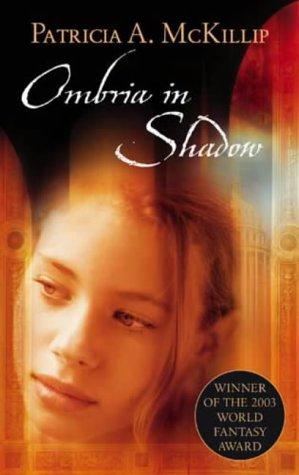
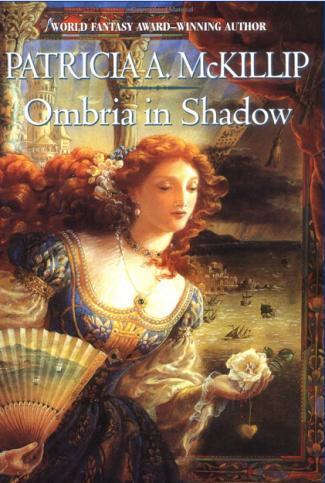
cover of Ombria in Shadow (UK edition) cover of Ombria in Shadow (US edition)

This is a mesmerizing, magical book full of fascinating characters. It begins and ends with two different stories that are told as if they were merely a folk-tale or a legend, but of course in the world of Ombria the tales hint at more truth than even the characters telling them realize.

Ombria is a city in political turmoil; the prince of the city has just died, and his young son and heir falls under the shadow of the dark, insidious Domina Pearl, an ancient woman with unknown powers and a desire to control Ombria.

After re-reading this book, I understand better why it might be classified as a Young Adult book-- much of the book focuses on the intriguing character of Mag, and in a way it is a "coming of age" story for her. Mag has grown up believing she is a "waxling" created by the powerful Sorceress Faey who lives under the city, but Mag gradually discovers she is human, and must struggle to discover where she belongs. It's easy to sympathize with Mag as she begins to take tiny actions of meddling in palace politics, through small gestures of help and small interferences in Faey's spells when she disagrees with their aims.

There are plenty of other fascinating characters in Ombria in Shadow. Kyel is the young prince, mourning his father and unsure who to trust, who speaks more truthfully through his golden, ornate puppets. Ducon is a handsome bastard son of the late prince, who could try to take advantage of the political upheaval for himself, but instead he does his best to take care of the young Kyel, and continues sketching the people and places and shadows in Ombria-- and discovers that there is a magical quality to his skill with charcoal. Lydea, the dead prince's mistress, is another character (like Ducon and Mag) who does not know where she belongs. Because of her love for Kyel, she persuades Faey to give her a magical disguise so she can be near the young prince without the dangerous Domina Pearl discovering her. I love the moment when Ducon cautions Lydea not to feel, because her passion is a stronger spell than Faey's disguise.

The most interesting character, however, is the sorceress Faey who is somehow connected with Ombria and its Shadow city, and who always wears different faces from Ombria's past. She seems somewhat sinister, especially at first, but is clearly offended when people compare her to the evil Domina Pearl; we learn the most about her through her relationship with Mag. I particularly loved her nonchalance during the climax of the book-- she is ancient enough to have experienced it many times, and doesn't seem to understand completely what is happening, but it doesn't worry her, either. Faey seems similar to some of the other powerful females in McKillip's other books, particularly Brume from In the Forests of Serre, who is also connected to her land, although more sinister.

The ending is lovely & masterful. We get a story that may be an answer to some of Mag's questions (but it also may not be), and although most of the characters don't remember what happened before the climactic shift in Ombria, it is suggested that Mag and Faey both remember what they have experienced, along with the reader.

Title:Ombria in Shadow
Author:Patricia McKillip
Date published:2002
Genre:Fantasy / Young Adult
Number of pages:291
Notes:Second reading. I purchased my copy of this book in London.

Read more...

Monday, April 25, 2005

read full post >

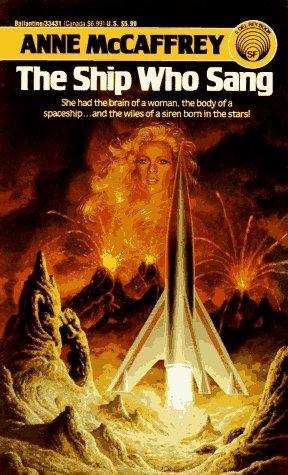
cover of The Ship Who Sang

This is the first book in one of the prolific Anne McCaffrey's many series. I have never (yet) read the other Brainship books, but it is a compelling idea-- to put humans born with damaged physical bodies and capable brains into powerful, new bodies shaped like cities and ships. McCaffrey plays out many of the problems that might accompany such a society-- how to treat brainships ethically and humanly, how they might interact with normal-bodied humans, and what some of their specific weaknesses might be despite their immense capabilities. But the reason this book really works is because Helva herself, the singing ship of the title, is so compelling. Far from feeling sorry for her, you may come to envy her cleverness and her strength-- both physical and mental, along with her ability to speed through space.

This book introduces us to the world of the brainships through the character of Helva, and after her intitial training, the plot follows Helva on a series of missions-- and of course, she runs into (and handles successfully, sometimes in spite of her human partner) some of the most dangerous missions and becomes the youngest ship ever to buy back her freedom (by paying for her education and the care that turned her into a brainship).

This book was published a while back, so it is a bit funny to see the technologies portrayed-- they have technology to connect a human brain to a "shell" so a person like Helva can control a powerful space ship, but their communications are somewhat behind-- they can use a "tight beam" like a radio to communicate, but Helva's human partners often bring her tapes or reels to convey the necessary information for their mission.

By making Helva a musician, McCaffrey makes it possible to explore how the world of art might interact with a technological world like the one she has created here. One more than one occasion, Helva uses her musical ability to help or manipulate humans in significant ways. One of Helva's stranger missions involves a delegation of actors and actresses who are sent to an alien society to perform teach Shakespeare's Romeo and Juliet for these aliens, and then teach it to them, in exchange for certain technologies and knowledge. The aliens conceive of drama in terms of energy exchange, and by the end of this mission, those ideas and terminology for drama make a great deal of sense.

Title:The Ship who Sang
Author:Anne McCaffrey
Date published:1969
Genre:Science Fiction
Series:Brainship series
Number of pages:248
Notes:Second reading.

Read more...

Monday, April 18, 2005

read full post >

cover of Sahara

This book made an impression on me, but maybe not the impression you might think. I found Sahara to be so poorly written, that it made me believe I could be a writer, and sell tons of books, and get them turned into big-budget movies, since I'm pretty sure I can write better than this. Of course, most people probably can.

G and I saw the trailer for the movie based on this book; he'd read the book before, and recognized it with excitement when he saw first saw the trailer for the movie. So, since he already had a copy of the book (an old hard-cover, not the new one pictured here), and I wasn't sure what to read next, he suggested I read this book before the movie came out. As it turns out, we never saw the movie (at least, we haven't yet-- maybe we'll catch it on TV sometime, just for larks, but it's not something I will be going out of our way to see). I've heard the movie was even more poorly written than the book.

I have to admit, the basic premise is fairly interesting, as far as end-of-the-world scenarios go-- this time it is an ecological crisis. Putting the crisis in the midst of African nations in political turmoil certainly ups the ante, and allows for some interesting scenery. For the most part, I tried to just relax and enjoy the ride of this far-fetched adventure, but the writing kept getting in my way. The characters are all very clichéd, and the writing itself is a mish-mash of clichés, and often ones that don't belong together, resulting in some unintentionally humorous mixed metaphors and the like.

There are plenty of moments where this story strains credibility beyond even my limits (and I consider myself a fairly gullible reader). There are two moments in particular that I found to be completely ridiculous. When Dirk and his trusty, able (but not quite as handsome and witty) side-kick are trekking across the desert, the descriptions of their dehydration and exhaustion are extreme and even hyperbolic, as if they are about to keel over dead in any moment (no doubt this is to heighten the sense of their strength and determination); yet, when they find an old prop-plane in a gully they somehow have enough energy & intellect to convert it into a land-yacht. And then, later, when our heroes are under siege, the beautiful and intelligent love-interest (whose life Dirk has saved twice now) manages to find the energy - despite the fact that she was just recently dehydrated, exhausted, and malnourished (how sexy is that?) - and a quiet spot - despite falling bombs and the like - for a quick fling with Dirk.

Sahara did give me a few hours of diversion and entertainment - which I enjoyed, particularly since I was stuck on a plane for some of those hours; but I don't particularly recommend it to readers who actually pay attention to the words and phrases and characters in the books they read.

Title:Sahara
Author:Clive Cussler
Date published:1992
Genre:Popular Fiction / Adventure
Series:Dirk Pitt Adventures
Number of pages:541

Read more...

Thursday, March 17, 2005

read full post >

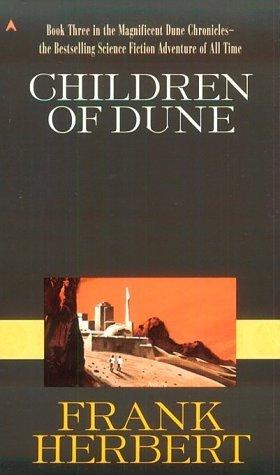
cover of Children of Dune

The continuing story of the planet Dune and Paul Muad'Dib follows the story of Paul's children, Leto and Ghanima. Like Alia, who is now ruling Dune and Paul's empire, these two were pre-born because of the spice their mother took while she was carrying them. While they are still quite young children, they possess great wisdom and experience because of the spice-- and sometimes it is a little hard to believe, or imagine, children saying and doing the things these two do.

I've been intrigued with this book ever since I saw the SciFi channel's "Children of Dune". I completely understand why they chose to go with teenagers, instead of children, for the roles of Paul and Ghanima-- it is hard to imagine or believe them, just when reading the book; I can imagine it would be much more difficult to find child actors who could carry the roles, and make something so strange believable.

When Alia was first born, there were some who considered her an "abomination"; in this book we get to see what they were afraid of. It is a clever way for Herbert to be able to bring back the disturbing Baron Harkonnen, and it is also interesting to view Alia's derangement from the point of view of Leto and Ghanima, who are careful lest the same thing happen to them.

Leto's choice-- to follow what he sees as "the golden path"-- is a fascinating one. In this book, he claims that Paul saw that choice and didn't want to take it; this makes me feel that Herbert has been revising and inventing things as he goes, because I certainly never got a sense of it when I read Dune. It is fascinating to think that the only way to rule a human empire with justice and preserve peace and stability is to become not-human. And that idea alone makes me quite interested in reading the sequels at some point, to see how Herbert plays this idea out-- although after reading Dune Messiah and this book, I was ready for a break from the world of Dune for a while.

Title:Children of Dune
Author:Frank Herbert
Date published:1976
Genre:Science Fiction
Series:Dune Chronicles
Number of pages:408

Read more...

Google Search

Google